The Joy of Padel podcast with Diego Campos (JOPS04E06)
On the latest episode of the JOY OF PADEL podcast, I had the pleasure of chatting with a true padel pioneer and visionary, Diego Campos. Our conversation was both illuminating and inspiring, as Diego brings not only the intensity of a passionate player but also the sharp mind of a savvy investor shifting the padel landscape—especially in the United States.
Background on Diego Campos
Diego’s story starts in Mexico City, where as a kid, he and his brother Ricardo (well-known in London padel circles) were surrounded by padel courts at their local tennis clubs. Ironically, back then, Diego was focused on competitive tennis and barely touched a padel racquet—preferring to whack tennis balls at his brother inside padel courts for fun! Fast-forward to today, after college tennis in the US left his body battered, Diego found padel as the perfect bridge to stay active, connect with old friends, and rekindle a sense of playful competition. Now based in Miami, Diego is both a high-level player (always on the left side!) and the driving force behind Sunrise Padel Capital—a sports-focused fund investing heavily in the future of padel.
Main Topics Covered
Our conversation spanned Diego’s transition from tennis to padel, the unique challenge tennis players face adapting to the subtle tactical game of padel, and the thrill of learning from players who grew up with padel rather than tennis. Diego walked me through Miami’s padel explosion—from two clubs to more than twenty-five in just a few years—and why he believes the US is poised to become a global hub for the sport.
But what truly stands out is Diego’s dual perspective as both player and investor. We explored his vision with Sunrise Padel Capital, from deploying capital in top-tier US cities to the critical importance of club amenities and community building (think coworking spaces, saunas, wellness, not just courts). We also took a deep dive into the scarcity of top coaches, the growth of women’s padel, the economics of membership models, and why the real money—and future of the sport—is in building a strong amateur ecosystem.
Diego’s love for padel shines through in every anecdote, especially in his hilarious story about making the padel legend Bela play on the right (“the only man to do so!”), and his views on learning, joy, and competition.
Three Takeaways from My Conversation with Diego Campos
If you want to understand the business and pure enjoyment fueling padel’s rise—or just love hearing stories from the front lines—tune in to the full JOY OF PADEL episode with Diego Campos. And remember, padel is for everyone—whatever side of the court you play on!
To find out more about Diego Campos and Sunrise Capital:
- Find or follow on Instagram: @diecamps
- Sunrise Padel Capital
- Diego Campos on Linkedin
To listen to the show:
To listen to The Joy of Padel podcast, you can use the embedded player above, or go find it on Spotify, Apple Podcasts or any number of other podcasting services listed here.
Send in your questions or reactions:
Please send me your questions — as an audio file if you’d like — to nminterdial@gmail.com. Otherwise, below, you’ll find the show notes and, of course, you are invited to comment. If you liked the podcast, please take a moment to review and/or rate it! ¡VAMOS!
Further resources for The Joy of Padel:

The Joy of Padel podcast, hosted by Minter Dial, a padel tennis player since 1974, is an exhilarating show that delves into the captivating stories of notable padel personalities worldwide.
Meanwhile, you can find Minter's other Evergreen podcasts, entitled The Minter Dialogue Show (in English and French) in this podcast tab, on Spotify, Megaphone or via Apple Podcasts.
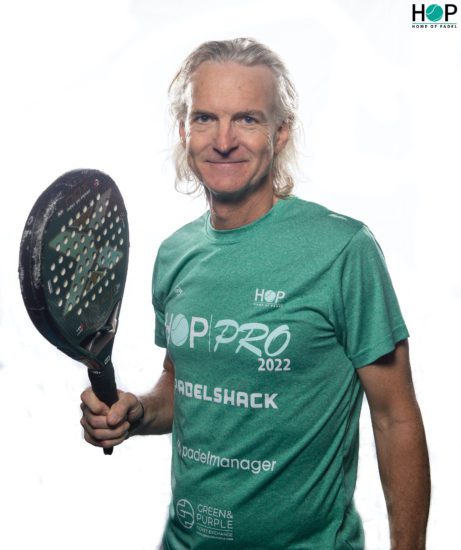
About the host: Minter Dial
Minter Dial is an international professional speaker, author & consultant on Leadership, Branding and Transformation. His involvement in sports has been a lifetime passion. Besides playing 18 years of rugby, captaining athletics teams, coaching tennis and playing squash for his university, he’s been a lifelong player of padel tennis, starting at the age of 10, from the time of its very first public courts at the Marbella Club in 1974.
Then, after a successful international career at L’Oréal, Minter Dial returned to his entrepreneurial roots and has spent the last twelve years helping senior management teams and Boards to adapt to the new exigencies of the digitally enhanced marketplace. He has worked with world-class organisations to help activate their brand strategies, and figure out how best to integrate new technologies, digital tools, devices and platforms. Above all, Minter works to catalyse a change in mindset and dial up transformation. Minter received his BA in Trilingual Literature from Yale University (1987) and gained his MBA at INSEAD, Fontainebleau (1993). He’s author of four award-winning books, including Heartificial Empathy 2nd edition (2023), You Lead (Kogan Page 2021), co-author of Futureproof (Pearson 2017); and author of The Last Ring Home (Myndset Press 2016), a book and documentary film, both of which have won awards and critical acclaim.
It’s easy to inquire about booking Minter Dial here.
Full transcript of interview via CastMagic
This transcription comes courtesy of Castmagic.io an AI service for podcasters.
Minter Dial: Hola, Diego Campos. You know, I was just chatting with you and I almost said Ricardo because we met through your brother Ricardo, a phenomenal padel player and lovely friend with me based in London. Diego, in your own words, who is Diego Campos?
Diego Campos: Thanks for, for having me in the podcast. I hope this is going to be a fun and entertaining conversation. Who am I? I’m first a padel player, and also a padel investor. That’s a very short summary.
Minter Dial: That is. I would imagine there’s a little bit more, like where are you based?
Diego Campos: Yeah, I’m based out of Miami. I’ve been in Miami for the last 8 years. I’m originally from Mexico City. And, uh, yeah, I mean, being involved in the padel ecosystem in Miami early on when we only used to have 2 clubs in town and we didn’t need to book a court in advance and we can just show up to now where we have more than, you know, 25 clubs in the city, which is kind of insane, the growth of the last few years. But I’m sure we’ll talk more about that.
Minter Dial: Phenomenal. And so, on the Joy of Padel, we like to talk about padel. You are going to be another Mexican on my podcast and with good reason, because of course padel was founded in Acapulco. Um, let’s, let’s talk about your journey. Did you discover padel in Miami or did you discover padel in Mexico?
Diego Campos: No, in Mexico for sure. Um, you know, growing up we always used to have, uh, padel courts in the, in the tennis clubs, right? They were always right next to each other. But kind of funny enough, uh, you know, I grew up playing competitive tennis, so didn’t have time to, to play padel at that time. But what we used to do, we used to go, uh, with my brother, which we’re Ricardo we used to go inside the padel courts with our tennis racquets and the tennis balls and just hit as hard as each other, like, as we could. So, that was my first experience with padel, was like going inside and just like hitting balls at each other.
Minter Dial: Well, the good news is the balls kept on coming back. I mean, correct, they had the glass. And I assume that by your age, Diego, that you’re not talking about the old concrete courts that we used to have.
Diego Campos: Correct. So, yeah, no, I think I–yeah, I never played in a concrete court. I’ve seen some, but never actually played in one of them.
Minter Dial: Mythical, the mythical courts with only 3-meter walls. I mean, it was such a different game back when I started anyway. So, in terms of your padel, you were playing tennis, you didn’t really, you know, think of padel too much, but how did you get into padel? What was the moment that you said, this is the gig, this is my sport? Or I mean, you may also play, of course, tennis.
Diego Campos: Yeah, so it’s just funny enough, I haven’t touched a tennis racquet in like 6 years since I started getting really more into padel. But I started like getting more serious about padel when, you know, I moved to the US to play college tennis, like Division 1. And then after playing college tennis, like my entire body was, you know, done, hurting. My tennis game was just going downhill. And then I moved back to Mexico City and I realized that a lot of my retired, like tennis friends I grew up playing with, they all switched to padel. So, I started playing padel with them just to reconnect with them. And, you know, we started a little bit of networking and friendship, and we were all still very competitive because we all came from tennis. So, that’s kind of like my first kind of like true more exposure into like start playing more serious padel and more often.
Diego Campos: It’s very awesome. This is probably like 2000–2014, more or less.
Minter Dial: Oh, right, right. So, reasonably recent. Of course, you’re a younger man, but, um, it’s often the case–a lot of–in my life, I’ve met many pro tennis players who would just have fun on a padel court. It was the distraction, the way to release pressure, because tennis is such a grind and a different experience. Padel was the joyful moment. But, and as we know, Padel can also be competitive, I mean, and truly a great exercise and proper, you know, downright competition. But when you transition from tennis to padel, it often can be complicated there. Well, so talk about what it was that allowed you to become good at playing padel as opposed to just being a tennis player on a padel court.
Diego Campos: Yeah, that’s definitely–it’s hard to get rid of the bad habits from a tennis player going into a public court and What I mean with that is letting the ball go behind you, the movement as well, try to understand that the game is not about winners, it’s more about less errors. So, for me, I think it was just spending a lot of time on the court and then playing against people that were better than me that don’t come from tennis. So, they actually grew up playing padel, so you get to understand better their strategy, the game. Um, that was kind of like what helped me a lot, just playing with people that were better and playing with people that they don’t come from tennis. So, you, you can see different type of shots. And, uh, yeah, just probably, you know, spending the 10,000 hours in the courts over the last, you know, 10 years, that’s definitely one of–
Minter Dial: one big factor. Well, I’m–I have a suspicion you know my cousin Nelly and Nelly Grinda, and, uh, yeah. He always says, really, it’s not about making winners, it’s about not making losers, not making errors on the court, which is, I mean, true about so many sports, especially at a beginner stage. But then at some level, as you get better and better, you do need to make winners. And so, that ability to take those risks that aren’t too stupid, it’s not the same as in tennis, but you still need to have the ability and you play on the left. What makes you the left-sided player that you are?
Diego Campos: It’s funny, it’s always, always a, a fun discussion with, you know, once you get to like a pretty like competitive level, everybody thinks that the best players should play on the left, and that’s not necessarily true, right? It’s just, um, but for me, what I like about the left, it’s just, you know, I tend to be a little more aggressive. Like, obviously, like, be patient and, and working on building the points, but whenever the opportunity arises, just step in and you know, try to hit a por tres or por cuatro and hit it outside the court, um, and just have like a fairly decent overhead, right, that can easily hit it out.
Minter Dial: Yeah, but it’s so, it’s so tempting to thwack the ball. I, I played, uh, even this morning in the pro, uh, with whom I was playing, absolutely missed the ball. I mean, whiffed on the ball. And it’s, it’s rather remarkable. You don’t–I don’t feel like you see that in tennis. Whiffing, just completely missing the ball. Like Gal√°n, who, one of your favorite players, I mean, it happens to him that he can–there’s a lob comes up and he just–and he misses the ball. Of course, you can always recuperate it off the back wall and so on.
Minter Dial: But it’s amazing. What do you think is it that allows for that sort of a mistake to happen, even at the highest level?
Diego Campos: I think just the distance is too short, right, between one player and across the net. So, sometimes like you are maybe one little step behind and you’re a little bit off and then you just completely miss it. And obviously, you know, the racquet’s smaller compared to other racquet sports like tennis. But it’s good to see that those guys are still human and they make those kind of mistakes that happens to all of us. And I think for me, for example, here in Miami, we’re more used to playing outdoors too. And the wind too, like, it’s just a small change in the wind, like, you suddenly, like, you’re expecting the ball here and you, like, completely miss it, right? So, it happens a lot too. And I think now also that’s why the pros, they all prefer to play indoors, right, and outdoors, because those little details, like, it’s like a small variable in the game, can change a lot of things. For them.
Minter Dial: So, true. I mean, also, of course, the sun. And it reminds me of the net cord. It’s remarkable. Sometimes I’m at the net or coming up and the ball’s struck and it just clips the net cord. The change of the trajectory is minimal, but you entirely miss the ball. It even might be the same trajectory, but because you hear, you see the clip, You then you’re trying to anticipate it and it just–it’s amazing how we can still miss the ball. So, hashtag, we’re all human.
Minter Dial: Um, what about your–what’s your favorite shot then?
Diego Campos: My favorite shots, um, I mean, it doesn’t happen every day, but whenever you, you go outside the court and somebody hits a forehand and then you just like hit it inside from the other side, you get it back, that’s just a really cool feeling.
Minter Dial: That’s magical. And what about the, um, obviously you play on the left, what sort of shot are you thinking you still need to work on?
Diego Campos: I think I love them, but, uh, if I can pick one, I would say the víbora. It’s just, it, I feel like it’s a great shot that you can mix it up your game, like whenever you have the opportunity to be a little more aggressive rather than try to overhit, you know, with an overhead just have the skills to do like a pretty deep víbora to set up maybe the next shot that you might hit, you know, a por tres or por quatro after that one. Because, you know, in the warm-up they all come like very loose, but once you start getting in the rally, it’s a different story. So, when you’re warming up, everybody just hits the víbora like, you know, no issues. But in the game, it’s so difficult. I feel like you have to be very well positioned. You have to hit on the right, you know, part of the racquet. It’s a tough shot.
Diego Campos: That’s a thing that requires a lot of practice that I haven’t mastered for sure.
Minter Dial: And, um, we–life is a work in progress. Um, when you–
Diego Campos: when you–
Minter Dial: I, I assume you play with Ricardo. Uh, does Ricardo play on the right when you play together?
Diego Campos: Yeah, he does. I don’t know if he likes that too much, but, uh, I always say like, he just–like, I tend to be more of an aggressive player than him, so, uh, it makes more sense. And yeah, he can be good like building the point, him some hitting some like really unique shots that you wouldn’t expect.
Minter Dial: Yeah, well, Ricardo is a unique player in my, in my book. He has these sort of inventive shots. He’s–the way he moves around the court, he’s sort of like a cat or a puma where he’s just figuring it out, and then all of a sudden the ball keeps coming back and it’s behind in this ups and downs and it’s all over the place.
Diego Campos: Very magical. He abuses that. He has really good hands, so sometimes he gets too creative on the court, which is good, sometimes it’s bad, but it’s just fun to see some like shots you wouldn’t expect.
Minter Dial: I would call him as pure joy. That’s what I say when you say the fun. All right, so Diego, you’re based in Miami and you’re seeing the massive growth in Miami amongst other places, but you decided to create this company called Sunrise. So, what is Sunrise Capital and, and where, how are you organizing? Because it seems like it’s a very complete investment tool that you’ve got. But give us a little bit of an understanding of what Sunrise Capital is all about.
Diego Campos: Yeah, we’re a sports-focused fund that we specialize in padel. Uh, so we’ve been pioneering this in the US since several years ago. Um, how we started in, in the industry, just making some angel investments with our own capital, uh, because we saw the opportunity early on in the US where we wanted to get involved. We like the, you know, the cash flow aspect of the clubs. It was very interesting. We saw that the sport in a lot of countries grows like very fragmented. And we saw an opportunity in the beginning in the US trying to professionalize as much as possible and, you know, bring institutional capital, bring best practices, playbooks, technology, everything into the facilities. So, our journey, how we started, we, we started investing our first phase of Sunrise, what we call like Sunrise Fund 1.
Diego Campos: We invested in 9 padel clubs across the US. So, I think until this day, nobody has that many exposures into like padel clubs in the US in this market. And we’re very happy with the facilities, the clubs, the projects, how they’ve been developed over the last 18 months or so. And that’s kind of like what’s our first phase of the journey. And right now we are working on what we call Sunrise 2, Fund 2, that we are investing across the entire value chain of Tidal, of the ecosystem, right? And what we mean with this is infrastructure on the club side. We mean technology, you know, bringing on the technology side, for example, booking systems, CRMs, loyalty platforms, AI-powered cameras and data analysis, those type of things. And then the last piece of the puzzle is the rest of the ecosystem, or what we call like sporting properties. So, amateur leagues, professional leagues, media, hospitality, those type of opportunities.
Diego Campos: Um, yeah, and we just see a big opportunity that now padels–it’s–we do believe it’s going to become a true like asset class over the next, you know, 5 to 10 years with everything happening in the industry over the last, you know, 5, 10 years, especially over the last couple years.
Minter Dial: So, I was speaking with another friend who’s investing in padel and he doesn’t like padel at all. And, um, the, the idea suddenly was, well, don’t, don’t invest in your passion, right? So, how do you mix, or at least, you know, keep your cold investment mind solid when you have your padel and your passion for padel?
Diego Campos: Yeah, it’s a, it’s a, it’s a really good question. And we always say that we have to remove the passion out of it, right, as, as you mentioned. And when somebody wants to introduce us to a potential LP, and he’s like, yeah, this guy loves padel, right? You should talk to him. It’s like, that’s great, but this is not investment based just because you like padel, right? It’s actually an investment because we were, you know, looking for these type of returns. So, we’re always very, you know, disciplined on our due diligence on like what opportunities fit our criteria for the type of return that we’re looking for, right? So, the good and bad thing about the passion is like, okay, we, we, We understand the business really well because we’re very passionate about it. But from an investment side, we just look at the numbers, right? You just come down to the, to the unit economics and the opportunity.
Minter Dial: So, give me an understanding of how investing in padel would be different than, let’s say, investing in tennis or pickleball, because pickleball is a little bit more likely in terms of its recency. But the economic model of padel, give us an understanding of how and where it’s really juicy. To be invested in padels?
Diego Campos: So, I’ll talk a little more about the infrastructure side. Like, that’s one of our core deployments into clubs. You know, about 60% of allocation goes into clubs. The thing–and I’m not an expert in pickleball or tennis facilities per se, but like, the thing that we look at, we look at tier 1 markets in the US right now on the infrastructure side. We only specialize in the US market. Because that’s what we see the biggest opportunity in the next few years.
Minter Dial: And so, just understand why Tier 1. Why Tier 1? You may just–because I like the Joy of Padel and a little bit of fun words–what about Tijuana Tier 1? No, just kidding. You know, what, what is it about Tier 1 that is the, the appropriate thing? Because it’s the richer, the more cosmopolitan. What is it that you’re looking for in Tier 1?
Diego Campos: Yeah, we look at large urban centers, very also more international, diverse type of city. And also in those tier 1 markets, there’s already 1 or 2 or 3 or 4 clubs in town. So, we prefer to be the second, third, fourth, fifth, or best facility than being the first one in a new market where that’s a little more challenging. Creating the padel, creating the community. That’s, that’s a really tough job on that first operator. So, and don’t get me wrong, we’ve done investments in tier 2 cities. It’s going great. Like, it just ramp-ups are taking a little bit longer than tier 1 markets, which is expected.
Diego Campos: But we look at some things that we keep in mind is how unique is this site, this location? Are you like in an industrial warehouse area where somebody next to you down the road can lease another warehouse. And then, yeah, you then you have two clubs cannibalizing each other. So, we, we do a proper study of, of the area, you know, like a 3-to-5-mile radius, like how likely somebody else to open, you know, close by. We look at the demographics as well. That’s very important. Like what’s the, you know, average household income, age, you know, like 5 to 10 miles ratio.
Minter Dial: And what about Hispanic? Correct. You know, how many Spanish phone?
Diego Campos: It’s not like a main driver at this point that it’s not for us a requirement that, hey, you know, 30% of the population has to be Hispanic. It’s not because now we’re at a point where maybe you asked me like 3 years ago, I would say like, yes. But now we’ve seen a lot of, you know, a lot of Americans as well really loving and adopting the sport very quickly. So, now it’s not like a really, really good factor. It’s just more overall about disposable income, to be honest, and time and age. That’s what we, we focus on. And then obviously that the site has the right infrastructure, you know, ceiling space, column spacing, sorry, ceiling heights, column spacing. We do like the clubs that offer, you know, have space for more amenities.
Diego Campos: So, I think that’s a big difference in the US compared to other markets that the, the clubs, you know, we’re fighting for that third space, right? So, you need to provide like a really good reason of why somebody is going to go to that, to your third space versus go to an Equinox or go to a gym or go to like a social club or wherever that might be. So, we do like the clubs that offer, you know, like a wellness, like cold plunge and sauna, maybe like a flex room to do Pilates or yoga or do some events and That’s the type of facilities that we’re looking for, not your pure, just, hey, I have 5 courts and a restroom and that’s it, right? Just because we do think that the US market, it’s a little bit where the sport is today, it requires a little more sophistication.
Minter Dial: So, you mentioned demographics.
Diego Campos: What are the–
Minter Dial: what is your core market in terms of demographics?
Diego Campos: Demographics, we’re looking at least, you know, an average income of $100,000 a year, the population between 30s and 50s, that’s kind of like the sweet spot that we’ve seen. Those are kind of like the main demographics.
Minter Dial: And also, we–I was just going to ask about women, because there’s a recent study that showed that only 29% of British players are females. Whereas in Portugal, in Spain, it’s more or less 50/50. In the, in the States, how is it with the, with the female population?
Diego Campos: Historically, in the past, it’s been more male dominant. Now it’s starting to change. I will say, and we don’t have a lot of data on like overall in the US, like I think it’s going to get closer to 50/50 pretty soon. In Miami, I think it’s already 50/50.
Minter Dial: Well, a hat tip to Andi Neugarten, of course, who’s leading the charge for winners in the States. Cheers. Been on my pod. And, um, and what about internationally? Are you–have you been exploring, you know, other growth markets?
Diego Campos: Yeah, to be honest, we’re lucky now in that position that we have a lot of people reaching out for different projects all over the world. Um, obviously right now there’s a big boom in Southeast Asia. Um, there’s in, you know, Australia, New Zealand, this very interesting market right now. India, for example, is starting to take off as well. We just, you know, we need to stay focused on the US market because that’s what we know at this point. And that’s what we’ve been specializing over the last few years. Eventually, yes, we might in maybe in a following, you know, fund might focus on other growing markets outside the US. But for now, You know, we’re still going to deploy in the US for the next few years.
Minter Dial: Right. So, I have another podcast and I, you know, I’ve run businesses. And so, I look at a padel club as a business, strictly speaking. To what extent is the brand important to you?
Diego Campos: At this point, people are not going to our club because of the brand yet. Maybe only one has accomplished that, and that’s Reserve. I think that’s the only one that has like they have built more of a lifestyle brand in that sense where, yeah, maybe people are driving there and justifying paying a premium because of the brand. The rest, I mean, it’s important, don’t get me wrong, but right now it’s not a key factor.
Minter Dial: All right. So, you mentioned creating this sort of third space that people want to go to. Where is the profitability going to be? Is it going to be in the annex, the accessories, the drinks at the bar, or is it going to be the lessons with the pro, or is it just going to be flat old court fees?
Diego Campos: To be honest, here we try to focus more on a membership model, um, and I think just because the US consumer is more used to memberships as well, um, which is not at all the case in Spain.
Minter Dial: Correct. Really is pay to play. You go anywhere, you can rock up pretty much anywhere except for the private, private clubs.
Diego Campos: But correct. So, on the business side, we love memberships. There’s nothing like further out the month and have some recurring revenue, whatever is happening weather-wise, seasonality-wise, you know, it’s great for business. Um, and, and the reason that we like to to add different amenities into the club. So, you justify the value of why somebody should be paying that membership, right? Um, that’s, that’s what we see is the biggest–one of the biggest upsides. And also just events, doing corporate events at the clubs. Uh, and then in order to do that and win a lot of corporate events, or bring a lot of corporate events into the club, you need to offer really nice facility, right? That invites people to stay and hang out and consume and do an event and host a party, host their company, or whatever that might be. For example, we have this club in Chicago called Union Padel, which they just, they have a full bar with liquor license.
Diego Campos: They have a coworking area. They have a members-only space. They just hosted this week the sales kickoff for Wilsons. Internationally, they all flew to Chicago and they did the kickoff of Wilson at the facility. It’s a really nice facility. You know, you can play some padel, you can drink, you can eat something. So, that’s why, you know, we focus on trying to build like a really nice turf space that you can also justify having these really nice events.
Minter Dial: So, there are two other areas that are of interest as we discuss about the padel in the United States in particular. One of them is the availability of good coaches. In England, it’s very difficult to attract a Spaniard who’s used to sun, good fun, good padel, and coming to a new market where people are just still playing tennis or, you know, they just don’t get padel and the weather is miserable and, you know, we still don’t have enough courts. So, It’s a problem in Britain. I know that Marcos del Pilar has done a great job in creating an environment where there’s a coaching facility academy and so on and so forth. How is it for finding coaches, especially when you get into some of those colder climate countries like Chicago or Boston?
Diego Campos: Yeah, it’s, it’s tough to be honest. I think that’s going to be one constraint in the market over the next 5 years, just, just trying to find really good coaches. Right now, some of the clubs, what are they doing? Um, converting traditional tennis coaches into padel, but that obviously takes some time, right? It’s great that they, they know, they know tennis, they know racquet sports, but it just, it’s not realistic to, to certify a padel coach in a weekend, right? It’s, it’s just not happening. Um, now we’ve seen a lot of clubs bringing people from overseas, whether from Argentina or Spain. It gets a little bit tougher in the, in the, in the north with the weather, but, you know, clubs, they’re able to get people from Spain, Argentina, without problems. For us, what we like to focus to is we do like to have a mix of bringing a coach from the community, from the racquet sport community, because they know, you know, we like, for example, tennis coaches that have been around for 10, 20 years teaching classes in different country clubs because they understand the local community really well and they can bring people and introduce people into the sport. So, we like to have a mix of those coaches And also like a padel-specific coach career that they’ve been doing this for 10, 20 years. And then it’s a matter of that coach having–and this is something that a lot of clubs struggle–just having one way of teaching, right? One school of thought about how you should be teaching and they all should be teaching the same versus you jump, you know, suddenly you have one lesson and one coach tells you one thing and then the other one tells you a completely different thing and they just have very different teaching methods, right? So, that’s something now that we were planning on doing as well, is just bringing these coaches to continue to develop existing coaches that they’re just more new to padel, but they come from tennis or other sports.
Diego Campos: And it’s a journey, right? It’s just not happening from one day to another, but you got to continue to invest into upleveling the coaches.
Minter Dial: The last area I want to talk to you about, Diego, is sort of the competition side. I start with sort of community competition. You got the USPCA, or United States Padel College.
Diego Campos: USPA. Oh yeah, the college one.
Minter Dial: The college. That’s so–that’s kind of cool, getting invested or linked into the community. And it does seem to me that there’s also a vibrant desire for competition. You’ve got the PPL, the Pro Padel League, which creates a kind of a unique a competition with cities and all that. I don’t know to what extent that’s going to proceed. I haven’t seen anything recently. But how do you feel about the competition and the community integration with clubs, and how is it going in the States?
Diego Campos: Yeah, it’s starting to become now like a full ecosystem, right, of clubs, leagues, uh, competition. And, you know, just to give you some numbers, last year there were more than 140 like USPA tournaments like hosted across the country, which is great. I think it was almost like 100% year-over-year increase in the amount of like competition tournaments from the USPA. And now you have different things happening. Like, you know, you have the college padel league, which is great. It’s a great start of eventually maybe in a decade getting padel into, you know, NCAA or I don’t know how long it’s going to take, but we’ll see. And then you have–we’re actually investors of the National Padel League. Which is the largest amateur league in the US.
Diego Campos: Just to give you some numbers, last year in the fall season, they have 2,000 amateur players playing across the nation. They all play at the city level, then regionals and then nationals. And they drove almost 50% of the memberships that the USPA has. So, the USPA has about 4,000 people registered. Almost half of them came from the National Padel League. So, this is all the kind of stuff that just really helps grow the ecosystem. You have National Padel League, you have the PPL on the professional side. You have, for example, Andy with Z Club Sports on the women’s league side growing that as well.
Diego Campos: You have the Miami Padel League in Miami, like for Division 1, Division 2. So, there’s a lot of things happening in the industry, which is great. And that’s At this point, where we think the money is, is at the amateur level, right? Like, that’s where you got to, from an investment point, that’s where you wanna be. And also, to grow the sport, that’s where you got to invest, right? Like, that’s why we need to grow the amateur players for any other business in the ecosystem to really thrive, where that’s, you know, professional competitions, clubs, brand, racquets, clothing, whatever, you know, you need them at your level to grow to the sport, to really thrive.
Minter Dial: And then we will maybe get the media side of things to upgrade. Correct. Once that happens, we got money, sponsorships and everything coming in. That’s, that’s really, that’s great to hear that. So, there’s so much vibrancy going on. It’s exciting. Hat tip to Bill Ullman, of course. Who’s also been on the show about the USPA.
Minter Dial: I want to finish on basically one little zone. You said you love watching Ale Gal√°n and Delfi Brea. You watch the pros, do you watch the pros a lot?
Diego Campos: I try to as much as I can. I usually, I think more of them about pairs, like of partners, rather than liking an individual player. Right, so a team. Yeah, correct. So, like, I, I think I have more favorite like teams, right, than players. If–
Minter Dial: who are your favorite teams these days?
Diego Campos: Um, just because I feel like they complement each other really well, and you know, they are the underdogs in the sense like going against Tapia and Coello. Obviously watching Tapia and Coello is just like pure magic and the stuff that they do. But yeah, I would say like Chingalan is probably like my–
Minter Dial: this right now, our friend Chingoto by himself just brings a smile to your face. He’s just such an ever-ready buddy, got such energy. And, you know, being so small, really, in the end of the day, you know, you can just feel he’s always being targeted. But boy, does he–and Gal√°n, I feel, is doing a stand-up job. Of constantly supporting him, talking him through, you know, even if he’s totally being in the fridge, he talks through and he keeps there. And you don’t see any time he’s like, oh God, they’re hitting on him again.
Diego Campos: Correct. And I like the, you know, Chingotto’s like background story of how, you know, he made it to the pro level. And I think he, when he was younger, he started playing on the left side and then switched to the right side you know, because, you know, the left side player is a little like taller and bigger, uh, but he’s so quick and then he can play like–I think he’s just like super talented and he can do anything on the court. He can play inside, he can hit every shot, like he’s just unbelievable to watch for sure.
Minter Dial: And just to follow on, I think that it seems like each of the Argentinians has an amazing story background. Yeah, Tapia as well. Um, and, and kudos to the Argentinian men for winning the last World Championships Hey, um, yeah, and so Diego, last question. Joy of Padel is about having fun, uh, and I think Padel does that. Can you give us a story that comes to mind where you had extraordinary fun, or some sort of memory that you can share with us to bring a smile to your lips and to ours?
Diego Campos: Yeah, that’s a good question. Um, I think the first one that comes to mind, and since we discussed this of left versus right side player, and that happens all the time in everywhere in the world, I had the opportunity last year to play with Bela, uh, which he’s notorious for always playing on the left side, right?
Minter Dial: Yeah, even as an old man.
Diego Campos: Yeah, man. And he’s like one of the, you know, obviously one of the greatest of all time. A legend. And we were playing together, um, and then I look at him and I was like, I was like, to be honest, if we want to win, I got to play the left side because that’s the one I know. And then you can play, you can do anything. So, so you, you should play on the right side. And he was just shocked that like I sent him to the right side. And today, to this day, I think if you ask him, he will remember, oh yeah, that guy, you know, the Miami, he, he put me on the right side and he’s been the only one that has like sent me to the right side.
Diego Campos: Uh, so that’s kind of funny. I think, uh, everybody I watch, it was watching, it’s like, how does that happen? Why is Bella playing the right side?
Minter Dial: I mean, you know, I can just imagine. I mean, of course his pride and And of his characteristic abilities. Anyway, you know, the funny thing with a lot of pros, of course, they can do anything. They play every side and know that stuff. But kudos to you, Diego, the only man who plays on the right. Anyway, great story. That’s lovely. Diego, how can people find out more about Sunrise Capital? Diego Campos, any, any ways you’d send people to go visit and check, check you guys out?
Diego Campos: Yeah, I think our website sunrisecapital.com has a lot of information about what we’re doing. It has all the portfolio companies, all the things that we’ve done in the industry. So, you can, you know, people can see more about the clubs, the tech investments that we’ve done, the leagues and all that. We try to be active on LinkedIn, just trying to post updates on things happening in the portfolio. So, I would say follow Sonris Park Capital on LinkedIn. And also people can find me on LinkedIn as well. I try to be fairly active. On Instagram, we don’t post much stuff.
Diego Campos: We try to, but that’s another probably outlet that people can come follow us.
Minter Dial: And then if you had a magic wand, who would you like to contact, have contact you? Who’s listening, who knows somebody who, or, you know, in the ecosystem, is there anyone in particular you would like to say, hey, oh, Diego, I need to contact him?
Diego Campos: To be honest, like, I take any phone calls and any emails, like, always open to chat about Padel. And, you know, even though sometimes, you know, we talk to a bunch of people and we don’t end up investing, we’re always happy to help. And however we can, you just connect them to people in the industry or in central markets Just anybody that loves the sport and wants to help it grow, you know, we’re open doors and always, you know, looking to chat and learn more about, you know, there’s a lot of really cool people doing really cool things in the space. So, always happy to chat.
Minter Dial: Fabulous. Well, Diego, muchas gracias. I look forward to meeting in real life with a game and a beer. Absolutely. Hanging out with Ricardo, as I love to do over here in London. Thank you so much for coming on.
Diego Campos: Thank you, Minter.
Minter Dial: Gracias.