Agentic AI may well be the new shiny object, but we’d do well to take heed that undisclosed AI in personal communications erodes trust and wastes time. Over the last few weeks, it has become alarmingly clear how many companies (and people) have delegated their communications to a (more or less) fancy artificial intelligence. One of the patterns I’ve noticed is that these organisations (and people) have been using AI without disclosure and without enough guardrails. It’s one thing to set up an automated out-of-office message. We’re used to such generic messages. However, replies that include personalised information and are directly in response to the email that you’ve sent are far more intriguing, if not more irksome. You can get to thinking they’re “legitimate”.
When my email was hacked
This came to a head for me recently when my email was hacked. It’s a rather rude experience, for sure, to be hacked. You feel violated. My contacts were blasted with this message from my gmail, purporting to be from me:
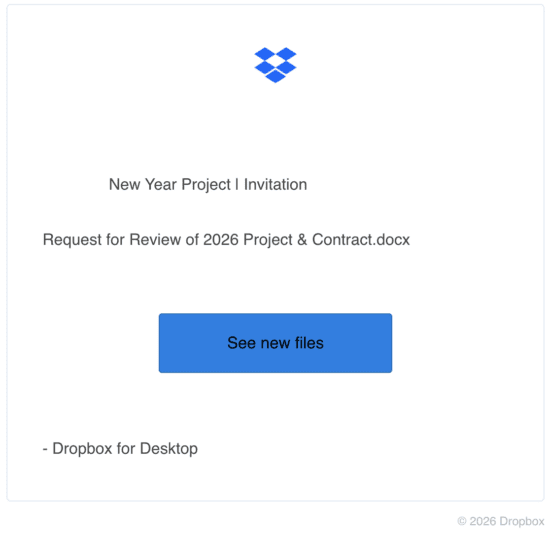
To be clear, it was illegitimate. The worst of it, though, is that I do often send out Dropbox links… so it was a pretty smart method (if perhaps just a coincidence) that could — and did, argh — catch out a few unsuspecting friends. Following the hack, I sent out a large-scale email to all those who had, unfortunately, been sent this malicious email from “me.” My message warned them about the nature of the hack and not to trust the link inside, etc. I therewith received a whole number of automated responses, including numerous messages that said that their emails are no longer functional (good for cleaning your address book). In the process, meanwhile, I also received a number of lovely, personal messages from individuals from my past, with whom I hadn’t exchanged in years. That turned out to be a happy accident.
The rise of fake-personal replies
During the same exercise, I also got three messages that tried to sound personal, but were clearly automated. Here are a few examples (names removed), that were more or less in tune with my message:
“How awesome it is to hear from you. We’ve received your message and will get back to you soon (definitely no later than 24 hours). If not, please give us a nudge and we’ll make sure you’re taken care of :)” Really?

“Hi Minter, Thank you for reaching out. I can see you’re sending a warning about a phishing email from your hacked account.”
“Thanks for reaching out. We will get to your email as soon as possible.” I’ve heard that one before!
“Thank you for reaching out. I understand the concern regarding the phishing email you mentioned. While this issue is outside the scope of XXXX company’s support, I recommend taking immediate action by changing your passwords and alerting your IT department as you mentioned. It’s important to be cautious with any suspicious links or emails.”
In the realm of irritations, I get about 3 unsolicited requests to be on my podcast. Over time, I have recognised many of the names. AI is clearly immensely used. One such “agent” is called Nikki Y who, just yesterday, wrote me again with the following opening gambit: “First-time listener, but enjoyed your episode with Jeremy Schwartz…” Turns out I have had a string of nine emails from Nikki going back to 2024, with a variety of opening lines about how great my podcast is and then her pitch quickly segues into why I need to interview such and such a person. Oy vé.
When ‘agentic AI’ pretends to be you
Outside of stuffing my inbox with unnecessary mails, I started to detect a pattern. These messages came on the back of another experience I had recently had with a fellow touting the wonders of agentic AI. In fact, in my exchange with him, it became quickly clear that he had delegated to his own agentic AI the authority to write in his name without any human oversight. The context: I was responding to this person’s solicitation to be a guest on my podcast. I then replied with a specific request and conditions by which I’d accept to have him on my show. To my surprise, I received a response immediately, acquiescing to my conditions. Wow, I thought to myself, that’s lightning speed. I was surprised and, if truth be told, also impressed.
He wrote: “Thanks for the clear and thoughtful response. I appreciate you sharing your process and the options regarding your books. I completely respect your system and would be happy to support your work in exchange for the opportunity to join your podcast.”
Then ensued an exchange of 22 messages back and forth over the course of two days. The first four of these I sent in full belief that I was exchanging with the individual in question. Wrong!
When I quizzed him (in an email) on the speed of the response and the possibility of AI being involved, I received this subsequent message:
“Haha, I love that! AI is definitely working behind the scenes to keep things moving fast. I appreciate you sharing your Calendly link. I am based in North America, so finding a time that fits both our zones is key.” He added his own Calendly link to boot.
Why this breaks trust
I was, to say the least, aggravated. Behind the scenes? Rubbish. More like: AI was front and centre! Three things happened to me at this point. First, the emails became less and less contextually relevant, if not repetitive. Secondly, I got irritated. It became clear that I had been duped (not an enjoyable sensation). Lastly, I had wasted my time. The Zoom meeting for the podcast recording I thought I’d confirmed (at least I had confirmed to him) never happened because he never showed up. Argh. Humans matter.
To be fair, he showed up on the second attempt (a week later) and was apologetic. But it was only because I bowed to his AI and booked using his Calendly link. And, whereas I needed 60 minutes, since his link only provided 30 minute slots (with a 30-minute gap in between!), I had to book two separate slots (i.e. 90 minutes) to ensure my one-hour exigency. Talk about shoe-horning into the AI’s world.
Guardrails for using AI in communications
So, if you’re thinking of using agentic AI to be so smart and efficient, and plan to give them the agency to replace you, be sure to know your audience and its tolerance for feeling duped. As much as I’m excited to explore and experiment with AI, I am also keen that people put up guardrails to avoid blemishes. AI can do many things, even many things well. However, to pretend that the AI is you, is not good practice. Secondly, it’s likely that if your sales (and their conversations) are being conducted by AI, you are bound to lose the thread and ownership, if not the quality of the relationship.
Have you noticed how many messages are populated with jolly — even appropriate — emojis. At the beginning, I found emojis somewhat charming. But that lustre has now worn off and been replaced with severe eye-rolling, as it’s more than likely to be yet another Chat-GPT creation. I’m really all for exploring how AI can help us, but automating everything is disingenuous if you consider trustworthiness and relationships an important part of your business, much less your life.
Do’s and Don’ts
Do:
• Do disclose when an AI agent is replying on your behalf, especially in anything that looks personal or relationship‑driven.
• Do use AI to draft, summarise, and handle logistics, then add a human pass to check tone, context, and accuracy.
• Do set clear guardrails for what your AI is allowed to say and decide, so it can’t make promises or commitments you wouldn’t.
• Do periodically review AI‑handled threads to stay close to your customers, audience, and partners.
Don’t:
• Don’t let AI impersonate you without disclosure, particularly in sales, support, or friendship‑coded conversations.
• Don’t allow AI to run entire relationships end‑to‑end; use it to assist, not to replace, the human bond.
• Don’t flood people’s inboxes with AI‑generated “personal” messages that you would never have taken the time to write yourself (and remember the Golden Rule).
• Don’t forget that trust is fragile: every undisclosed AI interaction that feels like a bait‑and‑switch makes it harder for people to believe you next time.
Your thoughts?