
The PADEL BAND: A Frustrating Journey into Padel Analytics
The Padel Band promised to revolutionize my game with cutting-edge analytics, but my experience with this Spanish-made device, retailing at €154.99 (along with a premium subscription to the app), turned into a month-long saga of disappointment. Here’s my review of what was billed as a game-changing piece of padel technology.
The Product and Its Promise
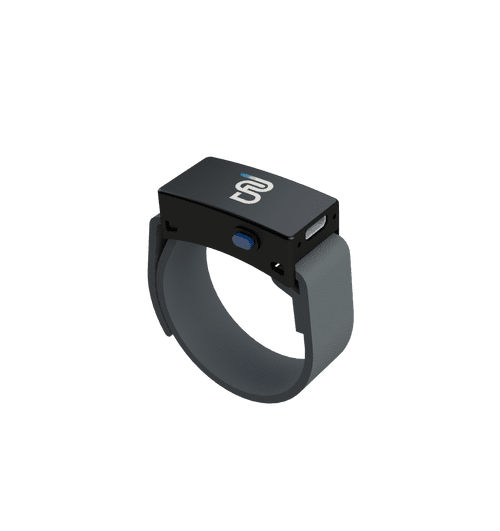
The Padel Band is a smart wearable device created by Spanish company Astur Advanced Technologies S.L., designed to transform any padel racket into an intelligent performance tracking system. This lightweight 12-gram band attaches to the top of your racket handle and promises to deliver comprehensive game analysis through sophisticated sensors and AI-powered insights. Where the AI came in, is anybody’s guess. IF it was truly using AI, the value-added component was entirely invisible. The device was developed by the Spanish team with a vision to “revolutionize how padel players harness and leverage data for maximum benefit”. The Padel Band positions itself as the most precise analysis and improvement tool for players of all levels, offering unprecedented levels of performance insights. As far as I was concerned, it was unprecedented in its level of deception!
Technical Features and Specifications
The Padel Band consists of two main components: the physical device with electronic sensors that attaches to the racket handle, and a mobile app that manages the device and presents results. The device specifications include:
-
Weight: Less than 12 grams, positioned at the racket’s center of mass
-
Dimensions: Case 35mm x 17mm x 12mm, Belt 150mm x 12mm
-
Battery: 3.7V Li-Ion 75mAh providing 8 hours of playtime
-
Connectivity: Bluetooth Low Energy 5.3
-
Charging: Micro USB with less than 2 hours charging time
-
Durability: Temperature range -20°C to 60°C, impact resistant
The elastic, high-friction band adapts to any racket without shifting during play. The device connects via Bluetooth to your smartphone, enabling simple session initiation in under 15 seconds (wherein starts the beginning of the frustration as I write below).
The Analytics Promise
According to the company, the Padel Band transforms your playing experience through five key capabilities:
-
Analyze your game – providing comprehensive match and training statistics
-
Generate custom graphics – creating personalized performance visualizations
-
Understand what you do right and wrong – identifying strengths and weaknesses
-
Discover how to improve – offering targeted improvement recommendations
-
Complete monitoring of your progress – tracking evolution over time
-

Total activity
-
Padel skills
-
Number of shots
-
Intervals
-
Shot frequency
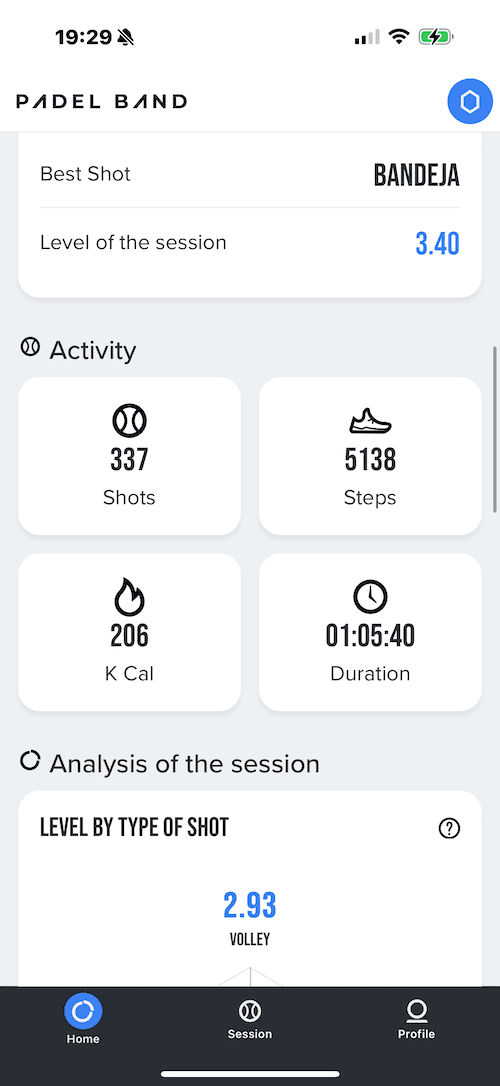
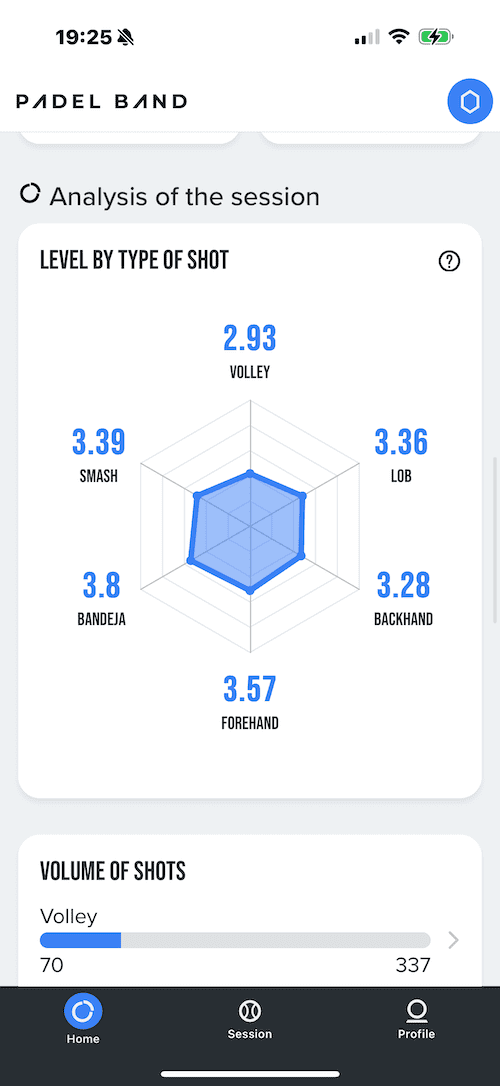
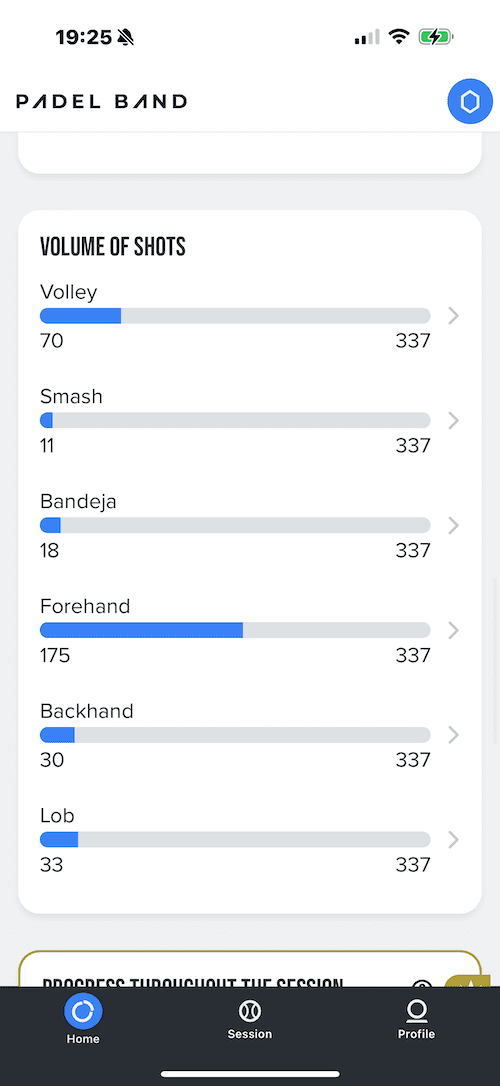
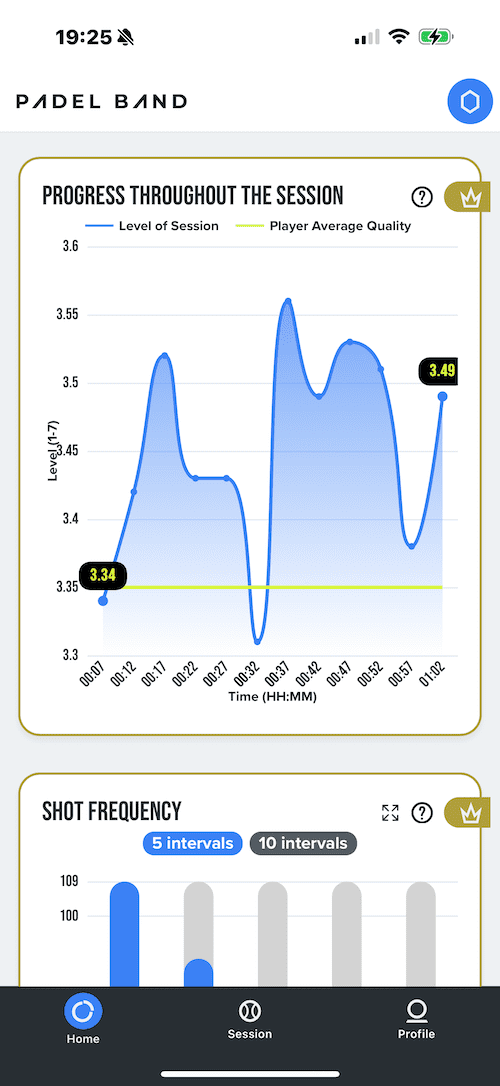
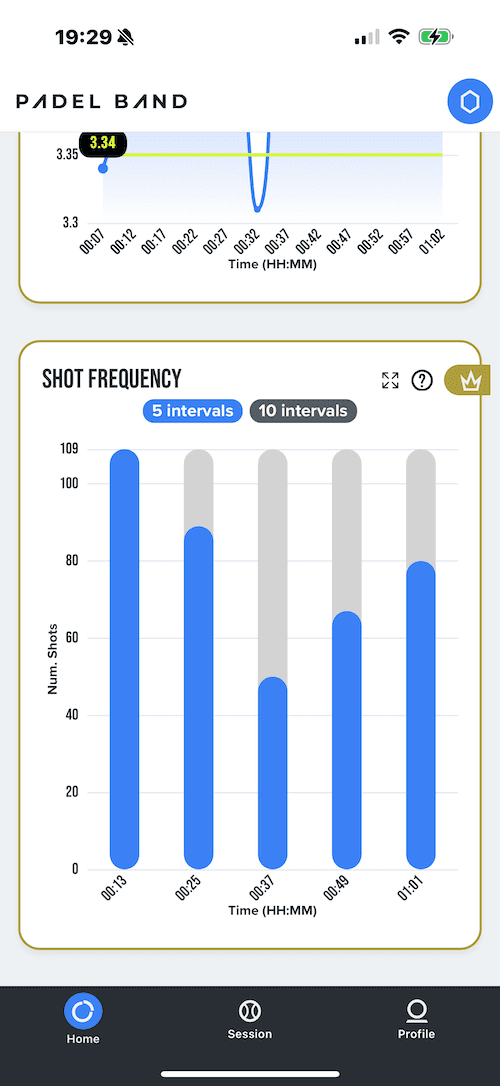
The system analyzes two fundamental metric categories. Session-level analysis includes general metrics like calories burned, steps taken, and total shots, plus padel-specific data such as individual shot counts (forehand, backhand, volley, bandeja, lob), average execution quality on a 1-7 scale, and temporal shot distribution.
Personal player analysis identifies your playing style (offensive or defensive), determines your most effective shot and areas needing improvement, and establishes your overall skill level. This data creates your personalized “player card” – a visual summary reflecting your evolution as a padel player.
First, let’s point out something positive!
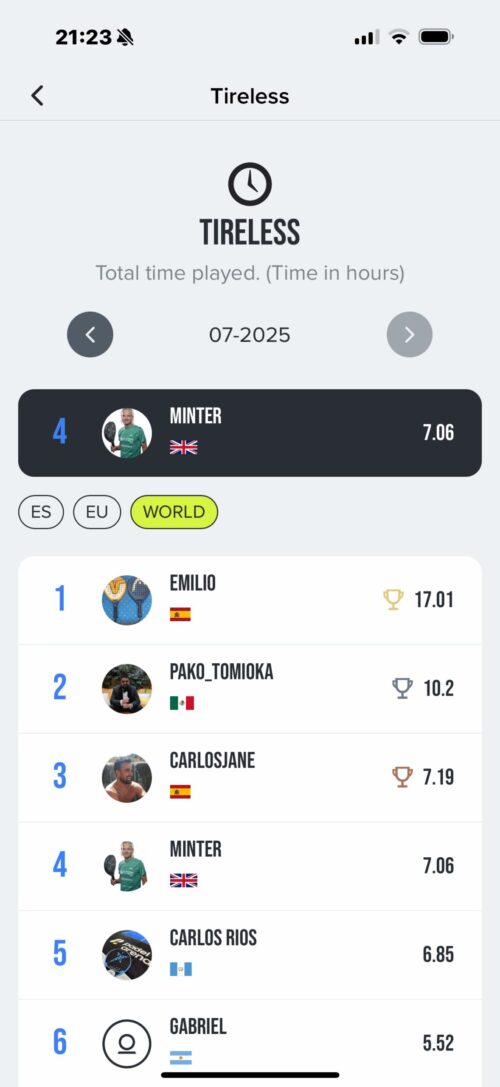
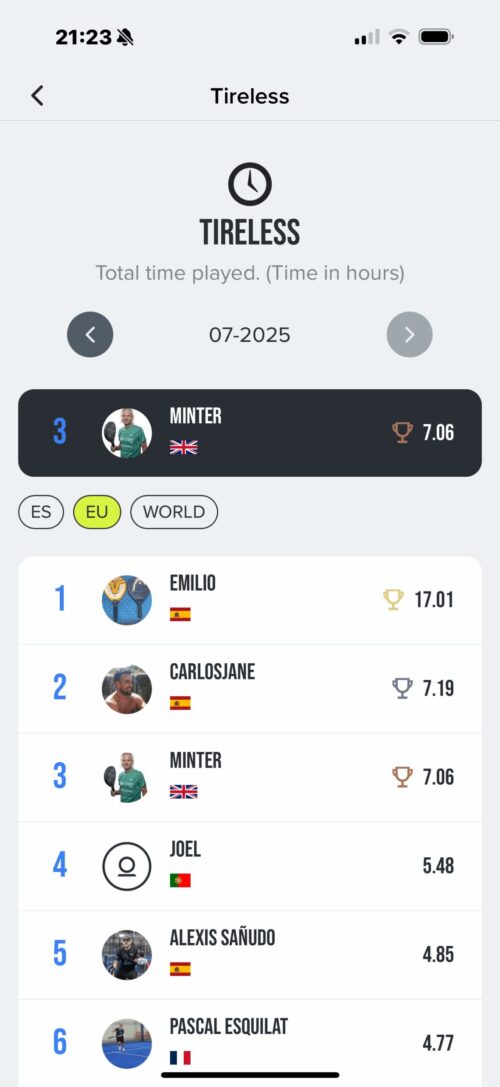
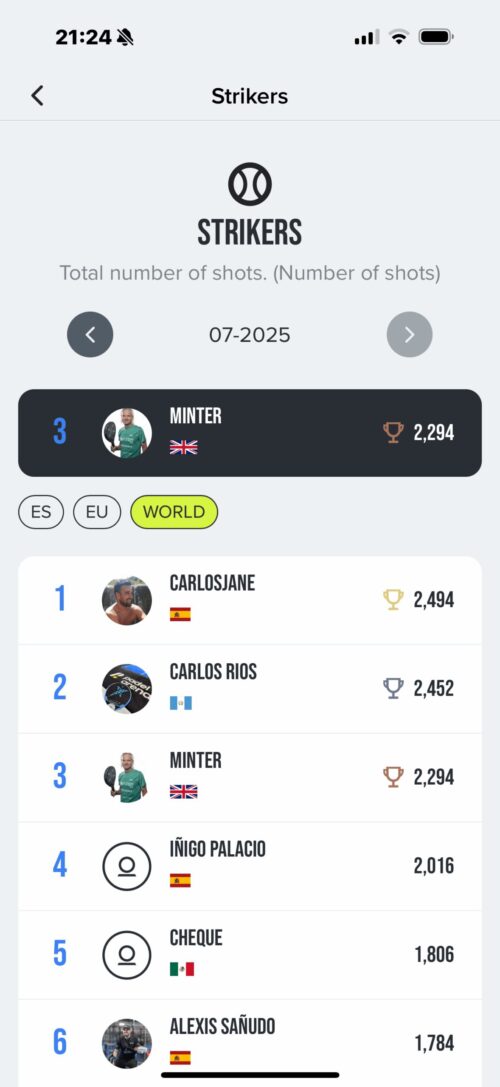
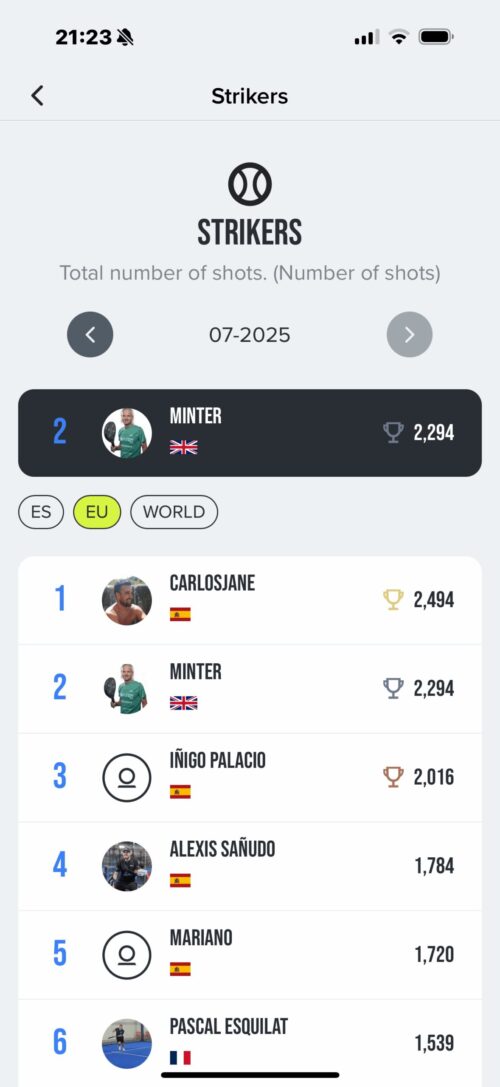
It wasn’t all doom and gloom, although, the more you read on, the more likely you will see that this wasn’t a hit. One of the interesting ideas they had was to create rankings for the Padel Band users. These came in three categories and were split into three regions: Spain, EU and the World. The three categories were: Tireless (total time played), Strikers (number of shots made) and Consistent (total number of sessions played). Judging from my performance, it was clear that there were few users… otherwise, I wouldn’t have wound up on the leader board so easily I dare say.
-
Tireless
-
Tireless
-
Strikers
-
Strikers
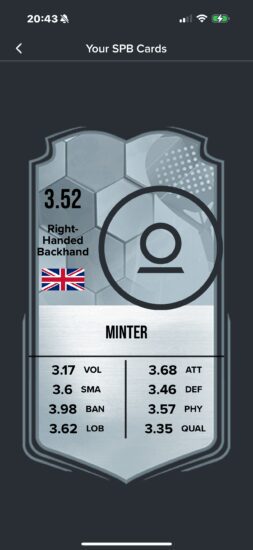
Another amusing part of their offer was the personalized “SPB Card”. The card displayed my skills divided into eight categories: Volley, Attack, Smash, Bandeja, Lob, Defense, Physicality, and Quality, along with an overall rating of 3.52/7. According to the system, my best shot was the bandeja. It may very well be that I’m a 3.52 (versus my current 4.9 on Playtomic) but the “analysis” leaves you short on substance. What element of each shot is good or lacking? Regarding the Bandeja rating, of course, it may be mistaking it for my vibora? Surely these are two different shots for me.
It’s not fancy and I was surprised that I was put as “Backhand” player… probably because of the number of sessions recorded as such (and errantly so).
My Disappointing Experience
Delivery Headaches
My excitement about receiving cutting-edge padel technology quickly turned to frustration. The ordering process with Viborace proved surprisingly complex, with delivery logistics becoming a month-long ordeal due to border complications. By the time the device finally arrived, my initial enthusiasm had significantly waned.
Technical Problems Galore
Once I finally had the band in hand, the real problems began. The device proved finicky and unreliable, with approximately 25% of my games failing to register. Even more frustrating were the frequent sessions that resulted in infinite loading loops, leaving me with no recorded data despite completing full matches. The connectivity issues weren’t just occasional glitches – they became a consistent pattern that undermined the entire purpose of the device. Nothing destroys confidence in a technology product quite like knowing there’s at least a one-in-four chance it simply won’t work.
Questionable Analytics and Lack of Transparency
With all the graphs and data provided on the app, I remained deeply puzzled about the methodology behind these ratings. How does the device assess lob quality for height, depth, and efficacy? Where and how do chiquitas get scored in the system? How is depth and placement evaluated? These fundamental questions about the scoring system went unanswered.
When I reached out for clarification about how ratings for volleys, smashes, bandejas, and lobs were constructed, their response was disappointingly light on substance. They mentioned the ratings were based on “professionals” but provided no meaningful details about the actual analytical methodology.
User Reviews Echo My Concerns
My experience aligns with other users’ frustrations documented in app store reviews. Spanish users have reported similar issues:
“Mucho por mejorar” – One reviewer noted that “they need to hurry up and improve and update the app to be accurate. For example, it has synchronization problems, doesn’t measure steps well, and the statistical intervals don’t make sense many times (you play 1h20′ and it marks intervals between 1h10 and 1h36′ ???). The product has potential, but they need to hurry to improve it” {Source: Apple App Stores}.
“Etapa muy joven del producto no la pillen!” – Another user warned: “I hope they improve the app and statistics they capture, they could with the same technology know position on court and give more explanations of the metrics and how they arrive at them, I trusted and got it in the presale and it has been a disaster nothing works well for 100€. The intention is good, I hope they make me change this review with a significant improvement”.
Even more concerning, one reviewer reported: “Bad product – The app seems fine at first, but it really just doesn’t work. First time I couldn’t even connect my band to the app, on the next time I connected and saw that there are three games/sessions already exists. Next time when I started my own game/session I was happy it started counted something, but when I finished playing I opened the app and it was gone, nothing recorded. The worst part is that I tried contacting them to replace the device or refund it, but they don’t reply to me!”.
Several Spanish padel enthusiasts have shared their experiences with the device:
Miguel García, a Spanish YouTuber who reviewed the device, noted that while the packaging was impressive and the device was easy to set up, he experienced mixed results with the analytics. In his first session, the device recorded 624 shots over 1 hour and 42 minutes, with his best shot being the smash and worst being the lob. However, he (like me) admitted uncertainty about how the quality metrics were calculated. [Source: Youtube]
A Reddit user (llum-foc-destruccio) reported wearing the band at the throat of the racket rather than the grip because “it’s annoying to play with the band at the top of the grip.” They found it “exciting to receive feedback on the various types of shots” with tracking of shot counts and levels, but had only used it once before forming a definitive opinion [Source: Reddit forum]. I’m sure that, since this was just his initial experience, the longer he tried it, the more frustrations would have appeared.
Language Barriers and Customer Service
If you’re hoping for the world to use your app, you need to accommodate the languages. If you don’t speak Spanish (which I fortunately do), navigating their website and customer support would be challenging. The company is based in Spain, and much of their detailed support documentation and customer service appears to be primarily Spanish-focused, creating additional barriers for international customers.
Pricing Concerns: The “.99” Psychology
The retail price of €154.99 raises an interesting question about modern pricing psychology. In an era where consumers are increasingly sophisticated about marketing tactics, does the “.99” pricing convention still make products “sound cheaper”? The Padel Band’s pricing feels somewhat dated in its approach, especially for a premium technology product targeting serious padel players who are likely making considered purchasing decisions rather than impulse buys. Why not call a spade a spade: i.e. 155E?
The Bigger Picture: A Product with Potential
Despite my negative experience, the Padel Band represents an interesting attempt to bring data analytics to padel, a sport that has seen explosive growth with over 25 million players worldwide. The concept of having a “coach in your pocket” with personalized insights is appealing, especially as padel continues its rapid global expansion. However, the execution falls significantly short of the promise. The fundamental issues with reliability, unclear analytics methodology, and poor customer service suggest this is a product launched before it was ready for market.
Final Verdict
The Padel Band costs €154.99 (or €115 with current promotions), but my experience suggests this money would be better spent on actual coaching sessions or court time. The month-long delivery delay, 25% failure rate, analytical opacity, and unresponsive customer service create a perfect storm of frustration.
While the underlying concept has merit, the current execution makes the Padel Band impossible to recommend. Until the company addresses the fundamental reliability issues and provides transparency about their analytical methods, players seeking to improve their game would be better served by traditional coaching methods or more established sports tracking technologies.
By the time I realized the device’s limitations, the return window had long passed – a timeline made worse by the initial delivery delays. For a product promising to revolutionize your game, the Padel Band instead serves as a reminder that cutting-edge concepts require reliable execution to deliver value.
Rating: 2/10 – The concept earns points, but the execution fails on multiple fronts, making this an expensive disappointment for serious padel players.