
The Joy of Padel podcast with Victor and William Dial (JOPS01E01)
Victor Dial is my father and a lifelong player of all racquet sports, including lawn tennis, real (court) tennis and squash, before becoming a padel tennis enthusiast. He had a long career in the automotive industry, rising to be Chairman and GM of Ford France, then VP of Sales and Marketing at Peugeot Worldwide. Simultaneously, he was Chairman, and then CEO as well of the American Hospital of Paris. He was board member for many companies and lived the majority of his adult life in Europe, between the UK, Belgium, France, Switzerland and Spain. In 1988, he was awarded the Legion of Honor by the government of France. To hear more about his life and career, check out this podcast with him.
William Dial, my half-brother, is a very accomplished lawn tennis player who picked up padel very early in life (see photos below). As a lawn tennis player, playing mostly in France, William was champion of Paris for the 13-14 age group, and participated in numerous international tournaments with the French Federation of Tennis. He reached the level of 2-6 (which is bloody good) in the French ranking system. He currently works in real estate and is based out of Madrid. Here are William’s LinkedIn and Instagram profiles.
To listen to the show:
To listen to The Joy of Padel podcast, you can use the embedded player above, or go find it on Spotify, Apple Podcasts or any number of other podcasting services listed here.
Send in your questions or reactions:
Please send me your questions — as an audio file if you’d like — to nminterdial@gmail.com. Otherwise, below, you’ll find the show notes and, of course, you are invited to comment. If you liked the podcast, please take a moment to review and/or rate it! ¡VAMOS!

Padel royalty
Victor Dial (left) with Henry Kissinger (middle) and Baroness Sandra di Portanova (right) – in Acapulco at the Corcuera court c 1984

Classic 1980s!
Victor Dial with Duc de Luynes, Stephane Collaro Philippe Junot, and Fredo Bauche

3 generations of Dial padel players
Victor Dial with son Minter and grandson Oscar Dial

Joyous
William Dial, aged 4, already beaming.

A young William
William Dial, 4, what a backhand! Note he’s levitating!

Brothers in arms
Minter (host) with William Dial in Aigle, Switzerland
Further resources for The Joy of Padel:

The Joy of Padel podcast, hosted by Minter Dial, a padel tennis player since 1974, is an exhilarating show that delves into the captivating stories of notable padel personalities worldwide.
Meanwhile, you can find Minter's other podcast, The Minter Dialogue Show (in English and French), in this podcast tab, on Spotify or via Apple Podcasts.
About the host: Minter Dial
Minter Dial is an international professional speaker, author & consultant on Leadership, Branding and Transformation. His involvement in sports has been a lifetime passion. Besides playing 18 years of rugby, captaining athletics teams, coaching tennis and playing squash for his university, he’s been a lifelong player of padel tennis, starting at the age of 10, from the time of its very first public courts at the Marbella Club in 1974.
Then, after a successful international career at L’Oréal, Minter Dial returned to his entrepreneurial roots and has spent the last twelve years helping senior management teams and Boards to adapt to the new exigencies of the digitally enhanced marketplace. He has worked with world-class organisations to help activate their brand strategies, and figure out how best to integrate new technologies, digital tools, devices and platforms. Above all, Minter works to catalyse a change in mindset and dial up transformation. Minter received his BA in Trilingual Literature from Yale University (1987) and gained his MBA at INSEAD, Fontainebleau (1993). He’s author of four award-winning books, including Heartificial Empathy 2nd edition (2023), You Lead (Kogan Page 2021), co-author of Futureproof (Pearson 2017); and author of The Last Ring Home (Myndset Press 2016), a book and documentary film, both of which have won awards and critical acclaim.
His current work is around fostering more meaningful conversation, with his featured publication on Substack: Dialogos, Fostering More Meaningful Conversations. It’s easy to inquire about booking Minter Dial here.
View all posts on padel tennis by Minter Dial
Full transcript via Instinct
Transcription courtesy of Instinct
Minter Dial: Buenos días, chicas y chicos. Hello and welcome, a very warm welcome to the Joy of Padel podcast, spreading and sharing the supreme delight of this wonderful and fast-growing game. I’m your host, Minter Dial, and this podcast is brought to you by Padel 1969, the largest manufacturer of premium padel courts. One court for life by Padel 1969. So this is the inaugural season of the Joy of Padel podcast, and to start with, we’re going to do an episode once every fortnight. Episodes will drop every other Wednesday at 12:00 noon London time. Please let us know what you think about the show by putting up a rating and review. So this first episode is a special one in that it’s with my father and my brother William, with whom I spent many a fabulous hour playing, laughing, and sweating on a padel court over the years. My father has a legitimate claim to be one of the first ever padel players, as he played on the very first Corcuera court in Acapulco, as you’ll find out. And my brother William, among other family members who love to play padel, is a far better player than I am, based out of Madrid. Please enjoy. Game on. Vamos. And the Joy of Padel. Welcome, my father and my brother. So we are a padel tennis family, bona fide padel tennis family. And so I wanted to invite both of you to to talk about your trip, your route to padel. So Pa, let’s start with you as you’re the doyen of the family and the doyen of our origins into padel. What was your route into padel?
Victor Dial: Well through tennis of course and um I used to go to Marbella lovely place and there were there weren’t even many tennis courts in those days in Marbella let alone padel tennis courts and the one tennis court that we sort of was nearby was at the Marbella club and it was a tile surface was tile and there was a slight uh sort of bubble bubble in the way the tile was launched for draining it was a pretty pathetic court and that didn’t have a it didn’t have a net it had a string so you was never sure whether the ball was over or under the net the so-called net but it was very primitive and so basically we we ignored it and then Alfonso came one day the prince Alfonso who was the president owner of the Marbella club who had just returned from a trip to Acapulco and full of enthusiasm had taken the measurements of what he thought would be a better game to have at the Marbella club than the tennis which no one played there and so he built this tennis court or we didn’t know what to call it actually this court that became a padel tennis court on the grounds of the Marbella on the grounds of the on the back of the former tennis court and that was in 1974 it was a pretty strange looking thing and no one knew quite what it was supposed to do but then Alfonso showed us these rackets and little wooden rackets that no one had seen before and I don’t know where they came from but he had them and he started showing it around and that’s how one day one of my friends pointed me in the direction you ought to try that and I was a little skeptical at first but I finally came around and of course the rest is history
Minter Dial: So who did you play with? I mean, at the Marbella Club, it’s a very exclusive club. Were there other people you got to play with, or did you have to scramble and scrounge, as we have sometimes today, to find a good good team?
Victor Dial: Well, Alfonso had a wide circle of friends and he was a great promoter of whatever he was promoting. If he was and if he decided he wanted to promote his padel tennis, then he knew who to go to and he’d organize groups to come out and play his pals. And some of them were pretty well known, so that would draw a crowd a little bit. And so they’d talk about it and among their friends and that’s how it sort of got going. And I I suppose that I waited probably a year from the first time I saw the court until I actually stepped on the court and took a racket in my hand. But once I did that and once I found out how how much fun it was, nothing could stop me. And I just dropped tennis and took up padel. I wasn’t very good, but I had fun.
Minter Dial: You also had a very famous ball boy as far as I recall.
Victor Dial: Well, there was a wonderful there was a wonderful young kid that uh Alfonso got to manage the the uh the use of the sign up for his time on the court. They have towels for the guests of the club who played there and have water and so on and he was about 12 years old and he was very little and um but he was a nice kid and and uh so when we needed a court he would be the guy and uh but at the end of the game completely exhausted we would leave the court and there’d be there’d be Luisito sort of looking forlorn. And one time I asked him hey let’s you and I hit some balls after the game and so he he gave him one of my rackets and he started hitting and he could hit it. He obviously had been doing some practicing in in off hours. And so he hit it and he’s enthusiastic and so I made a point frequently of asking him to play if I could but sometimes I couldn’t because he was so exhausted but that’s how we became friends and stayed friends until a very long time.
Minter Dial: Of course, Luisito Nieto, he becomes the manager owner, I think, of the club in San Pedro de Alcántara. Exactly. So, what about you, William? You are my younger brother, son of Victor. What was your route to padel? Do you recall the beginning of your padel days?
William Dial: Um, well, it was much later, of course, than that, but um, yeah, in Saint-Tropez, at the time there was no padel club, so the only way you could play was in private courts. And in Saint-Tropez, my uncle Olivier had a padel court in his house, um, and some friends of her her father had too. And I guess I saw pictures of me playing much younger than I can remember.
Minter Dial: Isn’t that true? It’s thank goodness for photographs.
William Dial: At the time, yeah, you had printed photograph. Now it’s everything digitalized. But at the time, yeah, I had so many pictures of me playing
Minter Dial: Well, and and it’s so cute to see you, of course, for me, when you were that small, you’re a toe head, really very cute small little boy, the racket, you know, almost half your size. And of course, you have turned into something of a different kind of padel player and man. For for both of you, um when you look back at that very beginning of padel, you obviously were in the very beginning of things and to think of Olivier’s court, William, it was a very different type of padel court than it is today. Can you describe Olivier’s padel court? Yeah,
William Dial: Well, it was concrete walls all around. The fences were like not the same as today. And at the time, when I was a little, we were playing padel with the rules of ping pong. So we’re doing first to 21. And we’re changing serve every two every two serves. And there were no real rules. Every house had his own rules, and we’re kind of trying to have fun. And I remember Olivier had I think my first racket was a racket was called written ice on it. And then he was taking those rackets coming from the states. I remember one was called the Sorba Plus, which was the best one. Everyone was fighting to get that racket.
Minter Dial: Yeah, the super special 450 g
William Dial: Exactly, and everyone wanted that racquet. We thought that if we were playing with this one, we would never lose. But nothing to do. Rackets were much heavier. United States control, courts, nothing to do. There was no, you know, it was hard court, concrete walls, very, very warm. We’re sweating a lot more than with the glass windows. But, you know, it came through until now.
Minter Dial: Yeah, playing those those walls of course they can find the heat. And Pa, the other thing that’s important to recall is that you actually went to Acapulco. And so you have actually played on the original original padel courts. Tell us about that experience.
Victor Dial: Well, that was a great experience. It was it was it was in 1984, so it was 10 years after its first appearance in Marbella, and I’d been playing during those 10 years and You become good. And I became a little better anyway, and um and uh I went on a trip invited by a friend who incidentally just passed away a couple days ago, and um we stayed at his house where uh and we got to know we went to a party with the next-door neighbor, a guy named Ricky de Portanova and his wife Samantha. And um and they had a padel tennis court, which uh likes of which I’ve never seen before and probably still doesn’t exist anywhere. It was a outside court, of course. There was a there was a tent, sort of a structure in case of extreme sunshine. And it was lighted at night by clean lights that you normally associate with films, during films. So there’s a very, very bright light. It was like being daylight in the court. And the the the seating beside the court was in a sort of a covered area with leather, expensive leather furniture with waiters waiting in black tie in air conditioning. This was air even though it was open, it was air conditioned so that the people watching the match could not be too overly warm. And um we’d have these games that were fun, and um and I one time was invited to play with the partner of Henry Kissinger, which was a big thrill for me because I was quite a fan of his. And um and he he took a she he seemed to enjoy playing with me. And so he’d call me up. He was on vacation nearby, and he’d call me up and says, Victor, do you want to play today? And I had this German accent and and um I’d say yes. And I I said to him, by the way, Henry, you’ve got a lot of people like to play with you, but you seem to like to play with me. Why is that? He says, because I want to win. I had this German accent, and um and it was really funny. But these women would come and watch him because he was a very it wasn’t particularly beautiful, but he was seductive by his brain and his charm. And the women flocked to him. It was really something to see. And they just abandoned me. I thought I was not too bad, but they totally abandoned, didn’t pay any attention to me at all, and just sat around and listened to Henry telling his stories about his career and various parts of his life. It was very interesting, man. So that’s sort of my my first big
Minter Dial: partner. Well, let’s say that that is the joy of padel being lived. All right, so William, you you are a great player. I’ve played with you a number of times. Uh you have great touch, you have a huge amount of power. How would you describe yourself as a player? What animal would you use to describe William the padel player?
William Dial: I would like to be a lion. Um, yeah.
Minter Dial: Why a lion? Why a female lion or a male lion?
William Dial: Well, I hope a male. Uh well, because I’m quite aggressive on the court, meaning uh I’m an offensive player. Uh I like to more likely being at the net and block uh the shots and keep being offensive rather than be defensive. So for that, you need to be quite quick, reactive, uh read the game because it’s obviously more tricky. You can be tricked by some shots or so you got to be very uh reactive.
Minter Dial: Love it. Pa, what about you? What animal are you as a padel player?
Victor Dial: Well, there’s the animal I am and there’s the animal I’d like to be. I’d say I’d I’d be a fox. Why? Well, a fox a little bit sneaky and uh and try to fool my opponent into thinking it’s going one way and then taking him the other way. So I try to be deceptive. Love it. And uh and then sort of be deceptive, I sort of got to deploy ruses to get his attention elsewhere. I’m not quite sure why, but uh
Minter Dial: Well, I you haven’t you haven’t been playing so much of course these days, but do you recall what was your favorite shot? Yes.
Victor Dial: Definitely. In the old days, the walls were very, very thick cement, the outside the court. And there was also a wire part of the side wall particularly. And there was always, there was never exactly a smooth surface, so there was a little ledge that sort of formed vertical going up and down the wall where the wire was joined to the cement. And that was a little space, maybe one inch, maybe sometimes a little more. And if you hit the ball into that place on the side wall where the net, where the net and the wire net and the cement joined, then you didn’t know where the ball was going to bounce out. It could bounce out straight or it could bounce out sideways. And so that was a really great shot to be able to pull off. It’s hard to do, but it’s a great shot and it is almost always a winner.
Minter Dial: It reminds me of the tambour in real tennis. Yes, that’s it. Which today in in padel it doesn’t happen, but it’s called the el pico in in padel today. It’s much less pronounced, but you still want to catch that moment between the glass and the and the wiring because right in there you don’t know which way it’s going to go. That’s right.
Victor Dial: That was fun. That was fun. And when you hit it that it was really
Minter Dial: great feeling. Because back in your day at least, the when you hit that spot and it and it caught the wall, it could even come backwards towards the net. Yes. Yes. Yes. I remember. It was a brilliant shot. It was a brilliant shot. Love it. William, what about you?
William Dial: I would say the por por tres to smash smash it out of the court.
Minter Dial: Por tres – the one that goes back wall and out by the 3-meter wall.
William Dial: Exactly. You know, I’ve been playing more tennis than padel, so you know, smash is an important shot and as I’m I think quite powerful, sometimes it works.
Minter Dial: I can confirm you certainly are. What about, how about which shot would you like to improve on and why? I mean, you’re a very accomplished player, but which ones do you think of, huh, this is one I could do better on.
William Dial: Well, there’s one definitely shot I need to improve is the bandeja, which is not a natural shot when you’re a tennis player and very important when you play padel. I was part of a tournament last week and the number 15 in the world came and played an amateur tournament and it was just so impressive to see him playing and he was playing with a guy that had no clue and he was going to take all his balls and he had such a good bandeja. You know, I always tried I always tried to take the ball as soon as possible when it goes up in the air so I don’t let it, you know, come down in order to take the bandeja. So sometime, you know, I just try to hit it on the fence slowly, but the bandeja makes much more damage in the opponent game. So definitely the bandeja.
Minter Dial: Yeah, so you don’t let it come down to your shoulder level. You kind of hit it a little higher, which means it’s going to bounce up a little bit more. Got it. Exactly. Exactly. Love it. All right, Pa, what about you? What if you think back to your career on the padel court, what’s the funniest thing that ever happened to you on a padel court?
Victor Dial: Well, I maybe I could do this. I go back to the match with Kissinger. And um I was running all around trying to get the balls back and Kissinger uh at one point uh he was trying to get us to stay out of the way. He was to leave the court clear for me to win the point. And one time he wasn’t able to get out of the way fast enough and the ball came and hit him right in the stomach. I cut it off. Classic. And he said he looked up and he said oh he said that’s the best shot I’ve made all day.
Minter Dial: It’s cute. Yeah, of course, we try to get out of those ball out of the way of those balls, not so easy. Hey, William, what about you? Do you have a funny shot that you can recall?
William Dial: Uh well, sometimes you got some very funny shots because uh when you hit a let or uh when you have to do smash and you just hit it very hard and just hit the let and then make funny go on the you know, you got to get there’s plenty of very funny moments or when you when you hit a a smash and you don’t hit it perfectly and it just bounces on the fence on top of the wall and not hitting the wall, then you has all those funny uh bounces and you have no clue where the ball goes. Sometimes it’s very good, sometimes it’s very bad. It just come back easy for the opponent. So you have all those fun shots that makes padel so entertaining.
Minter Dial: I mean at the end of the day William it feels like when you do when you have those shots that that happen you you I feel all of a sudden the humility because you can’t master that shot and you get stuck and you get it’s a little awkward.
William Dial: Exactly, that that’s I think those shots that makes padel so funny because you don’t control everything and all those bounces can go anywhere and and now we play with a golden point at 40 all. So, you know, one missed shot just can change all the course of the set.
Minter Dial: Yeah, it’s like that little one little shot, one little thing can absolutely change the direction. Or reflex. Or reflex. And so for you, William, uh in the in the padel you’ve been playing now for over 30 years, right? Um what would what would be the life lesson that padel has brought to you?
William Dial: It’s never over. Sometime, you know, in tennis, uh when you have a smash, well, the point is over in 95% of the time. Um and in padel, you always have a chance. You just need to go for it. Uh even if someone hits a smash por tres, which is getting out of the court, you can still run out of the court and get it back. Or when you hit the fence, you can have a a bounce that is that helps you and not against you. So, no matter how desperate the situation is, there’s always a way to to to to get back in the point and just never surrender.
Minter Dial: I love it. It is never over. Pa, what about you? What’s the life lesson that padel brought to you?
Victor Dial: Well, um I was thinking about the fact that when we were in those early days of the padel, we were so excited about it and there were um I remember we used to sit around and say, how can we make money out of this? How can this is such a fun game? How is it how how can we get it on television or get it promoted? Not so much on television because there wasn’t that prominent in those days, but do do stuff to make padel tennis game better known and more popular. And by the way, then this would get a lot of the sort of expatriate players and those who were looking for jobs, give them something to keep them going while they’re in between games. And um and of course we we just sat around for hours and hours chewing this fat and how to do it and how to do it and there was no the glass courts are what finally did it. That’s what finally opened up padel really to the grand public and the television and the tournaments that you could go and see. But when you only had a few few meters of space available to watch a match, it was hard to draw a crowd. But now of course it’s really it’s taking off and I’m so glad it took a long time but it’s finally taking off.
Minter Dial: Beautiful. And all right, let’s finish with one question, which is, is there any other sport that equals padel in your mind, either to play or to watch?
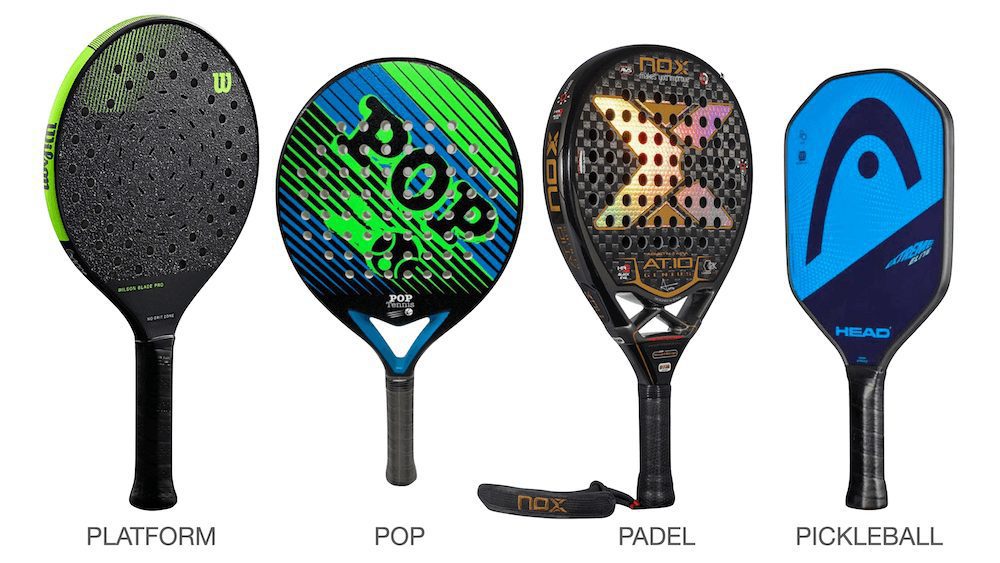
Victor Dial: Well, this is to my mind, it’s the best of all racquet sports, really the best. And it kills me to see this pickleball that I’ve been watching in the United States now, which seems to be trying to do what padel tries to do, but the pickleball is just not in the same league. And so I’m just out and out promoting our padel tennis. And long may it live.
Minter Dial: Amen. William, what about you?
William Dial: I think it’s just the perfect game between tennis and squash. Two games you play well. I do like to play squash as well, but I mean it’s really the in between because you’ve got some squash shot. I mean when the ball is very low and bounces on the window and you got to take it back and try to do a lob, you need to change your wrist and do as a squash shot. So it’s really the the the it’s with the glass windows as well. It’s much easier to see, to watch and you have those points that are very impressive when you look on YouTube the highlights of all the pros playing all over. I mean it’s very nice. We have fun watching it.
Minter Dial: I certainly do too. Hey you guys, thank you for coming on the Joy of Padel podcast. A last word for your word on padel, Pa.
Victor Dial: Minter, thank you for doing this. Thank you for being a promoter of this sport that we all love, and I’d love having my children following in my steps, illustrious field of footsteps. Hey, William. having fun with padel. It’s really a great thing. I love it. Love watching you and seeing you and talking to you.
Minter Dial: Brilliant. And William, what about you?
William Dial: question for you now. Um, you Minter, how how did you start into padel and be so passionate? I know you came from tennis, but how did the whole thing came up?
Minter Dial: Well, so I’m I’m going to tell you about why I’ve launched Joy of Joy of Padel. And of course, there’s a little bit of a hint to another book that was rather famous a long time ago. But what I think society is missing is reasons to commune, to get together. And it’s a great sport. And I love the professional padel league that’s been launched in America because it has mixed doubles. And so you you can see that it’s a very social sport. People talk during the point. It I feel like a game is half done if I don’t have a cerveza, a beer after the game. It’s um you play with a smile as opposed to tennis where you play with a grunt. And and squash you play with a you know, you’re about to die on a squash court. Just for some reason brings a smile to my face and that’s what I want to share and spread.
Victor Dial: Honorable Mayor, thank you.
Minter Dial: So I hope you’ve enjoyed this Joy of Padel episode. Please don’t forget to subscribe to be the first in queue for the next episode. And if you like what you hear, please do share around with other padel aficionados. This is a sport that deserves to be played by absolutely everyone. And if you’ve got a story that you’d like to share, please send me an email or a better yet, a voice note at nminterdial@gmail.com. With that, vamos.