The Joy of Padel podcast with Pep Stonor (JOPS04E03)
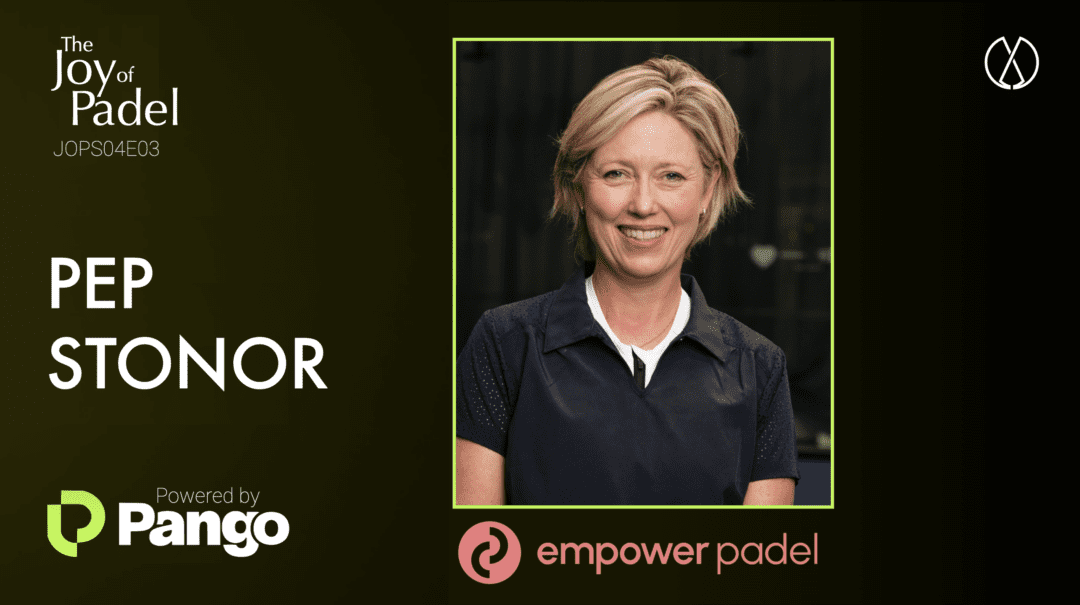
In this episode, I sat down with the inspiring Pep Stonor, a passionate padel player and founder of Empower Padel. Pep shares her journey from discovering padel on a holiday in Portugal to becoming an early adopter in the UK during the COVID lockdowns, and eventually representing Australia at the international level. Together, we explore the unique social spirit of padel, the transition challenges for tennis converts, and the empowering potential of the sport—especially for women and girls.
You’re bound to relish hearing about the power of fun and community in sport—especially for women. Why padel is the perfect entry point for nervous first-timers or rusty returners. Why real gender equity in padel starts from the grassroots up as well as about the surprising barriers women face (including those tricky ratings apps!).
To find out more about Pep Stonor:
- Find or follow on Instagram: @empower_padel
To listen to the show:
To listen to The Joy of Padel podcast, you can use the embedded player above, or go find it on Spotify, Apple Podcasts or any number of other podcasting services listed here.
Send in your questions or reactions:
Please send me your questions — as an audio file if you’d like — to nminterdial@gmail.com. Otherwise, below, you’ll find the show notes and, of course, you are invited to comment. If you liked the podcast, please take a moment to review and/or rate it! ¡VAMOS!
Further resources for The Joy of Padel:

The Joy of Padel podcast, hosted by Minter Dial, a padel tennis player since 1974, is an exhilarating show that delves into the captivating stories of notable padel personalities worldwide.
Meanwhile, you can find Minter's other Evergreen podcasts, entitled The Minter Dialogue Show (in English and French) in this podcast tab, on Spotify, Megaphone or via Apple Podcasts.
About the host: Minter Dial
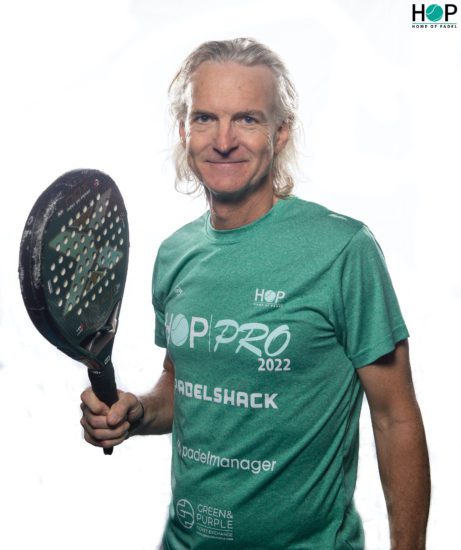
Minter Dial is an international professional speaker, author & consultant on Leadership, Branding and Transformation. His involvement in sports has been a lifetime passion. Besides playing 18 years of rugby, captaining athletics teams, coaching tennis and playing squash for his university, he’s been a lifelong player of padel tennis, starting at the age of 10, from the time of its very first public courts at the Marbella Club in 1974.
Then, after a successful international career at L’Oréal, Minter Dial returned to his entrepreneurial roots and has spent the last twelve years helping senior management teams and Boards to adapt to the new exigencies of the digitally enhanced marketplace. He has worked with world-class organisations to help activate their brand strategies, and figure out how best to integrate new technologies, digital tools, devices and platforms. Above all, Minter works to catalyse a change in mindset and dial up transformation. Minter received his BA in Trilingual Literature from Yale University (1987) and gained his MBA at INSEAD, Fontainebleau (1993). He’s author of four award-winning books, including Heartificial Empathy 2nd edition (2023), You Lead (Kogan Page 2021), co-author of Futureproof (Pearson 2017); and author of The Last Ring Home (Myndset Press 2016), a book and documentary film, both of which have won awards and critical acclaim.
It’s easy to inquire about booking Minter Dial here.
Full transcript of interview via CastMagic
This transcription comes courtesy of Castmagic.io an AI service for podcasters.
Minter Dial: Madame Stonor. Pep Stonor. Great to have you on the pod. Talk about some padel and Empower Padel in your own words, Pep, as I like to start. Who is Pep Stonor?
Pep Stonor: Thank you, Minter, for asking me onto your podcast. I’m glad we finally got here to record. Pep Stonor is a passionate padel player just like everybody else. Started playing and just got addicted very quickly through the social nature of Padel. I was prob, bit of an early adopter in the UK because it was 2020 through sort of COVID lockdowns. And that’s where the journey really started, playing Padel and having a lot of fun with it. Since then I’ve traveled all over the world with padel, played for my country, met amazing people and coaches and yeah, I’m just really living the dream. I feel a bit lucky.
Pep Stonor: I need to pinch myself sometimes.
Minter Dial: Matching passion with purpose and, and, and making it a business. So, let’s talk us through the very first time you discovered padel. How did it go? Who was it who took you and how did you get addicted?
Pep Stonor: Well, actually it was on holiday in Portugal, so for years. Yeah, I know. For years we’d gone on a tennis holiday to Val Del Lobo and we used to get everybody out of bed at nine o’ clock for, you know, two hours. Intense. Tennis seems a bit weird now, now, but we did it. But one year one of our friends decided to try this weird sport with a concrete wall that was on the side and we went and watched and we thought it was quite fun. And then we had a lesson with a Portuguese fabulous coach and just really loved it came back. It was actually the year of COVID so we were lucky to have traveled there that year, came back and then our local club was Stoke park in Buckinghamshire, which, which was very early days with paddock.
Pep Stonor: They put up courts sort of 2018, 2019 and I think because of COVID my usual women’s tennis group had sort of fallen apart a bit. You know, somebody moved back home and it just didn’t, it just was hard to organize. But I could hear all this laughter going on from the two padel courts at the back and so I just signed up for their roll up. So, it was easy. That was the first thing I didn’t have to think. I just signed up and the coach there was George Weller. He just put us into Lovely man, Lovely George Weller. And he really got me going because we, I think it was fun.
Pep Stonor: It was mixed. It was, you know, I, I found I got, you know, good quite quickly. Because I had racket skills and then which something was a bit strange because I really wanted to compete and I don’t think I really loved comp competing at tennis. I loved social tennis, but as a child I don’t think I really loved the competitions. Suddenly here I was, you know, late 40s, thinking I love this, I want to compete. And there were no women, there were no women to compete. So, that was really the start of the journey. I couldn’t in those days there were very few women doing the LTA competitions and so I think, you know, I think the first hop was only men and I played with a bloke and you know, it was the first eye pedal was, was men only.
Pep Stonor: So, it was all. It was quite weird to think back then there was so few women playing. So. But I, I went all over the country competing. It was great fun, really good fun.
Minter Dial: Explain to me how it is that you enjoyed social tennis but wanted to compete and padel. What do you think makes that made that happen for you?
Pep Stonor: I don’t really know. I think as a child I was pushed to do a lot of competition tennis and maybe I just didn’t love it. I don’t know what happened. But I continued playing tennis to university and then socially after that. But of course with tennis it’s such a hard sport if you haven’t had lessons as a junior or really been taught the first point is so difficult to serve. So, if you have been taught how to serve and you know, quite often with a group of four middle aged women, you know, somebody serve goes, the ball’s out, you know, I mean it just, I sort of just found that Padel was more fun. It was quick and easy. All the reasons everybody’s addicted now.
Pep Stonor: It was the same for me, you know, I just found I could get going and playing probably everyone on that court wasn’t maybe as strong from a tennis perspective, but they could all play, we could all have fun. And then once I started to master the wall was when I really got addicted because that’s, that was something challenging. I was like, wow, I really want to get that corner or I want to learn more and more and more so. And the competitions I loved because it pushed me to learn A how good I was versus the opponents, but B, you know, could I really do these shots I was training in during the week with George. So. So, I think it was a challenge but maybe it was a bit of maturity as well. May. Maybe I just got to that age where I was comfortable to just go on court and Be and compete.
Pep Stonor: You know, it’s just a. Yeah, it was. I just loved it.
Minter Dial: I just. When you mentioned George, a couple times I was with, I played in the Anglo American cup alongside my good buddy, fellow co Australian, slash Brit. And we were coached by George in the very final match of the whole competition. And he was such a good coach on the bench. Didn’t win. But hey, that’s not what it’s all about. It was about doing our best. So, in Buckinghamshire, I’m guessing the name Nick Baker should come to some kind of echo.
Pep Stonor: Yes, yes, I know Nick.
Minter Dial: I just played with him recently and we’re talking about how to make a club successful. Speaking of tennis, to padel. The thing that I regularly ask of all types of padel players is that transition. How does one actually get with the program of the wall, as your friend? Because so many of my tennis buddies, great hands, got that testosterone pop, pop, pop at the front, love the net and the volleys, big smashes. But when it comes to the wall. No, no, no, no. Half fully volley from the back, get a. No, no, no.
Minter Dial: Anything but the wall. How does. Or how do you think was the best method for unlocking that? Okay, the wall’s cool.
Pep Stonor: I think initially tennis players were early adopters to the sport because they could. Their racket skills meant that they could play quite quickly. But now as time’s gone on, I have seen some amazing players come from Babington squash or no previous racket skills because they don’t have that inhibition. And also the brain is not wired to hit the ball rather than let it go past you, which is so alien for tennis players. And tennis players are drilled to step in rather than step away. And the whole thing, it takes quite a lot of unprogramming tennis players. But yeah, I think that if they really. That’s when you really see when a really good player when they can use that wall effectively.
Pep Stonor: But probably majority of intermediate players are really good tennis players just playing on a, on a smaller that you see it all the time social at amateur level, don’t you?
Minter Dial: Well, and I, I’m thinking how is it that grown up adults that really understand, you know, someone told them the wall’s your friend, let it go. They just, it’s so difficult to unplug. I had Luis Estrada, who is the number one, one of the number one or top players in America played ATP tennis and he said, well his, his indication was I took me a year of losing to learn to play to win. Which meant letting the ball go by even if he didn’t know how he was going to handle it, letting it go into the corner even if the spin was going to kill him. Just finally get that experience. And once you get that experience, it’s so sexy. Like, oh, this is what this is around a turnaround. Get it? Bop.
Minter Dial: This is one off the back wall. I can lob it. No, I can’t. You’re sort of so much more present with the ball once you get to that point. But it feels like it’s a real ask difficult ask for so many of the tennis players that just don’t know how to unwire.
Pep Stonor: Well, of course they can be very effective tennis players because they can just step in and half volley it. I mean, Pat Raft is on the, you know, Australian team. Sarah Rani, I, I saw in Melbourne just now in the fib. I mean, they’re for Italian and they are. Yeah. And they are really quite effective. So, you really need. That’s when you know you need to be a really, really good padel you to be able to beat them at the strategic side of trying to push them back.
Pep Stonor: Because I know with tennis players, if they ever get to the net, I’m in trouble, you know.
Minter Dial: Exactly.
Pep Stonor: You know, I’ve developed a really great lob. As George will tell you. It’s probably the only bit of my game that’s really, really effective. But yeah, no, it’s, it’s. But Sandy Farquharson has said something to me before about when you’re training, it is important to let that ball go on the wall so that your brain picks up a memory bank of what to do with the ball. And I think that’s what I try and do. If I’m playing socially or in training, I just let it go. If it’s past that white line, just to practice, practice, practice and get better at it.
Pep Stonor: It’s a bit like sort of driving a car, isn’t it? You’ve got that first stage where you’ve got to learn how to drive the car and the next stage is making the decisions of where you’re, where you’re going. And it’s a bit like that with padel as well. Learn the ball but then you’ve got the shot selection afterwards.
Minter Dial: You have to learn the indicator. Look in the rear-view mirror. Yes. Sandy’s also been on the show as well. Good friend Gabo. And Gabo says the. Really, the lob is probably the most important shot. So, that’s a good thing.
Minter Dial: And one of the things, Pep that, that I, I think is an easy thing. Just to follow up on what you said is when you’re warming up, there’s no reason not to let the ball go by. There’s no risk, there’s no, nothing at stake. Just let it go by. And it’s remarkable. When I’m warming up, I see somebody and they had good hands. I push the ball expressly at the baseline a little bit over the service line and see what happens. And if they, they just, they don’t even know how to do it, then they certainly won’t know how to do it during the game.
Minter Dial: And it’s a great telltale sign at the, in the warmup session. All right, so Pep. Oh, yeah, One other thing before we get into Empower Padel, representing your country. Do you remember what was that? Is that the first time you’ve ever represented your country or maybe you’ve done it?
Pep Stonor: Yes, I mean that’s, that was incredible to get that call up. I mean that was 2022 to Las Vegas. We were the first six women from Australia to represent at vets level. And we had the most amazing trip there. It was, it was phenomenal, you know, and really those teammates are, you know, friends for life, I think. And then we went again to Alicante in 2022 and that was pretty cool as well. I mean, Australia is a tiny country, you know, with, with 80 courts at the moment. I mean, that’s amazing, right?
Minter Dial: Yeah.
Pep Stonor: Yeah. So, nascent. Exactly. So, to come 16th in the world is not bad. So, an amazing team spirit. We had a really great team, men and women, really, they were there to just enjoy it.
Minter Dial: Right.
Pep Stonor: And have. But good competitors. The Aussies, they always want to win.
Minter Dial: Good athletes. Yeah. I went to, went to the world Championships in, in Doha in 2024 and it’s, it’s remarkable how the difference between sor pro level to passionate level moves, the difference between playing to win money and playing for your country or flag, it’s such a, it’s a weight for sure. I mean, Sandy and I experienced that as well. Well, so Pep, in the time that we have left, I want to talk to you about Empower Padel because that’s really what I wanted to get to talk to you about. So, let’s talk about the beginning of Empower. What is Empower Padel and what are you trying to do?
Pep Stonor: Empower Padel is a global community for women and girls to either start, stay in or return to sport through Padel. Because it’s really. Padel is a phenomenal sport for engaging women. I’m sure, you know, but some of the stats for the drop off rate for girls are, it’s horrific. Age 14, 40, 45% of girls drop out of sport completely. Some say there are different stats, but it’s basically a problem. And that’s in all sports. So, padel is fantastic to get women that maybe have never played sport before.
Pep Stonor: And being Australian, you know, I was, I was brought up on all sports the same as my brother. We played touch rugby, cricket, swam, everything. So, when I meet women that have never played sport or team sport before, I’m wow, wow, that’s incredible. But you know, the joy on their faces when they realize they can play sport, you know, in this narrative that they come to me, I’m not sporty, I’m not good by the end of the session. Wow. Because it’s padel, it’s easy to take up, difficult to master, we know that, but easy for four of them to go and have a game. And so, I suppose Empower Padel is really about giving women confidence and an opportunity to try a sport that could well be something that they could play. You know, it’s, it’s, it’s achievable.
Pep Stonor: And it’s a team sport too. And I think, you know, only 4% of women in the UK play team sport. So, that’s a pretty horrific stat, statistic. So, that’s, that’s exciting to do that, really exciting. Through padel.
Minter Dial: I, I, I have a nice little story. I, I, I do seminars that I use padel to open the chakras, if you will. I, I get them to experience padel, experience the experience through the body, a lived experience. And then the next day we talk about business. And one time I was doing a session with 33 people. 3 so mixed group with a luxury goods company. Women came up to me and said, we don’t want to do this. We’ve never played any.
Minter Dial: Right. You know, well, I’m injured. I, I don’t, I don’t, I don’t like racket sports. And so, we do something else. I said, well, actually we, of course, we’ve anticipated that. We have some yoga, we have some massage you can do over here we have ping pong, if that’s, you know, maybe you can do that. Or we have a nice bar, you know. And about 15, 20 minutes later, when everyone else had been playing on the other chords, one of the three women came back to me, said, oh, they look like they’re having a lot of fun.
Minter Dial: I said, yes, yes, yes, yes. Do you think there’s any way, you know, maybe we could just sort of do it in the corner, you know, like that way. And I said of course there is. I took them over to a singles court which was really useful because it’s not quite as far. They’re very close social and I paid with them for about five minutes. I said this is all you need to do. I let them bounce off the wall and let it bounce again. So, it was easy to sort of accommodate the wall.
Minter Dial: And two and a half hours later there was champagne on the side. Everyone else was pooped. I couldn’t scrape them off the floor, off the court.
Pep Stonor: Well, mentor, you’ve done a good job. Male allies are very important.
Minter Dial: Well and they, and they were like, I can play sports. Of course you can and you can have fun and so on. So, so getting, getting women and girls into padel returning, it’s interesting. Is there a different problem between getting someone to return versus getting someone to start?
Pep Stonor: Yeah, I mean the thing I often say to, you know when I get asked this question is every single woman, it has a different motivation for, for attempt trying to play padel. Like before they even walk in that door of a padel club there will be different reasons. For her it might be time off from caring responsibilities, it might be that she wants to get, get fit, it might be she wants to see her friends. So, the job of our job is to try and find out why it is she’s there and make her feel welcome and comfortable. If they have never played sport before, there are all sorts of hang ups there about. I never, you know, I’ve had things like oh, I don’t play tennis or I was never taught tennis. That’s, it’s quite a common one that comes up quite a lot. Amazing how many people feel this inferiority because they never learned tennis or you know, just, just those sort of insecurities.
Pep Stonor: If they have played sport and they have been a long time out, they’re worried about fitness usually or just expectations.
Minter Dial: Probably as well because they, they may have done something at a good level now.
Pep Stonor: Exactly, exactly, exactly. I’ve got quite a lot of women that played quite a high level of netball or, or some other sport. But they’re the ones, I mean you, that once they’ve got it they, you can’t get rid of them. They are there all the time. Like you say, you know, they’re just. And the women that have never played sport as well. I mean I think the thing about women is they are so loyal and this is what I try to tell padel venues, don’t underestimate. If you welcome that woman and make her feel like this is a safe place to have fun with.
Pep Stonor: Your friends have. They’ll stay for the F B, they’ll bring their kids, they’ll buy the merch. I mean, they’re so important to padel club. And I still think that padel venues underestimate the power of. Of really making a really good women’s community. It doesn’t mean they can’t play mixed or whatever, but to start with, just making them feel comfortable in all women is. Seems to be in general better.
Minter Dial: It does feel like. I mean, the fact is that in Britain, France and many starting countries, the men tend to be the. The ones on the court. And I can imagine that’s a rather daunting experience. If you walk into a club, you see five courts and. And not a single woman on the court. The coach is a guy and it must be rather intimidating.
Pep Stonor: Yeah, and that’s why I get a bit annoyed with these kind of figures that get battered around about, oh, globally, 47% of players are women. Because maybe in the established countries, Spain, Portugal, Argentina. Yes, socially. Socially, it’s 50. 50, absolutely. But in these new countries is not 50, 50, you know, so. And I think even in the recent FIB report, you know, there were glaring issues in that. In that only 28 of pro players are women, 29 of FIP juniors are girls.
Pep Stonor: That’s a huge issue. Like somebody. People aren’t talking about that enough. You know, there are just. There’s issues there because it’s not equal. So, the numbers are being skewed by maybe those more established countries. But, you know, in the UK it’s probably like you said before, 75 male, probably. So, the chances are of a woman walking into a club and.
Pep Stonor: And it’s all men is pretty high. I mean, it happened this morning where I was. It was all men, you know, and.
Minter Dial: I mean, I’ve talked to a bunch of people in the pro area. Martha Talavanta, name her. She’s one of the representatives on the board to represent the players, the professional players. And we talked about that. And in many of the tournaments, one of the issues is that there aren’t enough, let’s say, competitive sets to play. And so, there are not as many matches at the right level. And so, for women to even get into it, if you’re good, you just dominate because there are not enough women who are coming through the ranks to join in. And so, it’s sort of.
Minter Dial: There’s a little bit of the egg and the chicken sort of feeling to making the competitions actually work.
Pep Stonor: Yeah, and that’s where making a sport equitable from the start is so important, which is why the UK has a chance, because it’s new still here, but, but it doesn’t happen by accident. And that’s why Empower Padel’s actually quite important because for the ecosystem to, to promote women and girls I think is really, really important because otherwise it’s not going to happen naturally because gender inequity starts at age 5 in general, not just pad the work we do is really important, I think. And you know, the fact that we’ve had a thousand women and girls on court in a year, 50 events, two and a half thousand on a database, you know that that’s important. So, hopefully we will just keep growing it. But I think, you know, we’re grassroots level. But if you’ve got 28% of pro players women and 29% of the fit juniors are girls, there’s an issue. So, you know, you do need sort of organizations like us to be, be to be you know, sort of working on the grassroots level.
Minter Dial: Well, as I, I told you before, I, I did, I studied as a minor in university in America, women’s studies and, and, and personally I’ve always had sports in my life and consider it a rock foundational piece of my education. How to play with a team, how to lose, how to pick yourself up off the ground when you’ve screwed up or whatever. And, and all these elements that are life lessons. And so, it was very important for me for not I have a son and a daughter for my daughter to be equally exposed to sport, to find her own actually for him to find his own so he didn’t have to play padel. But you know, to, to be able to learn about your body and, and, and to be able to move through space and, and knowing how to fall because by the way, life is full of stuff and sh, you know, star t. So, knowing how to fall and get up is a huge part of, of any sport. Obviously more physical like a rugby, but even in a tennis or a padel.
Pep Stonor: I think the team sports are pretty phenomenal for girls or boys to learn everything you need to know about life. And I think there are studies, EY’s definitely done something on leadership and women that end up in C suite boardroom positions, some level of, of quite, you know, senior team sports because you learn so much being part of a team. That’s why Padel is good. I know it’s not a huge team sport, but I’ve spoken about this before, you know, because it’s, it’s quite important. You’ve got to really get on with your partner on that padel court. I, I don’t know whether people really, it’s such a small court, isn’t it, that if you really, you really need to get on with your partner?
Minter Dial: Yeah. Well, I mean, to your point, if you look at the pros, the, the I, I, I don’t have evidence to say this, but, but the women pro padel players speak even more than the men pro padel players. And of course the men, mostly Hispanic, speak a lot. But in essence, a, I think it represents the need for communication in the women’s game. And no offense, men, it’s a little slower, so there’s more time in the air. There’s more time during the point because of the velocity isn’t necessarily coming at you at 100 miles an hour because that’s, you know, you don’t get to talk between, you know, you know, and for that matter, Gemma Three Eye, of course. But you know, there’s, there is a, an element of the, the, the singing the song, the going and throwing within the point where you’re talking and communicating, much like life. You don’t sort of do and then communicate.
Minter Dial: It’s got to be sort of meshed in.
Pep Stonor: Yeah, well, both, both, both are physical, very physical. Those pro, you know, pro level. But personally, I find the women’s game more interesting to watch because they really build the point.
Minter Dial: Yeah.
Pep Stonor: And some of those shots are phenomenal. You know, they’re not, not any, any less phenomenal than the men’s. It’s just the men’s maybe have more power because of their, their sort of. Yeah. Testosterone where it’s at.
Minter Dial: I mean, the fact is that, that, you know, we are different and, and that shows up in, in, in sports, in most sports, unless, you know, horse riding and a few others. But in, in general, it show absolutely right. For us amateurs, watching the women’s game is far more instructive than watching the men’s because we, you know, we go out there and we, there’s an expression in golf. You know, you, you, you, you drive for show and you putt for dough. There’s some, there needs to be a translation in padel, you know, you smash, you smash for show, but you actually play padel for dough. Something like that. Right. So, in power padel, 50, 50 tournaments in a year, you’ve got, you have empower pad.
Minter Dial: What are you looking to build in the, in the next year or so?
Pep Stonor: Well, I think that we are quite aggressive in our ambitions to Try and get to a database of 10,000 within a couple of years. I think by 2032, which is the Olympics that everybody talks about. You know, we, we would love to be the, the global brand where women are, are introduced to the sport in a, in a safe, you know, warm, welcoming community. Already our community is global. We had a woman come from Australia to one of our holidays. We’ve got people asking me about going to Australia. So, I think the world is actually small and as the pro players, you know, as those tournaments expand, you know, they’re expanding through Asia now and we will, we will start to see our players also. I would like to think they could come to Empower for a really nice community that they know has fabulous players, but also will help them get be.
Pep Stonor: To be the best player they can be. So, so yeah, I think we’re, we’re, we’re, we’re on the right track and of course, you know, you can’t do it by yourself. So, I’m only as good as my team and I am very, very lucky to work with some phenomenal women that are friends now and have been before. So, you know, I’ve even got one of my oldest university buddies who was my tennis partner and netball co captain. You know, she’s coming on board. I mean, these are all women that I’ve known for a long time, but also understand the power of sport for women and padel is such an amazing sport for that. I don’t know whether people realize how amazing padel is to bring women back into sport or starting sport. So, our mission’s quite clear.
Minter Dial: It is, and I love it. So, for somebody who’s listening, who knows a woman or is a woman and wants to get involved with Empower, maybe they’re in another country because there’s quite a wide audience. Maybe they’re in Britain or in Australia. What, what kind of advice or, or call to action can you give them?
Pep Stonor: Well, first of all, find one of our ambassadors. So, that’s one of our, one of our, things that we’re doing at the moment is rolling out ambassadors. But, and, and I do get emails.
Minter Dial: And so, sorry, how would they find the ambassadors?
Pep Stonor: So, I do, I get a lot of emails actually from women all over asking me. I mean, we’ve done a, we’ve done a phenomenal amount of rapport building behind the scenes that people don’t see. I mean, I get a load of emails every week that will be from venues or saying, we’ve got this woman that wants to do this or whatever it is. And I connect. So, I’ve just done one today, actually, for some women in Scotland. So, I had a. A padel player friend that had moved back from Australia. I had another lady that was new into padel that came to us through Instagram, and.
Pep Stonor: And I had our ambassador in Scotland and I put the three of them together over email and just said, have a game. Oh, You got me back. Minter, you might have to edit that. No.
Minter Dial: Don’T know what happened.
Pep Stonor: You got me back.
Minter Dial: Okay, you just take this off. Let me see.
Pep Stonor: Okay.
Minter Dial: Right.
Pep Stonor: My audio is fine.
Minter Dial: Ah, yes. So, it’s my. It was my audio, so I had to fix that.
Pep Stonor: Sorry, never mind. I was. I was probably rambling on about our ambassador.
Minter Dial: No, no, no, no, no, no, no. Nothing. You. All right, let’s. Let’s go back to. Yeah, so you had a call from Scotland.
Pep Stonor: So, I think your question was, if you’re a woman and you want to get into padel, how do you. How do you connect with us? And I. I was just saying that actually, our power of our social media is huge. So, we get a lot of inquiries through Instagram and they can be all from all over the world. And emails, I probably do at least 10 emails a week connecting different women to different people. And so, that’s all behind the scenes. But as our team experience expands, we will start to have ambassadors in each venue to represent us.
Pep Stonor: So, that, you know, because it is a problem, because it’s. You need four people to play. Right. So, you know, and women don’t automatically. They won’t do an open match. Most women will not do an open match, which I know men tend to.
Minter Dial: Be more up for that, especially apparently in Britain. Apparently, according to Playtomic. Anyway.
Pep Stonor: Yeah, well, yes, exactly. I don’t know. But yes, but women are a bit. Bit more shy. Also, the rating system is a big barrier for women, you know, so they might have never played and they have to download this app and they undersell themselves. So, their ratings, 0.8. So, they can’t join the beginner social, which starts at 1. So, there’s all these sort of issues.
Pep Stonor: So, I think a lot of our job is just building networks and communities. I have hundreds of WhatsApp groups all over the place. So, you know, if a woman comes to me, I usually say, where are you based? And I will connect her to. To someone. And I suppose that is the benefit of me having been in the sport since 2020. My network is enormous and so I can rely on quite a lot of fantastic women all over the world, actually, that I can say. And even with, you know, the U.S.
Pep Stonor: and Andy, I’ve put people in touch with her, so. And I think that’s great because we can all, you know, help each other.
Minter Dial: It’s a small base, so we have a long way to go. You talked about email. Would you mind giving it out so people could write to you? Or is that sort of okay?
Pep Stonor: I’m not sure. How many people have you got listening to this?
Minter Dial: Well, we will find out.
Pep Stonor: Message me through Instagram maybe.
Minter Dial: There you go. There you go. All right. So, what’s your Instagram?
Pep Stonor: It’s @Empower_Padel.
Minter Dial: Brilliant. All right, well, Pep, it’s been lovely chatting with you. I do hope we get a good game in together, you and me, right? Already seen.
Pep Stonor: That would be great. That would be great. Yeah. You forgot to ask me what side I play on. But it’s the right, so what side do you play on?
Minter Dial: I. I play where I’m supposed to play.
Pep Stonor: Okay, well, me too. I could play where.
Minter Dial: Yeah, exactly. Well, I think I’d be fine on the left, but, you know, I don’t want to make women have to play on the right. That’s, you know, one of those mixes.
Pep Stonor: At least you ask. Unlike my husband. At least you ask.
Minter Dial: So, what’s the final word for the future of padel there?
Pep Stonor: I think the future for me is that we will have been successful if we end up in a world where women’s only initiatives are no longer needed. And I think that would be success.
Minter Dial: I mean, to your point, the end of the day, there are no, sort of, like, male initiatives in battle because.
Pep Stonor: You don’t need them.
Minter Dial: Exactly.
Pep Stonor: You guys are fine.
Minter Dial: See you soon.
Pep Stonor: Thanks, Minter.