
Joy of Service, Joy of Padel – My Conversation with Ben Hanley (JOPS04E04)
On the latest episode of the JOY OF PADEL podcast, I had the real honour of sitting down with Flight Lieutenant Ben Hanley—a passionate advocate of padel, true community builder, and an officer in the Royal Air Force. Our connection first took shape through mutual contacts in the padel world, notably Ben Nichols (Padel22), and given my own experience in doing a documentary (“The Last Ring Home“) on the Second World War, it quickly became clear Ben’s journey was one I had to share.
Background on Ben Hanley
Ben hails from Ipswich in the UK and, thanks to his military posting, found himself in Madrid in 2022. It was here, with just some basic phrases from Duolingo under his belt, that he stumbled into padel—at first reluctantly, having no prior racket sport experience. Within five minutes, he was hooked. What started as friendly games with work colleagues quickly snowballed into Friday clubs, social gatherings, and, eventually, the ambitious vision of bringing padel back to the UK military not just for service personnel but for the often-overlooked families.
Alongside his military path, Ben’s drive led him to earn coaching certification with M3 Academy in Madrid, all while managing a NATO padel club that unites players from 19 nations.
Main Topics Covered
Our chat covered a sweeping terrain—from first impressions on a Spanish padel court and the joys of rapid, social gameplay, to practicalities of organizing multinational tournaments on a NATO base. Ben detailed the essence of learning padel as a complete newcomer, the satisfaction of teaching others using the M3 methodology, and, candidly, how an ACL injury interrupted but didn’t deter his passion.
A significant part of our conversation was devoted to Ben’s inspiring efforts to embed padel inside the UK Armed Forces. He’s faced the challenges of institutional inertia, creative funding models, and the unique needs of service members and their families. Yet, with resourcefulness and irrepressible energy, Ben showed how padel is becoming an official and widely played military sport—with plans for dedicated clubs (the first even in Cyprus and possibly the Falklands!), open tournaments, and international police-military showdowns.
We also dove into more personal topics: padel’s benefits for mental health, its role in accessible sport and rehabilitation (including for those with war injuries or PTSD), and how the sport levels ranks, making the “commander” and the “squad” just players on the same court. Ben’s leadership style truly shines: it’s about inclusivity, growth, and bringing joy to service through sport.
Three Takeaways from My Conversation with Ben Hanley
- Padel’s magic lies in its inclusivity and social glue. Whether you’re a beginner or a seasoned athlete, padel welcomes you with open arms. Its easy learning curve—and the drinks shared after—foster true community, breaking down barriers both on and off base.
- Sport creates healing and new beginnings. Ben’s story illustrates how padel isn’t merely a pastime—it’s a tool for physical recovery, re-integration, mental health support, and purpose, even when you’re sidelined by injury.
- Leadership is about leveling the playing field. On the padel court, everyone’s equal. Ben champions the power of sport to knock rank aside, empower teamwork, and develop leaders at every station and rank—lessons that serve far beyond the court.
If you’re inspired by Ben’s journey, curious about padel’s rise in the military, or keen to help foster new community initiatives, be sure to listen to the full JOY OF PADEL episode. You might just find, like Ben, that five minutes on court is all it takes to change your life.
Vamos padel!
To find out more about Ben Hanley and his padel initiative:
- Find or follow Ben Hanley on Instagram: @BCH.Padel
- Also on Instagram: the @RAFLTA and @RAFCareers
- Find or follow on LinkedIn
Mentioned during this interview: you can listen to my prior episodes on the Joy of Padel podcast with David Garcia of the M3 Padel Academy here, Gabo Loredo and Sandy Farquaharson from The Padel School.
To listen to the show:
To listen to The Joy of Padel podcast, you can use the embedded player above, or go find it on Spotify, Apple Podcasts or any number of other podcasting services listed here.
Send in your questions or reactions:
Please send me your questions — as an audio file if you’d like — to nminterdial@gmail.com. Otherwise, below, you’ll find the show notes and, of course, you are invited to comment. If you liked the podcast, please take a moment to review and/or rate it! ¡VAMOS!
Further resources for The Joy of Padel:

The Joy of Padel podcast, hosted by Minter Dial, a padel tennis player since 1974, is an exhilarating show that delves into the captivating stories of notable padel personalities worldwide.
Meanwhile, you can find Minter's other Evergreen podcasts, entitled The Minter Dialogue Show (in English and French) in this podcast tab, on Spotify, Megaphone or via Apple Podcasts.
About the host: Minter Dial
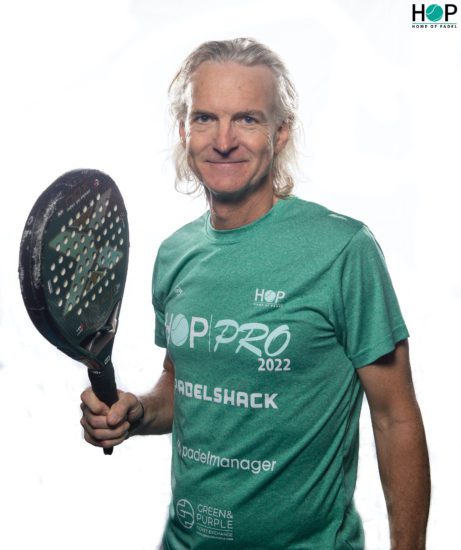
Minter Dial is an international professional speaker, author & consultant on Leadership, Branding and Transformation. His involvement in sports has been a lifetime passion. Besides playing 18 years of rugby, captaining athletics teams, coaching tennis and playing squash for his university, he’s been a lifelong player of padel tennis, starting at the age of 10, from the time of its very first public courts at the Marbella Club in 1974.
Then, after a successful international career at L’Oréal, Minter Dial returned to his entrepreneurial roots and has spent the last twelve years helping senior management teams and Boards to adapt to the new exigencies of the digitally enhanced marketplace. He has worked with world-class organisations to help activate their brand strategies, and figure out how best to integrate new technologies, digital tools, devices and platforms. Above all, Minter works to catalyse a change in mindset and dial up transformation. Minter received his BA in Trilingual Literature from Yale University (1987) and gained his MBA at INSEAD, Fontainebleau (1993). He’s author of four award-winning books, including Heartificial Empathy 2nd edition (2023), You Lead (Kogan Page 2021), co-author of Futureproof (Pearson 2017); and author of The Last Ring Home (Myndset Press 2016), a book and documentary film, both of which have won awards and critical acclaim.
It’s easy to inquire about booking Minter Dial here.
Full transcript of interview via CastMagic
This transcription comes courtesy of Castmagic.io an AI service for podcasters.
Minter: Flight Lieutenant Ben Hanley, brilliant to have you on the podcast. We met through our mutual contacts in padel, notably Ben Nichols. And the fact that I have done a documentary film on the Second World War, has brought me really very quickly to you, Ben, to get you on the show to talk about your journey into padel and what you’re up to. So, in the first few words, Who’s Ben Handley?
Ben Hanley: Ben Handley is a guy from Ipswich in the UK, and in 2022, through my job in the military, was posted to Madrid in Spain where I found this strange sport that I hadn’t heard of before and reluctantly at first took it up because I don’t come from a racket sports background. And within about 5 minutes, I found that this was going to change my life. And here we are.
Minter: Holy smokes. So, can you talk us through that very first time you played? You got to Madrid. How’s your Spanish? And who was there to bring you in?
Ben Hanley: So, my Spanish was very much limited by Duolingo when I first arrived. So, I could say phrases like, my cat is a lawyer, which is not very helpful in real life. But A lawyer is a cat. Yes. Yeah, there we go. That’s how Duolingo teaches you. And then I was at work and whilst at work somebody said, oh, we’re playing padel and we need a fourth player. And I said, okay, go on then.
Ben Hanley: And that was it. I played and then I did the standard thing of thinking, I’m quite good at this. Let me have a look at what I can do. And then played Playtomic with a friend against two Spanish players and quickly learned that there was levels to this sport and I needed to train. But yeah, I was completely hooked from the first match.
Minter: What do you think makes it so hooking or addictive?
Ben Hanley: I think it’s the ease. It’s easy to play and easy to pick up, difficult to master. And I think it’s just a fun sport. I played with just different, different people from, from work. And then it kind of developed into we had a little, um, a Friday club where we would, with our partners’ wives, we would play on a Friday afternoon. Um, and it was just fun. We just had fun, and then you can have a drink afterwards. And, and that was, that was the hook.
Ben Hanley: And I think that’s when my eyes lit up to think this would be a great sport to bring back for the military, not only for the military personnel but the families and, and everyone that’s that’s often forgotten about in the military at home. The real heroes.
Minter: It’s funny, I learned through the documentary I did that there’s a saying in the United States Navy, which is, “Those who wait behind also serve.” So very much in line with that. Yeah, really. And so, a little bit tricky question. You’re a certified coach with the M3 Academy. I wanna get to that in a moment, but what’s your level these days, Ben?
Ben Hanley: Well, unfortunately, in January ’24, I tore my ACL, which has, due to some logistical issues of being in Spain, took a while to fix. But it is now, was fixed in November last year, and I’m on the mend. But I was playing around a level 3 on Playtomic in Spain, which I haven’t played many matches in the UK, but I think the, uh, like, the, the experience of the players here, it’s, it’s, um, I don’t know what it would translate to in the UK. And when I’ve played back there, it’s, it’s always just been for fun. I, I knew I can always say that if it wasn’t for my ACL injury, I would have made it pro. And that’s, that’s my story, and I’m going to stick to it.
Minter: Go for it. Well, I think that in general there’s about a point, uh, of inflation in the United Kingdom. So, if I’m a 4.5 in, in lower 5 in, in London, I’m probably around a 4 in, in the, in Spain. So, that’s cool. So, now the idea of going to become a coach at M3, there, there are so many choices. How did that one come around and what did you learn from your certification?
Ben Hanley: So, I, I started having lessons at a club called Indy Padel here in Madrid, which, which was an M3 M3 school, and then as I kind of developed and I began a NATO club here at work, so we have 19 different nations here, and I was introducing people to the sport. So, I wanted to, rather than, I’ve played a few games, listen to me, try to take that step, and because I really enjoy it through work and everything, to teach people different things. So, it was kind of a natural step. M3, I was already working with them and I really liked their style of teaching, their methodology. And I saw that they were running a course that was specifically in English, English and Spanish. So, it was good too, because I was having my lessons in Spanish. I was using it as padel lesson and a Spanish lesson at the same time. And so, went along to M3 for the course, and it was really good because I was interested in how you would teach someone that could already play padel.
Ben Hanley: But they make you train with your weak hand, so you have to teach everybody the moves with their weak hand. So, it’s very interesting to be, oh, I know how to do a bandeja, and then they go, okay, use your other hand, and then all of a sudden you it feels like it’s not attached to your body. So, um, but they broke down and they said it’s like their style of coaching is, is you, you demonstrate, then you explain the, the tactical, um, elements of why you would use the shot, and then you break it down and you build up. Um, and I thought that was a really good way to take it was the Level 1 course. It was, it was, it’s aimed at beginners and, and low intermediate players. And that was where I’ve got a lot of pleasure here at work, is teaching people that have never picked up a racket and using that M3 methodology to get them to play. And then eventually I can just stand and watch people having a game, and it’s, it’s, uh, it’s been good. So, I’d like to do the Level 2 M3 course, um, at some point when my knee is better.
Ben Hanley: Um, and the club, I’m not sure if you’ve seen the M3 Club in Madrid that they opened a year or so ago. It’s a fantastic club and I love if I ever work from home, that’s where I work from.
Minter: Padel is your home. Yeah, I had David Garcia on my podcast who is the director at M3, so we talked a lot about that and that’s very exciting. I really love it. So, just a quick thing about this NATO-based padel club with the 19 nationalities. Do you have France versus Germany? What goes on in these, uh, in the padel clubs? Or do you just, you know, basically mix everyone up and, and not keep it any nationalities?
Ben Hanley: Initially, when we do the, the, the coaching, it’s just anybody can come along. Um, but we then built for a nations tournament. We were going to do a league, um, but it’s quite complicated because some nations will have one, one person and some have, have loads. Um, and As with Padel Around the World, Spain always win, so we have to mix it up. But we’re going to look at doing another one and how we mix the teams up, we’re not sure yet. But it’s added something here that especially for people that are new, it can be a daunting place because everybody seems to know what they’re doing, etc. And English is not the first language of lots of people. So, I’m just trying to use sport as an icebreaker and to build a community up.
Minter: That’s really marvelous. And I love the idea of bringing in the family and the kids and making them have it, have a location and an activity because it’s so inclusive. Anyone can play. Obviously, you’re going to have some players who are beginning to really take a take on, I imagine, and addicted their own way into padel.
Ben Hanley: Yeah, there’s a story of someone, and she definitely won’t mind me telling her story, of one of my friends called Cherie. And last year she picked up a padel racket for the first time, started playing with the Nato, and got completely addicted. And it’s due to injury, she hasn’t played sport in a long time and is hooked on padel, plays on Playtomic, and is currently, I think, 17 kilos down in weight from playing. And has kind of found her passion and found her love for sport again. And that’s the type of story that I love to hear about, and I’m really happy to be kind of the start of that journey for her.
Minter: That’s fantastic. You know, I can imagine there’s the physical, there’s the mental health, and of course there’s just the fun of going out and having some physicality in a social environment.
Ben Hanley: Yeah, exactly. And I think for it’s, it’s she is one of, in our UK community, she’s one of the few people that are out here without a family. So, it’s given her something extra to do in the evenings and finding new friends. And, and yeah, it’s, it’s been really good for her.
Minter: So for somebody who didn’t come from, uh, another racket sport into the sport, Ben, or what is currently I mean, ACL notwithstanding what is currently your favourite shot? What are you what’s your go-to, uh, saucy shot?
Ben Hanley: I am a fan of the lob, which not people don’t often say that, but, um, I my lob is one of my strong shots, um, and I think it’s, it’s because when I did start, because I didn’t have a racket background, I went straight into lessons, um, and tried to learn the correct technique from, from the start rather than developing my, uh and I have a habit of trying to hit things too hard, um So I tried to dial it back. And that’s one of the things that M3 worked on was, was we’re not going to train the kick smash because and they show the statistics and everything is data-driven there. So, they say actually in the percentage of a match, it’s a very low percentage shot and you don’t need it at the level that you’ll be teaching here. So, if you have a beginner that says, I want to train the kick smash, actually it’s probably more important for you to learn the lob first or defensive shots. So, I developed my lob and it gets me out of a lot of trouble. And yeah, not the rockstar answer that I’m sure you get from a lot of people, but it is my favourite shot.
Minter: Well, I have another wonderful friend and coach called Gabo Loredo who also says it’s his favourite shot and by the way, his best shot. It’s not just a defensive shot, it can be an attacking shot. So, for people who are listening, because they’re obviously not going to watch this as a shot, but although it is on video on YouTube, the interview, but what goes into making a good lob? Can you sort of describe the technical aspects such that someone who’s listening says, huh, this is what oh, that’s how you hit a lob?
Ben Hanley: Technical aspects of a lob, I think it’s more, uh, depth is obviously not obviously, but depth is very important because the risk of hitting a weak lob puts you in danger potentially. And I think where one of the good things I’ve learned, and actually there’s a video I watched recently of Ewan from Everything Padel training with Sandy [Farquaharson] from The Padel School, and it was about how you, if you open the racket at an early stage, if somebody is at the net, they will, if the person is reading your body language, they will, it will look like you’re going for a lob, but you can also play the Chiquita from there. So, it doesn’t give them the opportunity to step in which is another area that can be dangerous with that. But the lob, it also then puts them that they have to start beginning to shift their weight backwards. And yeah, I think it’s about preparation and you begin low. It’s a shot that should be used when you’re not under pressure because a lob under pressure can be dangerous, either too short or too long. So, when the time is right,. And, uh, I like to do one off the glass, knees bent, racket face open, and then just glide through.
Ben Hanley: And then, and take a second. Don’t, as soon as you hit your lob, start attacking the net, because you have to learn your players. And a lot of players sometimes will run backwards like they’re going to hit the shot, and then they’ll let it go over their head. So, I always say to people I’m training, until you see their back, stay still, because it can be very dangerous to run onto someone that can hit a very hard Vibora. Um, it can be it’s not a nice place to be running onto that.
Minter: Totally. Well, um, what I liked about what you said, and certainly I agree, is that you need to pick your pick your time to hit a lob and, and finding the right ball when you’re not under pressure. The number of times I see players sort of half volleying from the back and thinking the lob is the right shot at that point, it, it snaps off the racket. You can’t read it as well. Your partner is sort of not sure engaging it. So, it’s not all the same experience. Whereas you let the ball bounce, you’re underneath it, you pop it up, you can sort of you’re flowing with your partner. And then of course, the question then is, where is it going to land? And that depth, I’ve always said that depth comes from one more step in.
Minter: I like to go height underneath and step forward for my depth. And with that one step, as I’m hitting it, I always get it to within the service line. That’s sort of what I’m always aiming for, the service line or a couple, you know, meter back from the service line. Fabulous. Well, um, that’s all grand, Ben. Now let’s talk about your, uh, activation of padel within the military community. So, you, you’ve got it going in, uh, Spain at the NATO base there. Um, what about the rest of the military, and how are you, how are you going about getting padel into it? Does it require funding? Is it a political story?
Ben Hanley: What’s going on? A mix of everything there. So, um, as I said, when we started doing the Friday Afternoon Club, I kind of saw that this could be a good thing. And, um, as you mentioned, it’s the people at home in, in the military that often get forgotten about. Forgotten about, sorry. Um, we, the nature of the job, have to spend time away from home and, and I just thought if I could use this sport not only to benefit the service person but to build communities around those people that are at home and the fantastic things I’ve seen in London with events like Padel and Prams, it’s also that, that was my main driving force. A secondary driving force was selfishly I wanted to continue playing padel when I got back to the UK. So I started sending some emails to the sports board to say, uh, there’s this sport, it’s growing rapidly, and this was 2022, so kind of as the boom was beginning in the UK. And then the initial response was, uh, thank you for your enthusiasm, um, it takes around 5 years to get a sport recognized, and at the moment it’s not really on our radar. Which was frustrating because I’d had conversations and spoken to Sandy from the padel school, and we were planning these open days, and I had the enthusiasm and some people that I’d met.
But then with the military, it’s a very institutionalized area to work in. There’s a lot of policy that goes behind it, so it has to have a recognized status as a sport., and then once that is there, then you can claim for travel, you can play on duty, you can play and we can, and then build. And the military system goes all the way up to elite athlete status. We’ve got a lot of military people that are professional athletes. England’s women’s rugby team has got two flight lieutenants in. The Winter Olympics, we’ve just had some there. So, that was what started, and I wasn’t discouraged by that initial message because I’d seen something that I didn’t think they had yet. And we’ve gone through tennis, so it’s, it’s a subset of tennis.
So, I kept on, kept on knocking on the door, and then eventually somebody said, okay, we’re seeing it in the UK. We’ve got lots of people on base that are playing and asking the same question. So, then we started going digging into the policy of how we can get the sport in. They said 5 years and it was 18 months in the end. It became official in April last year. And from that point on, I can now I kind of inherited the lead of UK Armed Forces Padel. So, I manage padel for the Air Force, the Army, and the Navy, and that’s lots of often difficult from my position here in Spain, but lots of liaising with 3 services to try and build a plan going forward.
Ben Hanley: One of the reasons for the hesitation from the sports board was the fact that it needs quite sufficient infrastructure to be built, and they said it’s we are at a time where the world is uncertain, money that would often be funneled towards sporting facilities is being funneled elsewhere, and rightly so. That is the main job. But, um, so I had to be a little bit creative of how I worked this plan. So, what we’ve come up with is essentially looking at private investment into the public sector. So, We have a club, our first club is opening, Air Force Club, and should be open before the summer. So, that is a private company that are using or benefiting from MOD land to build a facility that will be a mixed purpose for military and civilians, and that’s how they get their capital back. And but there will be times blocked out during the day when the military have sole access This model does extend to, if for example, because some bases access, obviously you can’t just anybody can’t just go onto base. So, if that base wants padel courts, they can fund them themselves, and through different connections we can go down that route.
But my aim is to get as many people playing as possible. So, the Army are in talks with Advantage Padel for a club down in Aldershot. RF Odiham in Hampshire will have the first Air Force club. We have a court already built in Cyprus, and we are having more talks to turn them into clubs because there’s a big footprint out there of families and communities that we think that would be a benefit. And one of my other ambitions is to have the most, the world’s most southerly padel court in the Falkland Islands. Logistically, that’s a bit of a nightmare, but that’s one of the aims. But it’s going really well. We did a small Instagram page in the winter just for the RAF, and within 3 days, we had 150 people sign up.
So, the appetite is there. We have our first padel Taster/champs in April in the UK. And yeah, where I, where I see it going is I think it will just be, be fantastic. There’s I’ve been in contact with the, the National Police League to have police versus military tournaments. And yeah, I think it’s, it’s, it’s going to be a really, uh, a really good thing. Yeah, we
Minter: I mean, in the end of the day, um, in my youth we used to say Cricket is the sport of diplomacy. It was sort of considered that amongst the countries like India, Pakistan, and England. And rather than be at odds with one another, put your odds on the green. And so, I can well see how padel might be that substitute in that we’re talking military. As you can imagine, I’m aware there also is this issue of people who come back with wounds or are handicapped by some kind of battle wound or such. Do you are you into how is that conversation going into accessible padel? Because we, we know that’s another area in padel.
Ben Hanley: So, that’s, that’s something that I’ve had a conversation recently with. We’ve just recently someone’s been assigned to be the media rep for UK Armed Forces Padel, and they have some connections in, in the accessible padel world, and I think that’s something. I mean, we, we have ties with Invictus Games and, and projects like that. And through this crazy world of padel that started with this idea of bringing it back to the UK, I’ve been around not necessarily within, but around conversations of building padel facilities in Ukraine for wounded soldiers there, for rehab facilities. The ones that we’re building in the UK will have wellness facilities as well, and we can it’s not a distant dream to be able to bring in specific physiotherapists and people that deal with, with battle injuries and definitely to incorporate this into rehab. I myself will be using it as rehab as a as the time comes. Um, and yeah, that’s definitely one of the, one of the big things that is, that’s there as well and, and makes it attractive to the military.
Minter: Well, it’s funny you talk about Ukraine. I, I, uh, I met a couple Ukrainians that had started a padel club in, in Kyiv, and my nephew has spent basically off and on, uh, last, uh, or since the beginning of the war, which happened on his birthday, in Ukraine, and he’s part of the family gang and he’s a left-hander. So, a big shout out to Dylan there. Oh, there you go, left-handers. All right. So, one of the things that also occurred to me, and maybe this is a little off color at some level, PTSD. So, obviously a big thing for returning veterans. I mean, in general, and I’ve often on my other podcasts talk about the merits of psychedelics and the much work that’s been going on in looking at rewiring the brain through psychedelia or psychedelic-assisted therapy.
Minter: I have the sneaking suspicion that padel, although there’s lots of noise that the pop and bang perhaps can trigger some, but in general, I had the sort of the funny feeling that padel can help rewire as well. Do you have any inkling onto that? I have a friend, Julio, who’s a neuroscientist. And we’ve been talking about what’s going on in the brain in padel. Do you what, where, where are you with that idea?
Ben Hanley: I think 100%. I think, and I’m not, not one to shy away from talking about some of the own, my own struggles I’ve had. So, the injury was difficult. I was lined up to go into surgery, and then the rug was pulled. And I was then left with a with an unknown timeline. And yeah, I struggled. And through, again, through the military, the, the mental health stigma is, is being lifted, and we’re in a really good place. So, I was offered help, which I took, and, and came out the other end.
Ben Hanley: But, but one of the things and this was a time when I couldn’t play, um and one of the things that, that I went through was almost this: I didn’t want to be angry at the sport and shut it out because I love the sport. So, and a lot of people have said to me over the last couple of years, like, it’s crazy that you are so involved in padel when you can’t play. It must be really frustrating. But it’s the Joy of Padel. It’s and that’s I enjoy watching it. I enjoy being part of it. I’ve enjoyed building it. And one of the or the company that are building the courts in, um, Odium It’s called Mission Puddle.
Ben Hanley: Two ex-RAF pilots are behind the project, and one of them, Nathan, he was the co-pilot on I’m not sure if you heard the story there was an RAF Voyager transport aircraft that was flying towards Afghanistan, and the pilot’s camera got stuck in the controls, and it just nosedived, lost I think 10,000 feet or something, maybe more. Um, and he actually broke his back because he wasn’t in the cockpit, he was behind, um, having a cup of tea and just launched straight up onto the roof. Um, and he dealt with PTSD for this, didn’t realize he had it at the time, um, and, and now has his own company called Peak State, which deals with um, kind of mental rehabilitation, um, within elite athletes and getting people back into sport. So, his story is another one that, that kind of he saw in padel the same thing that we’ve just spoken about. He saw that I think it’s beyond the sport, it’s the camaraderie, it’s, it’s just meeting different people, um, and it’s definitely, definitely high up on, on one of the reasons when I was selling the sport of to say it’s, it’s kind of, it’s more than, than a sport. Um, and it has been for me, and it’s definitely dragged me through some, through some, some bad times. And I’m a lot stronger now because of what I went through, um, but also strong because I, I made the decision not to shut the sport out it wasn’t the sport’s fault, um, and I kept my love of the sport. And I think that’s kind of the driving thing.
Ben Hanley: I can go and sit and watch my friends play and not have any, any ill feelings towards it, um. So, yeah, I think the, the people go through a lot of mental battles in, in my line of work, um, and it’s definitely improving. People can have allowed the space to talk about it more It’s not something that people shy away from, which I think is fantastic. We, by the nature of the job, we can’t delve into psychedelics so much, but we have our own ways of doing it. And sport is one of those huge things that people can tap into.
Minter: Well, I love it, you know, getting on a padel court as long, you know, to the extent that you can be totally present on the court, everything else can blur away and you focus in, you get on that peak state like you’re talking about that is so instrumental. I had to make a little comment about the Falklands Islands idea where some that makes me think of Argentina that reasonably good at padel. So, I’m thinking that might be another competition, Falklands Islands against Argentina. Bad humor, I don’t know. But what about the international game? I mean, to the extent that you are doing this with the British military. Do you see other countries’ military also getting involved? And can you imagine sort of the international military competition of padel?
Ben Hanley: So, it exists. We weren’t part of it this year, but I’m pushing to get a UK team this year. There was a tournament held in the Netherlands in November last year. One of my friends from work here, he’s one of my German colleagues, he played in it and said it was fantastic. This year’s tournament is going to be held in Spain. Um, so, and these are the things, um, Ben, our mutual friend Ben Nichols, he has, um, an idea to try and have a UK versus US military at the Anglo-American Cup this year, which would be fantastic. Um, and a good I think that as the sport is, is growing in the US, I think it would be opportunities like this. And, uh, I mean, it’s such a huge military to get into that would be, uh, would be amazing.
Ben Hanley: And so, I see the international game growing. Um, I’ve seen it with other sports. We, we have access and the ability to do overseas tours within the military. Um, and they’re, they’re the, the sort of things I’d be looking at. Um, we’re still very early stages, but I’m very ambitious with, with the projects.
Minter: That’s absolutely fabulous. So, also, just the last area that I wanted to cover with you, Ben, you talk a lot on your LinkedIn profile anyway about this notion of leadership. You’re obviously an officer in the armed forces, in the Royal Air Force. What do you how do you look at the concepts of leadership on a padel court? How can padel help leaders develop? Do you think there’s a way crossover?
Ben Hanley: Definitely. I think there’s a lot of things during my officer training and leadership games, I say games, the drills that we did that you could actually directly linked to the padel court. But the way I see the growth of leadership within the military, within padel, is removing the rank. So, you go on the court and your teammate can be the highest rank on the station or the lowest rank, it makes absolutely no difference. And that will be something that I’m really pushing on the clubs to make sure that there is as soon as you step onto this, into this club, Your name is your name, not your rank, because that’s what I want. So, I think from a junior leadership level, you can have I can run a day when I have the executives of the station and the most junior ranks, and you team up together and you can play games or drills where, for example, you can say, okay, right, you can’t talk for this next point. See how difficult it is to, to manage There’s a fun game that I always like to play. I probably shouldn’t say because I’ll spoil the ending, but there’s a game called Saboteur that we do in some of our leadership games where we’re all told that somebody is the saboteur, and at the end of every round you have to pick who do you think is the saboteur.
Ben Hanley: And in the end there isn’t one, so you start kind of turning against each other. But that’s another game I think would be good because it teaches you that you have to accept people’s flaws. Somebody may miss a shot and you think, ah, you’re the saboteur. But I think in terms of an overall picture, I think it’s sport is used in the military for this and the development of personnel and leadership from the bottom up. And as an officer, I get some training, and if I can turn that into sport, I think that’s a fantastic thing that I can give give people and, um, and, and instill in people from the most junior to the most senior.
Minter: I love it. Well, I, in, in the civilian world, I have often mentioned the story, uh, like you say, everyone can meet on a padel court. So, I have my friend Chris who was a tube driver, underground tube driver, and playing on a court with a CEO. And, uh, and it’s that kind of a sport where you take off the titles And you put your game into action. It’s your game that speaks. Of course, you have to also speak communication. Maybe just that last piece, which is, you know, you’re in Spain being British. I find that the British have certain things they love about padel, and there are certain areas which are just very distant from the culture of padel that I learned when I was in Spain.
Minter: And one of them being communication, the idea of always having a beer, una caña, after the match. Um, what, what do you see the, uh, without being too pointed, um, where, where do you see the Brits going in, in the future of padel? What do we think they need in order to be the best or better?
Ben Hanley: So, a very interesting question. And, and initially when I started to play and then I started to get really involved in, in the Playtomic matches, um, and Playtomic is it’s, it’s huge here in Spain. And I think my first year of playing, it’s that I got the end of year stats. And so, you’ve played with 170 new partners and/or new people. And I looked and thought, this, this is the it took a lot at first, but I’m quite an outgoing person. And I think to throw yourself in the deep end here was, was daunting, but to go and play my first match, and if there’s a communication gap in a conversation, but on the court, the first time you move at the same pace with the partner, and it’s like, okay, we’re communicating through sport. And initially I thought, I don’t know if this same just arrive and play with complete strangers and have a, have a drink afterwards, if that translates into the British culture. And as I’ve seen it grow, I’ve seen a lot of many different apps that people use in the UK and booking systems.
Ben Hanley: And I think the open match is something that is growing. I did put a post up on LinkedIn the other day just to kind of drum up some people’s thoughts on, because I think here in Spain there’s no, or definitely Madrid, there’s the most padel courts in a city in the world, and there’s no memberships. You just I, if I’m playing a game, I look at when do I want to play and then what’s available. And I think that as in the infancy of the UK, people are signing up to be a member of a club because they can book early, and then that kind of leads to people only playing with their same group of friends. So, I’m not sure how it will go. And I think the benefit of choice that happens that’s here in Spain, and a lot of people have said to me when I’m looking at planning military bases, like, oh, RAF Brize Norton, for example, has 6,000 military staff that work there. So, on top of that, add their families, etc. You’ve got a huge, like a town of people.
Ben Hanley: But then someone said, well, but there’s a padel club in Oxford. Irrelevant. To me, that’s irrelevant. There’s between my house and the maximum limit on Playtomic of 10Km, there’s 100 clubs. So, I have my favourites, but I’ll play where there’s a court and have the luxury of choice. So, I think as it develops, I think that to play with random people and just to go, I fancy a match, will grow, and I think that’s really good for the UK, for the culture, and just to use this sport to meet new people. And you being one of them people that, that I’ve met through this sport, and everyone that is in the sport has the same feeling inside, um, and it takes you to some crazy places. Um, like one story I have of Ben Nicholls when we were doing an interview with Eva Longoria, that was just a small room in the back of a toilet in the Hexagon Cup.
Ben Hanley: So, yeah, just put yourself out there and speak. Wherever I go in the world, I would look to play and people I’ve never met before, because I think it’s the perfect sport to find friends or find somebody you play with one time, or you bump into someone at a Premier Padel event like, oh, we played, we played two matches together, and that’s it. That’s, that’s enough to let’s share a drink and, and laugh at how many times I hit the net or something. So, I hope, I really, really hope that that’s the way the UK goes, and, and in future there are clubs everywhere and people go I fancy a match and they are not interested in who they play with and they finish the match and they’ve got 3 new friends.
Minter: It is my recollection that in last year’s report on the state of padel, the Playtomic report, they said that the UK had the largest percentage of open matches. In other words, where you invite and play with strangers who you don’t know in the world on Playtomic. So, that’s a good sign. And I was thinking as you were talking that, you know, oftentimes people now saying padel is the new golf. I’m thinking actually padel is the new dating app. Yeah, people. All right, well, listen, uh, tremendous. That was great fun, Ben, to have you on the show.
Minter: Can where can people interact with you, learn more about what you’re up to with Padel in the Military, help, or if they have an idea of, of a private venture that they’d like to do, what’s the best way to contact you, man?
Ben Hanley: The best way so I’m on LinkedIn. I’m just going to double-check that my name is Ben and not Benjamin on there because I have this yeah, I think it’s Ben. Yeah, okay, it’s Ben Handley on the minute, and there was one person that is in their uniform, so that one is me.
Minter: Also, I’ll put it in the show notes.
Ben Hanley: Thank you. I’m on Instagram, @bch.padel, and that used to be @rafpadel, but I moved across because that whole page was set up to tell the world what I was doing. Then RAF Padel became official and it wasn’t needed. So, for military, if you were listening from the military, there’s the @RAFLTA, Lawn Tennis Association that now includes Padel. And my overall point to kind of all of this is if you are somebody that is listening, plays Padel, and unsure what to do career-wise, you can play padel and get paid and be in the military. So, at Royal Air Force on Instagram, @RAFCareers on the website, and I will sell this, this dream of a job that I have. I live in Spain, I play padel in the evenings, minus one bad knee, but we still smile. But I’m coming back to the UK in August, being posted back, and I’m bringing this sport and the passion with me.
Ben Hanley: So, yeah, look forward to that.
Minter: Vamos padel! Vamos, Ben! Thank you so much for coming on.
Ben Hanley: Great fun. Thank you so much, Minter.