
The Joy of Padel podcast with Gabo Loredo (JOPS01E03)
Gabo Loredo is a padel phenomenon! He’s Mexican whose professional career began as a tennis coach for elite juniors. In 2010, he switched to padel to become an international director and coach, having coached in Italy, Mexico, England, Estonia, Argentina, and, of course, Spain. He has coached the Swedish and Finnish national padel teams and now lives in Sweden, running the Instagram friendly Tasty Padel along with Riikka Laine, where they run clinics and camps.
To find out more about Gabo Loredo:
- Follow Gabo here and Tasty Padel on Instagram
- Check out the Tasty Padel Academy site
To listen to the show:
To listen to The Joy of Padel podcast, you can use the embedded player above, or go find it on Spotify, Apple Podcasts or any number of other podcasting services listed here.
Send in your questions or reactions:
Please send me your questions — as an audio file if you’d like — to nminterdial@gmail.com. Otherwise, below, you’ll find the show notes and, of course, you are invited to comment. If you liked the podcast, please take a moment to review and/or rate it! ¡VAMOS!
Further resources for The Joy of Padel:

The Joy of Padel podcast, hosted by Minter Dial, a padel tennis player since 1974, is an exhilarating show that delves into the captivating stories of notable padel personalities worldwide.
Meanwhile, you can find Minter's other podcast, The Minter Dialogue Show (in English and French), in this podcast tab, on Spotify or via Apple Podcasts.
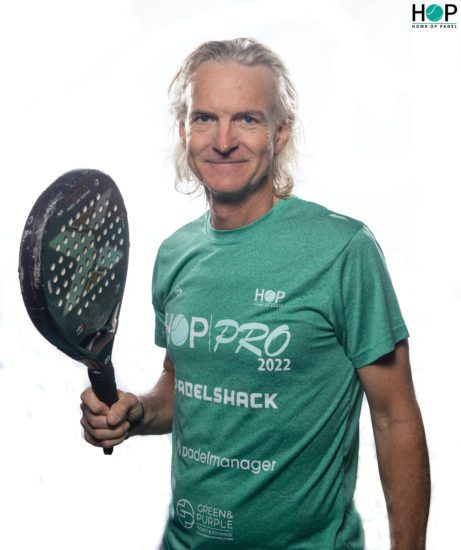
About the host: Minter Dial
Minter Dial is an international professional speaker, author & consultant on Leadership, Branding and Transformation. His involvement in sports has been a lifetime passion. Besides playing 18 years of rugby, captaining athletics teams, coaching tennis and playing squash for his university, he’s been a lifelong player of padel tennis, starting at the age of 10, from the time of its very first public courts at the Marbella Club in 1974.
Then, after a successful international career at L’Oréal, Minter Dial returned to his entrepreneurial roots and has spent the last twelve years helping senior management teams and Boards to adapt to the new exigencies of the digitally enhanced marketplace. He has worked with world-class organisations to help activate their brand strategies, and figure out how best to integrate new technologies, digital tools, devices and platforms. Above all, Minter works to catalyse a change in mindset and dial up transformation. Minter received his BA in Trilingual Literature from Yale University (1987) and gained his MBA at INSEAD, Fontainebleau (1993). He’s author of four award-winning books, including Heartificial Empathy 2nd edition (2023), You Lead (Kogan Page 2021), co-author of Futureproof (Pearson 2017); and author of The Last Ring Home (Myndset Press 2016), a book and documentary film, both of which have won awards and critical acclaim.
It’s easy to inquire about booking Minter Dial here.
View all posts on padel tennis by Minter Dial
Full transcript via Instinct
Transcription courtesy of Instinct
Minter Dial: Hello and welcome, a very warm welcome to the Joy of Padel podcast. Spreading and sharing the supreme delight of this wonderful and fast growing game. I’m your host, Minter Dial, and this podcast is brought to you by Padel 1969, the largest manufacturer of premium padel courts. One court for life by Padel 1969. So this is the inaugural season of the Joy of Padel podcast. And to start with, we’re going to do an episode once every fortnight. Episodes will drop every other Wednesday at 12:00 noon London time. Please let us know what you think about the show by putting up a rating and review. So welcome to the third episode of the Joy of Padel podcast. It’s with my old friend Gabo Loredo. Gabo was my first real padel tennis coach. He’s a padel phenomenon, a Mexican whose professional career began as a tennis coach for elite juniors. In 2010, he switched to padel to become an international director and coach, having coached in Italy, Mexico, England, Estonia, Argentina, and of course in Spain. He has coached the Swedish and Finnish national padel teams for both men and women, and he now lives in Sweden running the Instagram friendly Tasty Padel along with Riikka Laine, where they run clinics and camps. Please enjoy. Game on. My dear Gabo, it is so fun to have you on the show, the Joy of Padel. You, sir, I think really were instrumental in bringing out the joy of padel for me. How about in your own words, Gabo, who are you?
Gabo Loredo: Well, I’m a Mexican padel enthusiast. I have devoted the last 12 years to padel because for what you said, I found it fun and you know, I got very passionate about it. So that’s who I am.
Minter Dial: So tell us, so you’re Mexican, Gabo, the the origin country of padel with the Corcueras. Tell us your route to padel because you started in tennis as I recall.
Gabo Loredo: Yes, actually, you know, it’s it’s it’s interesting because even though padel, you know, was created in Mexico, I didn’t know the sport until after college. Uh I basically graduated in California. Uh I was on a scholarship playing tennis, and then after that, I went back to Mexico, and then one friend called me one day and said, “Hey, Gabo, I need you to do me a favor. I’m playing this game called padel, and I need to show up to this tournament, but my partner is injured, so I just need you to be there.” And then I said, “Um okay, and what do I need to do?” I said, “Just it’s like tennis. Just be at the net and don’t worry about it.” And of course, it didn’t go very well, but that’s how I that’s how I uh actually started padel. And then, you know, obviously we lost badly. And then after that, I stayed and watched the next matches. I watched the semifinals, I watched the finals, and I was in love with the sport. Wow. So after that, I I went completely crazy with it, and I decided to change my life and my business. I was a tennis coach at that time. I had a very nice job in California running uh the junior program for for 13 clubs, and I decided to leave that and basically relearn from scratch what padel was about, and I don’t regret it. I I think it was a very good choice for me.
Minter Dial: You clearly also moved to Spain, which is quite a powerful country for padel. How instrumental was that in helping you get to learn or by the time you arrived there, did you feel already up to snuff? Well,
Gabo Loredo: Actually, where I started was in Argentina. So after this story I was telling you that I went crazy with padel, then I went online and found the, you know, I Googled the best padel academy in the world and I was sent to Argentina and that’s how I met Jorge Nicolini. And basically he was my godfather when it comes to padel, right? So that’s where I spent about eight months doing nothing but padel. It was a beautiful experience, very hippie because you know, I was at the club all day helping with whatever and I would trade, you know, cleaning the cafeteria or helping to sweep the club at night in exchange of training, food, you know, a place to sleep. So it was really nice. It was one of the best times in my life, even though, you know, it doesn’t sound maybe as exciting, but it was. And I was basically always available to play with anyone and then when coaches were coaching, I was always there, you know, showing them and just watching what they were teaching and trying to just get as much information as I could from padel. And yes, then I started training myself and basically in eight months I became top 25 in Argentina. So then my godfather told me, look, there is the only tour that is in padel is in Spain, so maybe you should move there. And I was like, that sounds really exciting. So actually that was when instead of World Padel Tour, there was a tour called Padel Pro Tour. And that’s when I came to Spain.
Minter Dial: That that’s the predecessor to World Padel Tour, right? Exactly.
Gabo Loredo: Exactly. So that’s that’s how everything started and then I I ended up in in Spain. Uh I love Europe always and then well I was I was able to get a job here and get started and just starting doing padel full time and that’s how I um I came here. But you know of course I believe more in the Argentinian school and in in the Argentinian method and all that. I I of course the Spanish method is fantastic but they are very different if you if you ask
Minter Dial: Give us give us the the short understanding description of the Argentinian method and the Spanish method. How do you describe it?
Gabo Loredo: You can see now also with the way the players play. I mean, of course, we’re talking about professionals, no? But to me, the Argentinian way is a way to understand padel as, you know, being very patient, very defensive, cooking the point, building the point from, you know, from the defense and using a lot of lobs, choosing very well when to when to smash, when to go for a winner because otherwise, if you don’t do it right, they will counterattack you. So it’s a very defensive slash counterattacking way of playing. And I think the Spanish way is is more, you know, especially the way padel is evolving, is more about, you know, attacking, attacking, attacking, smash, go for it. The points need to be shorter. And I’m not so into into that kind of style. Of course, it’s a great style if you if you can perform it. And also the training. The training, you know, I’m used to training with two balls, three balls in my hand and and and that’s it. We need to learn how to rally, we need to learn how to control the ball, we need to understand the pace of the game. And you know, my experience with the Spanish academies is more about, you know, hit a lot of balls, hit hard, do baskets. It’s very different. So I I believe a lot more in in the way, you know, Di Nenno and Stupa play more than the way Coello and Garrido and these guys play.
Minter Dial: I, I, because I, I, I tend to love the the defensive side of things as well. But um, but… And Gabo, your journey after Spain. You are running Tasty, Tasty Padel. Tell us tell us your involvement in Padel today. Well,
Gabo Loredo: Actually, you know, my plan at the beginning was to compete, and I did for a while, but then I became a father and things became difficult, you know, to have the freedom to travel around. And then the tour started, you know, becoming more demanding that, you know, it was playing in different places and it was just difficult. So then I started running like my own academy kind of thing, and it went very well. I always also enjoyed the teaching part of every sport. I really am passionate about teaching and coaching. So that’s what I’ve been doing the last decade basically. I found that there was an opportunity for me to grow my business abroad. Abroad meaning Sweden, Finland, basically Nordic countries because I saw the need for English speaking coaches. And also, to be honest, business-wise is probably the best option. It has been the best option in the last decade to teach in the Nordics because the prices are higher, people are very committed, they are eager to learn, and you know, it’s been a great business model for me. And that’s what I’ve been doing the last 10 years, working with the Swedish Federation, working with the Finnish Federation, and traveling wherever my services are required. And then we just started a brand also, maybe it’s been around for a year or so, and it’s more for the fun of it also because we couldn’t find any racket that we like. So then we say if I cannot find what I want, then I need to do it myself. So then we did our own rackets and they are doing well and we like to play with it. We are proud to play with our own brand and that’s basically what I’m doing, trying to show padel to as many people as we can.
Minter Dial: So, congratulations on all that. I have I’m the new owner of one of your rackets, Tasty. But the Swedish story is very intriguing. I mean, it is kind of an outlier for being such a developed padel world, perhaps overdeveloped according to some people. Tell us what your version of how Sweden, why Sweden is such a padel destination today.
Gabo Loredo: Honestly, I mean, I’m sure there are many different opinions on this, but what I have seen, because you know, I was there since the beginning. I was there when there was only one club in Helsingborg, in the south of Sweden, with five courts. And actually, the guy, Anders Mattsson, that was the one that opened this club, he was criticized and told that he was crazy, that he was stupid because he had a squash business and tennis business, and he refused to continue with that in order to open padel. And people laughed at him. And I remember that when he took us there, it was at the beginning, of course, it was like a trending thing, it was new, it wasn’t easy at the beginning, but then he was, you know, he was a guy with a vision because, you know, padel became huge. I mean, it’s huge in Sweden. And I think the main reason is because padel will be huge wherever it goes, to be honest. Then Swedish have really got involved, not only enthusiast people but also celebrities. Yes, we have people like Zlatan, the football player. We have one guy from Eurovision that won Eurovision also is attached to this. You know, we have a lot of soccer players playing padel, tennis players, you know, Jonas Bjorkman, former number one in the world in doubles. He’s now the main guy for the federation. So I mean, of course, when you see all these celebrities coming together, it makes it easier for the sport to grow. And then Sweden is a country of tennis players, amazing tennis players. I mean, you remember this generation of Edberg, Magnus Norman, you know, you name it. Bjorn Borg perhaps. Bjorn Borg, I mean, there were many players. So I think that also helps because padel is probably the perfect sport when you transition from tennis or any racket sport to padel. It’s amazing. It’s hard to describe how fun it is, you know.
Minter Dial: And certainly I’m based in the UK. I have lots of knowledge about padel in the states. Both of these countries are doing, you know, have a 200 padel courts compared to a Sweden or a Spain with, you know, literally 20,000 in Sweden, I mean in Spain. But what is it that you feel is for sure why padel will succeed wherever it starts?
Gabo Loredo: Well, I think it’s because it brings people together. Also, it’s a sport, Minter, well, you know, we we actually had the chance to play together a month ago. And you know, maybe our level might not be the same. I I agree. But we are, you know, we are we are still sharing the same court, having fun. We both got a beautiful workout. We were sweating, we had fun, we had long points, we had, you know, I think there is no other sport in the world, Minter, where you can do that, where you can have fun playing with people that are not exactly at your level, but you still enjoy the game. And it’s very hard to describe, but to me, that’s the magic of of padel. You know, and I and then one personal thing, Minter, I always say, in in tennis, I was very, very grumpy. I I remember breaking one year close to 28 rackets, yes. Wow. And you know, and I’m not, you know, I’m not a person that misbehaves on court. I’m I’m I’m normally happy and and you know, it doesn’t take it takes a lot for me to get frustrated. But tennis, in that way, I find it a very frustrating sport. When padel, it has never even crossed my mind to to hit a racket on the ground or to get in a bad mood or frustrated. Like, I just always have fun playing padel. I don’t know why. That I cannot explain. But there is always a big smile in my face when I’m when I’m playing padel. And and that’s something I cannot really describe why. But one day maybe I I will be able to do so. But there is something about the game that is just so enjoyable.
Minter Dial: Well, this is maybe what the joy of padel is going to be about, is finding out exactly why. Um, so listen, I want to talk about you as a player. Um, I’ll get to some of your coaching ideas in a moment, but how do you describe yourself as a player? And the way I’m going to ask you is, what sort of animal would you say you are when you play padel?
Gabo Loredo: I I I think I I have it very clear. I I would say I’m similar to a panther. Um, yes. A black panther? The black panther, yes, why not? Yes, no, I I think, you know, I’m very defensive, but at the same time, I do like the action. I like the fast game. Of course, first I need to build that situation where I can play fast. But at the same time, you know, I told you I’m a forehand player, and for being a forehand player, I’m considered, I have always been considered a very aggressive player. So that’s what probably makes me an okay player on the forehand side. You know, I always say on the forehand side, I can make a difference. On the backhand side, I’m just one more player. Yeah, but
Minter Dial: Yeah, it’s interesting. It’s sort of when you look at the the the winning combinations, whether on the women or the men’s side today, both the right-hand side, Delfi Brea, I’m thinking of in particular, and and Di Nenno, have the ability to pop balls out of the court and have very aggressive viboras from the right. So they they’re not any, you know, slouches when you hit towards them. Would that be fair? No.
Gabo Loredo: Yes, I’m not only aggressive with the shots, I mean, because of course at that level everybody has every shot. But you know, they many times are the leaders of the of the of the pair. They are very strong mentally, and that’s something that sometimes people don’t pay attention to, but you know, Di Nenno, for example, in that pair, even though Stupa is the one that, you know, wins more points and is the one putting the cherry of the cake and all that, the the the guy holding the team together is is Di Nenno, eh? He’s the brain, he’s the he’s the strong guy, he’s the leader.
Minter Dial: And this is why he’s your favorite player professionally?
Gabo Loredo: I love him. Yes, also because I know him as a person and I I I just love humble players. That’s why also I I really I really like the way Argentinians are because in my experience when I have met them in person, they are humble. They are they are what you see. You know, they they don’t they don’t become, you know, arrogant or impolite. They are always what what you see. Same as Tapia, you know, Tapia is probably the best player in the world at the moment and he’s just so nice and so likeable and so, you know, there’s no drama with them and I I I love that. I love that they compete, they always play hard and and if they lose, they are okay with it also. You know, they congratulate the the opponents and and they are happy. So
Minter Dial: And the other thing about Di Nenno of course is he had that horrible accident so he came back from that and that that is also shows a lot of tenacity and Yes,
Gabo Loredo: That’s a very very very tough thing and I and I hope actually um I hope one day someone will make a documentary about about this not just for padel you know it’s it’s a it’s a very nice story and very inspiring I believe so hopefully one day he’s willing to tell that story to the world because I think it’s amazing what he has achieved.
Minter Dial: So you’re you’re just you’re gaslighting me uh here uh Gabo. So you’re speaking to a guy who’s done a documentary film. Now I’ve got I love padel. I like I’ve done documentary. What he’s telling me? Anyway, so what Gabo, what about your favorite shot and why is that your favorite shot?
Gabo Loredo: I My favorite shot is the lob. Boring, yeah.
Minter Dial: Oh, nice. Boring? Are you kidding?
Gabo Loredo: No.
Gabo Loredo: Yeah, but I I mean I I I will tell you honestly, especially as I get older, why I I I like it and why I think it’s so important is because in order for me to play with younger players, which most of the time I’m playing against younger players now, it’s if my lobs are able to neutralize the players I’m playing against, you know, then I always have a chance. And the only shot that, you know, can create that possibility for me is the lob because it gives me time, because it pushes the player a little bit farther from the attacking area. And I just think it’s such a uh it’s such a fun shot to to play because, you know, when you execute it properly, you feel that you are in control of things. So, but of course, it’s not easy, especially nowadays that everyone smashes from everywhere.
Minter Dial: Right. Well, so I’m in in in having played with you a bit, um I I noticed how you’re you’re you can obviously do sky high lobs, but so the idea is to get the lob quickly over them somehow and then over their their wrong shoulder. So they have to maybe play a backhand shot. Is that something that you are actively Well, how do you actually attack or at least, you know, look at, approach lobbing when you’re playing good players? Yeah, that
Gabo Loredo: you said is is is I mean there are many ways and this is this is lovely to hear from you because people just think oh a lob yeah but the lob is is very complex like it can get very complex you know one thing is to always play to the left shoulder another thing especially with professionals Minter is that if you play a lob and they see it you know because they are looking at how your racket is looking how your body position is looking so if they read it they will always get behind and under the ball and they will smash so you have to do combos combos as meaning you play a low shot you step in and maybe you play the lob with your volley why because that will take a little bit of time away from the opponent so I mean there are many many different we can say many different lob styles you know there is the fast lob there is the super high lob if you don’t play indoors of course but uh I mean the lob is very it’s very complex because it has many different ways to play it and depending on the opponents you need to play it in this way or that way
Minter Dial: Another thing of course that’s different is is outdoor indoor when it comes to the lobs because sun wind outdoors that’s a big deal right when we saw in how so many of these balls were skied high and the sun was difficult and all they did is just put you could see these pros struggling just to push the ball back with some sort of meek
Gabo Loredo: Yes, we call it the potato shot, yeah? Just like a potato bandeja. Just put it in and
Minter Dial: And you’re lucky you don’t screw it up, you know, the right? So, all right, what about you? I mean, you’re a very accomplished player having played with you. You have all the shots, of course, you’re coaching. What is your the shot that you would like to improve? What’s what’s Gabba’s weakness per se?
Gabo Loredo: I think I I could improve every shot, but of course one of my weaknesses or where I’m not, you know, I don’t feel so comfortable is with the overhead game in general. It’s not easy, especially when you play, you know, professionals. Remember that any shot that you execute a little bit wrong, which basically translates into my overhead being too short, the player will approach and come to the net and crush me. Or if I play a little bit too bouncy after the rebound, they will counter attack me. So that’s where I I could improve, especially, you know, trying to do less of those mistakes, execution mistakes. But of course, that’s what makes the the game so exciting because, you know, I miss that. That’s why I’m going back to competing because I miss making a little mistake and getting punished for it. You understand? And I have to play professionals for that to happen.
Minter Dial: Right, who are good enough to punish you, because I was not able to do that.
Gabo Loredo: Yeah, but I think the overhead game is very complex in general. I think that’s where a lot of people should focus, also because you hit a lot of and and and and it’s one of the shots that you use the most.
Minter Dial: And I mean, of course the bajada isn’t an overhead practically speaking, but it is in terms of the style, it’s above your head. The bhada and having to Yeah. But it’s another shot to have to learn as well because
Gabo Loredo: The problem with the bajada is that once you play the bajada, which is okay, you might have a very good bajada and you will win a lot of points, but at the end of the day, after doing the bajada, you are back. You are in the defensive area. So then things become difficult when you lose the net. Doesn’t mean that you are not going to be able to win the point from the back, but for sure it’s more difficult than if you actually keep the net.
Minter Dial: Yeah, well, there comes the Spanish versus the Argentinian style and then the transition to the front. So, um, Gabi, in all your experience, many, you know, a dozen years now, I guess, of playing padel, do you have a funny moment that stands out for you?
Gabo Loredo: Well, actually, uh what I was telling you at the beginning, you know, for me, the the funniest and craziest moment I had was when my friend called me and the way I discovered padel because, you know, The first the first time. Yes, because first the way he described it, I mean, I still remember his words of saying, nah, it’s just you just need to be at the net. It’s like tennis but on a on a mini court. That was his description of padel. I mean, that’s how clueless that’s how clueless my friend was about padel because he has nothing to do with that. But anyway, and also it was it was really embarrassing because, you know, I played against two players that I knew from tennis and they will never even get a set from me in tennis. So of course they they were like, oh, this is our time to to, you know, get payback. Yes. And and you know, they kill us. They kill us and it was it was hilarious now that I think about it to see that, you know, they were doing lobs to me and I was thinking like a tennis player, smashing and the guys were waiting by the net and then just did, I don’t know how many four meters. And and you know, for me that was um I didn’t get upset. I I was I was just laughing trying to understand what was happening because you know, probably you remember the first time you play padel, it’s it’s really weird. And you know, you come as a tennis player, good player in tennis and you know, we are cocky because we are tennis players are cocky by nature. And and you know, I thought I was going to rock the world there and and you know, first round 6-0, 6-1, 30 minutes. So to me that was hilarious. I mean, I still laugh about it when I remember. And and that’s probably the funniest thing that has happened to me on the padel court to be honest.
Minter Dial: I love it. What a good lesson. Well, speaking of lessons, what about um uh your life lesson with regard I mean, sports is always a way of learning uh about life, but what is what is specific to padel for giving you Gabo a life lesson?
Gabo Loredo: Oof, I mean, I guess one one thing that has really been unique in my in my journey in padel is the amount of people that shares the same passion. I mean, it’s not easy. You can have different hobbies, yes? But in padel, it’s it’s just it’s just amazing how, for example, you probably experience this even more than me because you travel a lot, Minter, and you just go to a padel club and you will have a good time. You will play with four strangers that at the end of the 1 hour and a half, 2 hours you played, you have a drink and you become kind of like not friends, but you feel like, you know, you feel welcome. And it’s a beautiful way to break the ice. I think in that way, that’s what padel that’s why it has become my lifestyle. And and, you know, I have seen a lot of people changing their life and changing their jobs because they they are crazy about just dedicating and devoting their life to padel. And and I think there is no like I said, it’s hard for me to think of anything else in the world, sports like, that, you know, will make someone leave an engineering job making 7,000 a month for because you want to play padel all day. And then you are willing to make maybe 2,000 a month, but you’re happy. You feel fulfilled. And I think that’s what padel has shown me that, you know, you have to do the things you’re passionate about. And I think padel opens that door for a lot of people.
Minter Dial: That’s beautiful. I I can’t help but think, I mean, I totally agree with with your assessment, but I can’t help but think that at some level, it’s also because it’s still for some reason esoteric. I mean, I’ve been playing since 1974, so I feel like I’ve been around and I and I don’t remember my first times on a court. That’s too long ago. But um there’s still this feeling of it’s new and so we’re sort of we’re part of the adventurers. There’s also a little bit of that feeling and I’m wondering to what extent that will diminish, you know, once it sort of becomes so popularised.
Gabo Loredo: That we don’t know, but yes, it’s true what you say. I mean, there is, for example, anybody that wants to become a coach still has room to to to become a coach and to be okay and to actually make a living coaching. I mean, many of these stories that I tell you that I that I have seen, I have experienced in my own skin, is from people that, you know, they were working in a company, just normal company, in a bank, in a whatever, you know, a lawyer, and then they decide to to become coaches. And you know, because the sport is new, you still you still have room to, you know, start from scratch and, you know, educate yourself and build little by little your your, you know, your clientele and then become a coach and and actually be respected. So I think that’s one of the of the reasons, as you said, padel is still new to the world and, you know, as you see in many places, it’s just it’s just booming now. So there is still room for for anyone that wants to become a padel enthusiast or or coach to to to do business with it.
Minter Dial: I was talking with my cousin Nallé about the United States and you know let’s say that they they end up with 10,000 courts in a few years. The one of the challenging things will actually be having good padel coaches because that’s we need you can’t just sort of switch from tennis overnight. You’ve got to unlearn a whole lot of things and then relearn and so there’s a lot of opportunity there.
Gabo Loredo: Yes, and the coaching Minter has, you know, has that’s another good subject you can talk about one day, but it has its positives and its negatives, yes? Positive because it opens the opportunities for a lot, but on the negative side, and if we get picky about it, there is a lot of bad coaches there, yes, that already get paid enough. For example, in Sweden, for example, it doesn’t matter what kind of coach you are, Minter, if you start teaching tomorrow, you will charge 100 euros an hour regardless, just because the market is there, like nobody charges less. Yeah? So in that way, I think eventually, hopefully the International Padel Federation does something like like it has been done in tennis where, you know, the certifications are more serious, that there is some control on on who’s coaching and and, you know, the knowledge they have. So, but you know, at the moment, in that way, padel is still in diapers.
Minter Dial: Yeah, well you just and with that knowledge you can really so much of it has to come through experience. You to under to to understand how to unlearn the volleying in the back court that tennis players do or the desire to smash every ball, you have to go through the experience of unlearning to relearn, I think in terms of gaining that true knowledge in you know, in your mindset like you did. You worked from you know, being the tennis player to being now you know, and you’re still of course a very good tennis player, but you you’ve you have a padel mentality, you have a padel game. And not every coach that plays tennis is going to get that just because they read about it or see it on a on a YouTube. Exactly.
Gabo Loredo: Exactly, and also taking the time in there. For example, I just told you at the beginning that I was eight months in Argentina day in and day out at a padel club playing with if a ladies match was, you know, short one player, I will join. If a professional match was short one player, I will join. I was there for whatever. Yes, I was needed. And and you know, it took me about a year to to actually believe that I was able to teach someone. But the problem is some people take a three-day course and, you know, uh then they say, okay, I’m ready. I’m going to be a coach and and then that’s it. They don’t they don’t care about getting more educated or or they are not humble enough to say, look, I still need to learn.
Minter Dial: Well, um, I, I, I’m just hitting 60 soon and I still think I need to learn so much more. So Gabo, um, you, you have your Tasty Academy, you have a tremendous presence on Instagram. Um, I would love for you to tell just before you tell us the close off, what, um, what led you to, to drive the Instagram approach with your coaching? I mean, it seems like there’s stronger space, maybe you’re on YouTube channel as well, but you, you seem to do a really good job on social.
Gabo Loredo: Yes, well, a lot of the socialist thanks to Rica. Rica Laine is my business partner. She’s a lady from Finland, but probably one day you will interview. But you know, for me it’s very simple, Minter. Social media to me, and this is the way I educate my daughter with social media, is there to help others, to connect with others. And the only thing I’m trying to achieve with my Instagram is to help other padel players with what I do, with tips that I want to share. Nothing else. For example, you will never see a picture of me on on on my Insta, you know, showing my beautiful hair and and you know, because I could be a hair model. But but that to me is not important. To me, what is important is that if you follow my account, you are like, okay, this is helping me or it’s giving me a perspective on something. Then you might not like it, you might agree or not. But the only thing I want to do is I want to try to help other padel players and encourage them to do what I consider they should do or whatever works out for me when I do it. So that’s the only purpose. And I think people actually are able to feel that because, you know, we have gotten a lot of response from people and, you know, we we don’t we don’t do giveaways, we don’t do anything of that to to grow our community, but they still they still follow us. So it is beautiful to to to to have an Instagram account where all you want to do is help others and share your passion for padel. And and I think the the feedback we get is is very positive.
Minter Dial: The proof is in the pudding, Gabo. So, tell us, tell listeners where they can reach you, check out your Instagram account, and also eventually get a chance to learn from you.
Gabo Loredo: Yes, well, the the the Instagram is Tasty Play Hard. Then I have my own personal Insta, which is private and it’s coach_gabo84. And then probably for those that are interested in maybe getting to know more about our tasty concepts, coaching, playing, we do camps. We do camps in Sweden, we do camps in Spain. Also, we have our main location in Stockholm in LeDap. It’s a it’s a padel club. So yeah, I mean, they they can surely find us if they really want to visit us, yes, just like you did. I think you had a good time in Stockholm. You saw how nice the club is where we are.
Minter Dial: My goodness, this is just a beautiful club, panoramic courts, beautiful facilities, Mondo carpets and you leading. So Gabo, thank you very much for coming on as I like to sign off my podcast with a good old Vamos.
Gabo Loredo: Thank you. The pleasure is mine and I wish you lots of success with this podcast. I think it’s very interesting and you are a great host.
Minter Dial: Gracias, señor. So, I hope you’ve enjoyed this Joy of Padel episode. Please don’t forget to subscribe to be the first in queue for the next episode. And if you like what you hear, please do share around with other padel aficionados. This is a sport that deserves to be played by absolutely everyone. And if you got a story that you’d like to share, please send me an email or a better yet, a voice note at nminterdial@gmail.com. With that, thanks for listening and see you on the next episode of The Joy of Padel podcast.