The Joy of Padel podcast with Emily Kilner (JOPS03E21)
Emily Kilner: From Hockey Pitches to Padel Courts – A Journey in Sports Commentary
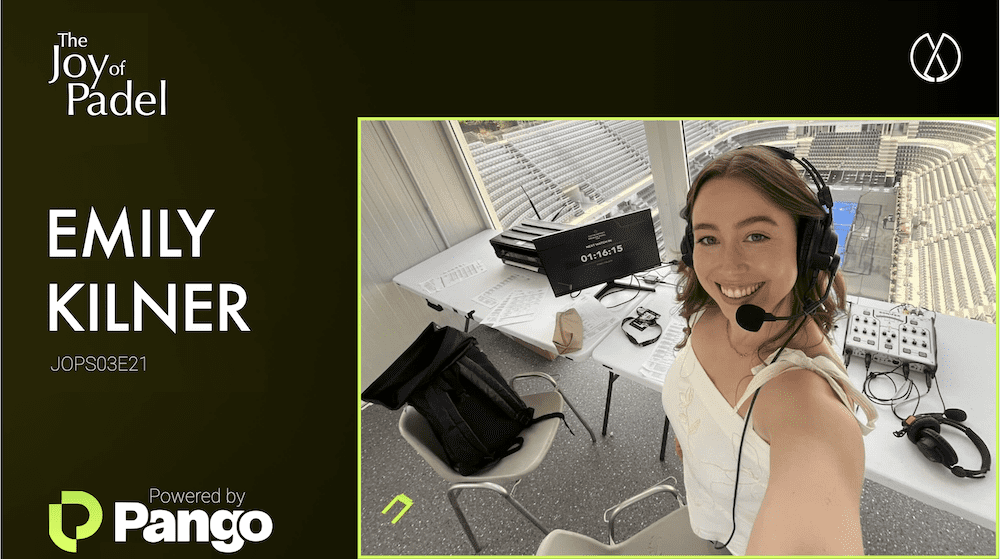
I’m thrilled to share my latest Joy of Padel episode featuring the brilliant Emily Kilner, BBC New Voice Award winner and one of the most exciting voices in padel commentary today.
Emily’s journey is fascinating – from representing England in hockey at under-21 level to becoming a bilingual sports commentator who’s now at the forefront of padel broadcasting. What struck me most during our conversation was her genuine passion for the sport and her thoughtful approach to commentary.
We explored how her athletic background translates into her work, and I was particularly interested in her perspective on what makes padel such a compelling spectator sport. Emily shared some brilliant insights about the three key elements of effective commentary: education (especially important for a growing sport like padel), context (the intrigue of player partnerships and rivalries), and the play-by-play that brings the emotion to life.
Her ability to commentate seamlessly in both English and Spanish – with an impeccable accent, I might add – gives her a unique advantage. She can translate those crucial coaching conversations during changeovers, adding layers of insight that monolingual commentators simply can’t provide.
We also discussed the differences between men’s and women’s padel, the importance of watching professional tournaments live, and why she believes padel is already a true spectator sport – we just need the right venues and events in the UK to prove it.
Emily’s optimism about padel’s future in Great Britain is infectious, though she rightly emphasises the need for everyone in the sport to pull together in the same direction.
If you’re a padel aficionado or simply curious about what goes into professional sports commentary, this episode offers a fascinating behind-the-scenes look at the world of padel broadcasting.
You can follow Emily’s work at @kilner_presents on Instagram or visit emilykilnerpresenting.com
Listen now and discover why this padel podcast conversation left me even more excited about the future of our beloved sport.
To find out more about Emily Kilner:
- Find or follow on Instagram: @Kilner_presents
- Check out her website: EmilyKilnerPresenting.com
To listen to the show:
To listen to The Joy of Padel podcast, you can use the embedded player above, or go find it on Spotify, Apple Podcasts or any number of other podcasting services listed here.
Send in your questions or reactions:
Please send me your questions — as an audio file if you’d like — to nminterdial@gmail.com. Otherwise, below, you’ll find the show notes and, of course, you are invited to comment. If you liked the podcast, please take a moment to review and/or rate it! ¡VAMOS!
Further resources for The Joy of Padel:

The Joy of Padel podcast, hosted by Minter Dial, a padel tennis player since 1974, is an exhilarating show that delves into the captivating stories of notable padel personalities worldwide.
Meanwhile, you can find Minter's other podcast, The Minter Dialogue Show (in English and French), in this podcast tab, on Spotify or via Apple Podcasts.
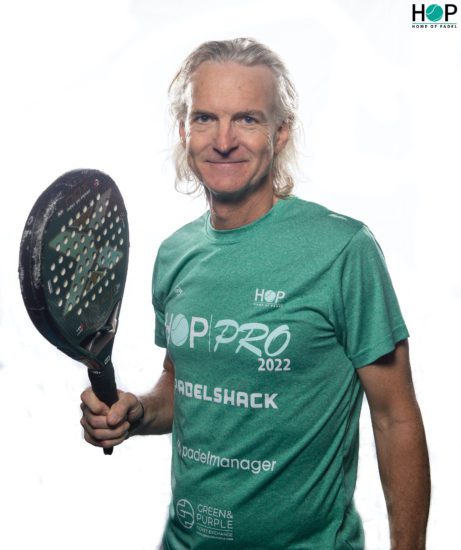
About the host: Minter Dial
Minter Dial is an international professional speaker, author & consultant on Leadership, Branding and Transformation. His involvement in sports has been a lifetime passion. Besides playing 18 years of rugby, captaining athletics teams, coaching tennis and playing squash for his university, he’s been a lifelong player of padel tennis, starting at the age of 10, from the time of its very first public courts at the Marbella Club in 1974.
Then, after a successful international career at L’Oréal, Minter Dial returned to his entrepreneurial roots and has spent the last twelve years helping senior management teams and Boards to adapt to the new exigencies of the digitally enhanced marketplace. He has worked with world-class organisations to help activate their brand strategies, and figure out how best to integrate new technologies, digital tools, devices and platforms. Above all, Minter works to catalyse a change in mindset and dial up transformation. Minter received his BA in Trilingual Literature from Yale University (1987) and gained his MBA at INSEAD, Fontainebleau (1993). He’s author of four award-winning books, including Heartificial Empathy 2nd edition (2023), You Lead (Kogan Page 2021), co-author of Futureproof (Pearson 2017); and author of The Last Ring Home (Myndset Press 2016), a book and documentary film, both of which have won awards and critical acclaim.
It’s easy to inquire about booking Minter Dial here.
Full transcript of interview via Flowsend.ai
This transcription comes courtesy of Flowsend.ai, an AI service for podcasters.
Minter Dial: Emily Kilner. Well, how lovely to get you on the show. I obviously, we hang out at multiple events, whether it’s pro padel or overseas or in the UK. In your own words, who is Emily Kilner?
Emily Kilner: Well, thank you for having me. I feel like this is long overdue. Minter, who is Emily Kilner? What an existential question. I would describe myself as a sports commentator, presenter and host, which is probably at the minute, 80% padel, a little bit of football, a little bit of hockey and a little bit of tennis in season. And I absolutely love my job and what I do. It’s a bit of a dream to be getting paid to talk about sports, and I don’t take that for granted. It’s awesome.
Minter Dial: Well, you can hear it. Inevitably, you have a beautiful. They always say you have a voice for radio, which usually means you’re. You’re distinctly not video, but you were good in both counts. And on top of having a lovely voice, you have a voice that’s English and Spanish and your Spanish is impicable, as we say in French. How on earth did you get to speak such good English with your. I mean, Spanish with such a wonderful English?
Emily Kilner: I, you know, I get asked this question a lot, but it’s. I studied Spanish at school, as a lot of people do. I went to Durham University and I’d always known that I wanted to be fluent in another language. I loved going to Spain. I had some family that lived out in the Canary Islands, so had kind of grown up a little bit with that culture. And I studied history and Spanish at Durham within that time in my degree, I got to do a year abroad, where I went to Lima in Peru for a year, which was quite a step change in terms of going from classroom Spanish to business Spanish. I worked out there for a year, and then when I graduated from Durham, the only thing I wanted to do was not live in the UK. I. I wanted to go somewhere and build on that Spanish again. So I actually went out to Canary Islands and worked there again for a year, which I think really forced me to properly learn business Spanish and immerse yourself in that environment. And came away from that year back to London pretty fluent. And I wouldn’t be working in Padel if that wasn’t the case.
Minter Dial: Yeah. And so let me say, I mean, I love languages as well. And what is uncommon about your ability is that you have the accent. I’m just wondering to what extent you had to lean in to figure out how to know the. The accentuations as well. As the accents and. Because when you speak, I mean, you have a bona fide rhythm of a Spanish. A native Spanish speaker.
Emily Kilner: Yeah, I. I don’t know. Like, I wouldn’t consider myself one of those people that, you know, can learn hundreds of languages or pick things up after a couple of hours. I think I had teachers from all over the world. I had teachers at university from Argentina. And then my. Yeah, I think my tutor was from Madrid, and I think it’s maybe just that mix. And then I find myself, when I talk to people from different areas of Spain, I actually end up imitating their accents. I don’t know why that is. There’s probably some psychological element behind that, but you end up, you know, if I’m talking to somebody from Argentina and my. My jazz will go, yeah, and I’m like, oh, no, Emily, stop. But, yeah, I don’t know. I wish someone would study it and tell me why some people think language is easier than others. But, yeah, I’m very, very grateful for it. And whenever I can, I try and get the chance to practise it. Whenever I see Spanish people around, I’m like, no, please, let’s talk in Spanish so that I keep it up. Vamos.
Minter Dial: Indeed. Well, so brilliant. And then the other thing, of course, is that you were a tremendous athlete. You played hockey for the under 21 national team. Talk to us about your experience representing the country.
Emily Kilner: Yeah, it seems like a while ago now, but sure, it was awesome. There’s nothing quite like putting on a shirt that says England and stepping out and seeing the national anthem. I’ll never look back on that with anything other than a smile and lovely memories. But I played hockey my whole life. My. My mum was a great hockey player in New Zealand and so started from a very young age, worked up, I always thought my dream might one day be to go to an Olympics, but maybe now that would be commentating rather than playing. But, yeah, I. I was really dedicated to it at school and then went to Durham, which obviously has an amazing hockey team as well. Played a lot there, up to only 21 level. Did some amazing trips, some incredible tournaments. And, yeah, hockey’s given me a lot. It’s where I first started broadcasting and presenting, so I’m also very lucky that that’s been able to continue. And the hockey community is fantastic. And it’s amazing when I go to these events and see lots of familiar faces, some of whom have now gone to an Olympics, and now I’m interviewing them on the side of pitch, and that’s a lovely Full circle moment.
Minter Dial: Yeah. And. And obviously so much credibility. I. I was trying to think as I was listening to you, Emily, and knowing you, what position you played in hockey. I’m going to guess midfield, but, you know, that’s just my first thought.
Emily Kilner: Yeah, I give off midfield energy. Good centre half. I reckon that’s where I sat most at the time.
Minter Dial: Exactly. I played left wing. Um, and. And then you got into padel.
Emily Kilner: What.
Minter Dial: What was the moment? I mean, was it in the Canary Islands? I’m thinking it certainly wasn’t in Peru, I don’t think, at that time.
Emily Kilner: No, not in Peru. It was actually a little bit later than that. So I had just worked at the Commonwealth Games when it was in Birmingham in 2022, doing the. The stadium announcing in hockey. And soon after that, somebody got in touch that had. Was working in kind of some media in hockey and I did some work for them and they then came to me a couple of months later and was like, oh, have you heard of this sport, paddle? Because they had only just gone into it as well and had started to build some media around Padel. And I was like, I know absolutely nothing about this sport, but let’s. Let’s see what we can do. And went to. When the World Championship qualifiers was up in Derby, that was the first time that I had experienced Padel and went there with the paddle paper at the time, who were covering it to basically create a documentary because it was the biggest thing that had happened in the UK. Nobody knew what paddle was and so, I mean, neither did I really. Right. But it was an opportunity to. To go and start to spread the word. And I guess that went very well. Got to know some of the players and just kind of sparked a little bit of, oh, there’s a real niche here. Nobody else is doing it. It’s a real opportunity to create a, like a voice for the paddle for somebody that, you know, has a presenting or media skill set. And that’s, I guess, what I went and did. But it didn’t like go from 0 to 100 immediately. It’s been a slow burner and I think it’s grown alongside the sport has grown and this year has just exploded and there is a hundred times the number of events there was back then.
Minter Dial: It’s, you know, a kind of a good fit. So you. Then you had a corporate career and then you. You say, all right, I’m going to jump in, go whole hog on this as a professional commentator, presenter, documentarian. You won the BBC New Voice award this year, 2025 wow, what was that like the over 1100 entrants and you were the one that came on top. What, what do you think that happened?
Emily Kilner: It was a really, it almost didn’t happen. So it was like maybe December last year and my sister’s friend sent her a link saying, I think your sister should apply for this. And it was the day that it closed and you had to submit commentary. So I was like, right, I’ve got, I’ve got one chance, I’ll go upstairs into my spare room and have a go and try and do this. And I looked through a lot of the commentary that I had done and tried to like clip a couple of bits together that I was really proud of. Sent it off, didn’t really think anything of it and it was paddles. So I was like, you know, maybe they’ll see this and think, oh, that’s interesting. I’m sure they’ll get loads and loads of football submissions. And then I got a call in maybe March time. So it was a really long gap between December and March and I didn’t really think too much of it and got this call and they were like, you won. And so I think that alongside the kind of getting the work with Premier Paddle as well at the start of the year and realising that actually one, I didn’t have enough annual leave to do my corporate job and this side, on the side, it wasn’t, I couldn’t justify it as a side hustle anymore. And also realising, you know, if I can put everything into doing this, take every opportunity with the BBC that I can, then, you know what, maybe I actually can do, you know, a proper career out of this. But it probably wasn’t until that award or a couple of other big bits of work that I got that I actually probably believed it. I thought I would be side hustling with it and just doing it with my weekends forever.
Minter Dial: Well, congratulations on both counts. Moving into your passion is a beautiful thing. Certainly the observations that I have and regularly when I talk to people on the Joy of Paddle, we’re talking about with players and looking at paddle and how do you play and, and you and I chatted a little bit beforehand about your own paddle. You, you, you don’t play so much. One of the things that I, I remark is that most of the time we’re talking about tennis players or squash players who convert to paddle and then they get addicted to it. It’s also been my observation that football players, because of their athleticism naturally are quite adequate quickly in paddle. I have to imagine hockey players are actually much better equipped because of the hand eye. Even though it’s down below, it’s very different. How do you react to that? What other sports? Maybe blind spots that I might have that actually translate well into paddle?
Emily Kilner: Yeah, I think you’ve mentioned all the, all the key ones. I think if you look at a couple of hockey players now, like Ellie Tate, for example, has I also played some England stuff with her. So it’s, you know, we’re kind of going through this journey a little bit together. We’ll be on different paths, but she’s now an excellent Padel player. Somebody like Sophie Bray as well has moved over. She went to the Olympics and is now playing in Padel tournaments. Yes, there is a good hand eye. I think there’s a good competitiveness and I think I’ve actually spoken to elite quite a lot about this. That Padel is still, even though people train and do quite a lot of stuff on their own, it is still a team sport. So compared to maybe just going running or going to the gym or playing tennis, I think that ability that you still have to work in a team is something that, yes, it’s not a team of 11 or 16 individuals on a hockey pitch, but there is a really important element of it, of communication and strategy that I think does translate over very well also. And I wouldn’t be surprised if more hockey players come and start playing Padel. I think my old hockey team in London have done it a couple of times as a social as well. So it works. I think most sports translate very well into paddle. I am a very, don’t let the ball hit the back, hit it as hard as you can type of player. Always wants to go for a big smash, which is not, not the right way to play. But it’s how I kind of get my, you know, get my fix.
Minter Dial: That’s, that’s fun. Well, I, I did play with a, a man who played for the Scottish national team in hockey. And, and so I, I’ve, I had a little chat with him, but that was, that was pre covered. And here’s the interesting thing, Emily. I mean you intellectually, like most of us, we can watch, we say, ah, this is what I should do. Especially since you’re up close, you get to, you know, hang out with Jose Maria and Ali Sanchez, Adi Sanchez or, you know, Cuya Tapia and so on. And you see that intellectually you’re not supposed to hit every ball hard. Yet we do. What do you think is the key conversion factor that Allows us to come down and just be present with the ball a little bit more.
Emily Kilner: That’s a great question. I would love to be in the minds of somebody like Paola Jose Maria. I think, for one, she is one of the most mentally tough people on the circuit. She’s fantastic to watch. She never looks fazed. But I think it’s an understanding of winners versus unforced errors versus you’re making your opponent make the error.
Minter Dial: Right.
Emily Kilner: And I think if you start looking at the game not as everything or every shot that you do has to be the winner, and it doesn’t have to be this huge hard hit. There’s so much more to the strategy of, okay, why am I actually using a lob? It’s to push the opposition back so I can get to the net. It’s not about necessarily winning that point, but if you can maybe push them a bit further back, their chances of messing up at the back of the court increases, or it allows me to get into a better position up at the net that maybe it’s not a huge smash, it’s just a little volley that then catches them off. So I think it’s that it’s not necessarily thinking about every single shot in isolation. I think the more you play and the more you study and the more you watch these games, yes, there’s some incredible smashers, and all those beautiful points look amazing when it goes out the court or, you know, the podcuatro. But it’s much more strategic than I think a lot of people appreciate around how you’re moving the opposition, how you’re communicating with your partner and telling them where they are. And I think when you get that intelligent around the game strategy and how you’re actually building points, it becomes a lot more obvious that the winners look great, but they’re not the be all and end all, I think.
Minter Dial: And yet it feels like so many people struggle to capture that, that idea, perhaps as an amateur. It’s not. It’s because we don’t have such long points in general, but you don’t have this sense of sequences back and forth. It’s more like a bid, a bang, bidda, boom sort of approach.
Emily Kilner: Yeah, I would agree with that. I think especially, you know, when. When you’re maybe not quite good enough to sustain a rally or to defend, then you actually don’t get the chance to play those. Those long rallies. I would also say here, I think the other thing that’s not damaging because it’s natural is that a lot of what we see as in highlights or clips on social media are always these insane points and I would love to see, and I don’t know, maybe we could get this one day, but I would love to see like maybe some data on the time spent in rallies versus the time spent, you know, playing those amazing shots and try and work out a little bit of, you know, I don’t know, the game makeup, if that makes sense. But yeah, I think when people see these amazing out of the court runs and you know, behind the back and they think that that’s, that’s what it’s all about. I’m not sure, not sure it quite is. And I want people to come and watch professional tournaments more. I think there’s nothing quite like actually seeing it live and appreciating how good these players are and how a professional Padel match plays out. It’s spectacular.
Minter Dial: Well, I, I obviously agree. I, I, I just love watching and I want to do a little hat tip to my friend Vienna Dubois, who does paddle intelligence and the kinds of data that he’s, he’s been following for the last 10 years and things like the number of lobs that the pros hit when they’re in the back. It’s going to be 25, 30% more for the women than the men depending on the speed of the court. That number always should stand out because the number of lobs that we amateurs tend to do, we think of it as a distress shot as opposed to an attacking shot. When’s the right time to hit a lob? Then Vosser looks at the assists, all the buildup, how your partner on the right, if they’re right handed, helped to create the situation to get the winner. And then what’s the length of an average point at the pro level? Nine and a half or roughly 11 for the women, nine and a half for the men. And all these elements that go into.
Emily Kilner: I will be digging into that. There you go.
Minter Dial: Well, I should put you in touch with DNA.
Emily Kilner: Yes, please.
Minter Dial: Because he, he’s the only guy who has real data at this moment with, with it’s called paddle intelligence. Dot AI. Oh, I’m going to make a mistake. Oh, dot live dot live.
Emily Kilner: Yeah, amazing. That’s right up my street. I’ll have a look. Cool.
Minter Dial: That’s a good thing. And anyway, so from, from commentating, what do you think makes for good commentary? I mean, we get to listen to it, but you in the com, in your commentator’s brain, in your head, how do you think about commentating to make it good for the listeners?
Emily Kilner: So if we talk specifically about paddle commentating, and I commentate in English majority of the time in what I do, I think there’s a real balance at the minute in English paddle commentary between education, not oversimplifying to people that watch paddle all the time, but making sure that if you’re tuning in for the first time, if I’m describing a shot and it has a Spanish name, someone’s not going, what did she say? What does that mean exactly? And actually talking through it. So that’s one bucket. The kind of educational side, then I think there’s a contextual side which you can’t ignore. You can’t just go into a game without, you know, the listener understanding what’s come before, what’s going to happen. You know, there’s a lot of behind the scenes in paddle of previous partners, and as we get throughout the season, people switch who they’re playing with and that could make it really exciting, you know, if they’re playing against the previous partner, which adds, you know, adding the context, a little bit of. Exactly. A little bit of firepower. And then there’s the. The actual, you know, play by play of what’s happening. And some of the best advice I ever got was, you know, you can use your voice in such an effective way to like, to add emotion to the point. So if something is really boring, someone was like, you. You know, you can just. You can say that it’s boring, you can say nothing’s happening. And I think maybe that’s more akin to football than it is to paddle, because in paddle, there’s always an interesting point happening, more or less. But, you know, if something wasn’t that exciting, you don’t need to sound excited about it. And you can save those moments of real excitement and emotion and use your voice in a really effective way to, you know, emphasise emotion or get something out of the person that’s listening. Not everything has to be 100% exciting. And the way you actually communicate with your voice, it’s not just about what you’re saying, but it’s about how you’re saying it. So that’s what I kind of think about in my three buckets. How am I educating people? What’s the context behind everything? And then actually in the play by play, not talking too much, not making everything sound like it’s the best point in the world, and kind of marrying all those things together to have a really good product. But I don’t always come away from a game and think I’ve done an amazing Job, it’s quite self critical and will sometimes be like I didn’t say that quite right or oh, I didn’t mention that bit when I really should have done so. You know, always learning as well.
Minter Dial: Well that, that is a lovely attitude to have. And in your second bucket I think speaks to an interest as a viewer of paddle which is so I really distinct, I feel there’s that, that element of the synergy or the antagonism, the history, the context as you say, it makes it so intriguing and I don’t know of another sport that has that level of intrigue. If you take football and you have 11 people, it’s, there are too many, if you will separate side stories to that. And you know, they, he, you know, let’s say Diaz comes back and he plays against Liverpool, okay, that’s you know, an obvious intrigue. But there’s, it feels like in paddle it’s sort of every match there’s intrigue. Oh this especially since we have so many predictable results at some level where you, 1, 2, 3, 4, always in the semi finals virtually. And then you have, you know, this is the 19th time that these two have come up against these two and it’s 8 to 6 and this and that or, or 17 to 2 and you know, can they make it through? What makes the difference? How do they, how do they win those two matches? Because of the surface or whatever and, and, and then finally with regard to the third bucket and the play by play, what extent. So you mentioned boredom, but what about shitty shots? How often and where do you feel? Because you’re such a positive person, Emily. But you know, that was a really stupid shot.
Emily Kilner: I think you just have to be honest with the audience. Like if somebody, if like Tapia frames the ball and he goes for the big smash and he doesn’t pull it off and it goes out into the audience, you know, sometimes you have to laugh along with it and be like, you know what? Everybody’s human, everybody.
Minter Dial: Hashtag just like us.
Emily Kilner: Exactly. Hashtag just like us. But you know, people are also watching it. You can’t lie to them and be like, oh yeah, that was, that was great when it was terrible. Or you know, it’s just gone into the net and they’ve fluffed it because of, you know, they didn’t have their racket held tight enough. And I think that’s where a little bit as well of more technical knowledge comes in. And you know, I think it’s different doing this. If you had somebody on co comms who is an Ex coach or an ex player because they’re often that person adds the more kind of colour that adds, you know, they framed that because they weren’t, you know, that they didn’t quite try and hit it in the right place or their eyes weren’t, you.
Minter Dial: Know, fixed on, caught by the light.
Emily Kilner: Exactly. And, and sometimes that is difficult when, when maybe something goes wrong and not being an ex player in the top 100 or a trained paddle coach, sometimes you don’t know why things aren’t quite happening or, or sometimes you’re a bit confused by the strategy and you know, you have to be honest with the audience about that or, you know, there’s no point hiding it and trying to blag your way through. So I think I really like working with co commentators that can add just another level of expertise and technical elements. But I think that is something that is not quite there yet with English commentary because maybe we don’t have people that have been world number ones in the UK and now want to commentate. I think we’ll get there with ex coaches or ex players that take to it, but we’re not quite there yet.
Minter Dial: Well, the other thing that you add, Emily, which is delightful, is the ability to understand when they go to the Los banquios, we go to the, in the changeover and you’ve got the coach talking with, berating or energising, whatever, and, and you can, you can translate, you understand what’s being said. I think a lot of times, especially if you’re just an English commentator, you don’t have that Spanish on top of not really being fully familiar with the culture of it, they, you can’t give that nuance. And I think that as a, as a viewer, maybe more of a fifth year, like a complete nut for paddle, I get really interested in what’s being said by the coaches and then that back to the context that you’re talking about before the intrigue. But from your viewpoint, being a national hockey player and so involved in Padel today, to what extent do you believe that paddle can become a true spectator sport? It feels like it’s most paddle is played, not watched.
Emily Kilner: I think, to be completely honest, I think it already is. I just think we haven’t had a tournament in the UK to experience that like. And I know in Spain and in Argentina they will fill out stadiums, but I was in Dubai last week for a tournament. A country that probably has know a similar level of interest in the sport to here, maybe a little bit behind, but a lot of countries in that Part of the world are they have incredible facilities and the sport is growing and the number of players and courts, etc. And they on finals day managed to fill out a stadium of almost 8,000 people. And that’s not, you know, that’s not a small amount of people at all.
Minter Dial: Not for paddle, that’s for sure.
Emily Kilner: No, not for paddle. Even, you know, maybe in Argentina they sell out 17,000. But I think because we, and I talk to the UK specifically here, I think because we haven’t maybe had the chance to experience watching top, top paddle yet. When I say yet in this country, then I think if people went and watched, you know, a P1 or a major or even just even a P2 like the, the show is the same, then they would understand a little bit more why there’s so much buzz around watching it live. And also, we don’t quite have venues in this country at the minute that facilitate, you know, arena viewing or we haven’t set them up yet for that purpose. But I would say, I mean, I always say this to people, I’m like, please go and watch. Watch a tournament. I mean, there’s finals in Barcelona in a couple of weeks if people want some pre Christmas shopping down Las Ramblas and they want to pop into the paddle on their way. I think it’s quite game changing when you see the top players in the world on court. It’s just a whole another level to what we’re used to.
Minter Dial: You know, my invitation, Holland Garhas, they have managed to get into big crowds. It’s an amazing venue. It’s just a Eurostar away. And then there’s the Hexagon cup, of course, in January in, in Madrid, which is also another type of exciting paddle match. And, and in. And the truth is that because paddle is still not hugely known, it’s very likely that you can bump into Agustin or Jose, you know, Paola and, and, and if you speak Spanish with those two in particular, it’s better. But you. Them is always a, is always a pleasure. Well, and I think so this is a word to lta. The other thing I was thinking about just a little bit goofily, is that I was just imagining, well, you know, with the Queen’s Club, they have their free Wimbledon. Why don’t we just keep it up one more week and everyone at Queen’s Club is going to look at me, scream at me if I mention this, but keep it up one more week and then fill it with a, with a paddle, you know, a central court. We’re A long way from that. Well, what do you, when you think about watching the pros, the women and the men, how do you distinguish, what do you make, what’s, what’s the best of the men, what’s the best of the women? Because obviously they’re different.
Emily Kilner: Oh. Yeah. The main difference is, is most of the top 10 men on the circuit will have a pretty unbelievable ability to smash the ball out the court. You look at the likes of Augsburger Galan and they are, you know, lauded for having an unbelievable smash. Tapia, a little bit unorthodox, but he’s up there. And just because of, you know, the physical aspect of the women’s game, you just don’t have as many players that can do that. There’s still some fantastic smashers. They are again up there for, for their power and their, and their technique in this match.
Minter Dial: Even little Paola can put out Dinamita.
Emily Kilner: But I think, you know, just women aren’t as tall as men. They’re, they’re not as sure as, you know, just naturally you see a lot less Smashes as winners in the game. So I think what you tend to see is longer rallies, longer games and I think potentially a little bit more mentality and strategy in the women’s game just because you can’t just finish a point as easily as potentially you could in the men. There’s also a bit less out of court play in the women’s just because again, the ball is maybe less likely to go out because it’s not being hit as much in those, in those areas. But I think they’re both as impressive as the other because I mean they’re not. I say this like they’re hugely different. I, I actually don’t think they are. I think it’s, it’s minuscule details around the type of shots used and probably the length of rallies and how the pairs build points to find the winners. But they’re both, you know, they’ve both created some of the most amazing shots that I’ve ever seen and I enjoy them both equally for those different reasons. I probably said wow more times in the men’s game just because some of the, the Smashes are just don’t understand, some of them are flying around the court. But I think the, like, the perseverance and the stamina that is seen in the women’s game is, is hugely impressive as well.
Minter Dial: Yeah, that, that ability to hold back because in the end of the day with your longer points as a couple, you’re trying to build it Up. What are the sequences we have? We reset. Okay, I’m not going to be impatient. We’re back to a reset. Back. Right, let me put up a lob. Oh, something big enough. Put up another one up there. We go back to the front, does transition and then you go back and you wave in and out and, and that tenacity within the point is huge. I mean, I think, and I’ve said this many times for anyone who’s not a pro, watching the women’s is far more instructive. And it reminds me actually Emily, of my time when I used to begin to play pad rack in the 70s. We had sometimes the rule that you can’t win the point by hitting the ball out because back in those days all the walls were never more than three, three metres. And so if, if it was, we use tennis balls so they’re easier to pop out. So you had to win within the court. If you hit it out you’d lose the point. And, and so you had to learn how to win the point within the court. That was, that’s only, you know, for some. And, and it was a, let’s say an eccentric unknown sport back in the 70s for the most part. All right, so last finish, because this is the. What about your funniest, or should I say funnest moment in paddle?
Emily Kilner: Oh, let me have a think about this one. My funnest moment. Why am I taking so long? There’s a few running around in my head at the moment, specifically specific to commentary or more.
Minter Dial: It could be, you know, going down the sidelines and doing an interview. It can be your playing paddle yourself, a thing you’ve watched and slipped up on or whatever. Anything that comes to mind.
Emily Kilner: Yeah, some of those slip ups. No, I think, I think. This is really difficult actually. No, I’m getting there, I’m getting there. I think my, can I say my favourite moment that’s happened, I think when, when I first started at the beginning of the year and I went out to my first kind of in person tournament with Premier Palo and started doing the interviewing. I was obviously quite new to the players and at first, when I started talking in English, the terror that I got some of these looks in these players and, and then of course switch into Spanish and everything’s okay, but I remember like I, and I think it might have been, it might have been with Fede Chingotto and Ale Galan when they’d won and I was talking to, had to do half of being the, half the interview in English with Galan and Half of it in Spanish with Chingotto, but it was the first time they’d met me, so I started off in English and analysed. Actually got quite good English. But as he was better. Yes. As he was replying. Replying in the interview, Feather. Chingotto was stood there making the most, like, hilarious faces and. And he was just standing there and.
Minter Dial: He’s a little bit Mr. Bean at times.
Emily Kilner: Yeah. And I. And it was really, really hard to keep a straight face in this interview. And I was like, I can’t do this. And then it went over to him and again, because then it was in the Spanish and I think my Spanish was just not. I was. My brain was in other places. I was all over the place that I think I just couldn’t get the Spanish out. And it ended up being. It was a very funny interview in the end that I look back on with fond memories. And now when they see me, they’re not scared because they know I can. I can speak in Spanish. But I think was fun getting to know the players in that. In that atmosphere, but also kind of seeing their reactions for the first time and. Yeah. And not being all that comfortable with English, which now they’re. They’re much better at.
Minter Dial: Yeah.
Emily Kilner: It was a very memorable interview.
Minter Dial: Yeah. And then there’s this also. You come to get to know the players, they get to know you and you install a certain relationship, actually, when you come. So Fede, since you played 16 times with them, Ali and this and that, and you won there. And you know the history, you know the context and that surely changes the nature of your interviews.
Emily Kilner: Yeah. It’s just a familiar smile rather than them turning up for the interview and being like, who’s this? I’m not used to this. And then they’re maybe a little bit more closed, but now there’s a. Hi. Hey, how are you? Congratulations. Before you actually get into it and it just. It sets a much nicer tone, I think.
Minter Dial: Plus, you also, you know, they’re probably used to your ability to speak two languages quickly switching back as a forwards. They get that. All right. Well, Emily, Fabulous. The future of paddle in Great Britain. How did you describe that last words?
Emily Kilner: Exciting, possibly a little bit overwhelming. And a real need for lots of people to pull together to make it a success. Competition should be seen as healthy and positive to bring up the level across all areas of the business. But overall, the sport’s not going anywhere. I think it’s pretty unstoppable. We just need to make sure that everyone is pulling in the same direction and continues to be as positive about it as we are at the moment. But you know, we’re going to see big tournaments come to the UK. It is going to be incredibly exciting. I will do my best to make sure everybody who’s ever picked up a racket will go and watch and experience that. So I’m very excited for next year and the future is going to be amazing.
Minter Dial: How can I steer anyone to go track you down, hire you as a commentator for their next event and follow you all you’re doing? Emily.
Emily Kilner: So either I’m @Kilner_presents on Instagram. I have my website which is very self-explanatory. Emilykilderpresenting.com LinkedIn. Yeah, Stuff is booking up for 2026. So I, you know, if there’s, if there’s new events and things like that, very open to talking to people. But if anyone wants to just talk about paddle about the world of sport in general, then I love it. So yeah, let me know.
Minter Dial: I’m excited with you. And for you, Emily, thank you so much for coming on.
Emily Kilner: Thank you, Minter. This has been a lovely conversation. Thank you.