
The Joy of Padel podcast with Mark Hewlett (JOPS03E16)
Mark Hewlett, founder of Soul Padel, reveals how a traumatic experience led him to discover the transformative power of padel. His journey from rugby player to padel pioneer is nothing short of inspiring.
In this episode of Joy of Padel, Mark shares the genesis of Soul Padel and its mission to make padel accessible to all. We explore how this fast-growing sport is building communities and bridging social divides across the UK.
Here are 3 key takeaways from our chat with Mark:
– Community-Centric Approach: Soul Padel’s focus on creating welcoming spaces where everyone can meet, play, and connect is revolutionizing the UK padel scene.
– Innovative Growth Strategy: By partnering with Decathlon and universities, Soul Padel is introducing padel to new audiences and fostering the next generation of players.
– Preserving the Soul: As they expand to 40-50 locations, Soul Padel’s commitment to maintaining their core values through people and digital engagement is admirable.
Mark’s insights into the future of padel in the UK and globally are invaluable for anyone interested in the sport’s development. His vision of padel as a unifying force in communities is both refreshing and inspiring.
Listen to the full episode for more on Soul Padel’s journey, their unique approach to coaching, and Mark’s perspective on what makes padel so special.
To find out more about Mark Hewlett and Soul Padel:
- Find Mark Hewlett on LinkedIn as well as the corporate Soul Padel account
- You can find or follow Soul Padel on Instagram: SoulPadel
- Find or follow on their main site SoulPadel
- Other mentions: Sue Morrison and LUSU, helping to transform the lives of children with disabilities
To listen to the show:
To listen to The Joy of Padel podcast, you can use the embedded player above, or go find it on Spotify, Apple Podcasts or any number of other podcasting services listed here.
Send in your questions or reactions:
Please send me your questions — as an audio file if you’d like — to nminterdial@gmail.com. Otherwise, below, you’ll find the show notes and, of course, you are invited to comment. If you liked the podcast, please take a moment to review and/or rate it! ¡VAMOS!
Further resources for The Joy of Padel:

The Joy of Padel podcast, hosted by Minter Dial, a padel tennis player since 1974, is an exhilarating show that delves into the captivating stories of notable padel personalities worldwide.
Meanwhile, you can find Minter's other Evergreen podcasts, entitled The Minter Dialogue Show (in English and French) in this podcast tab, on Spotify, Megaphone or via Apple Podcasts.
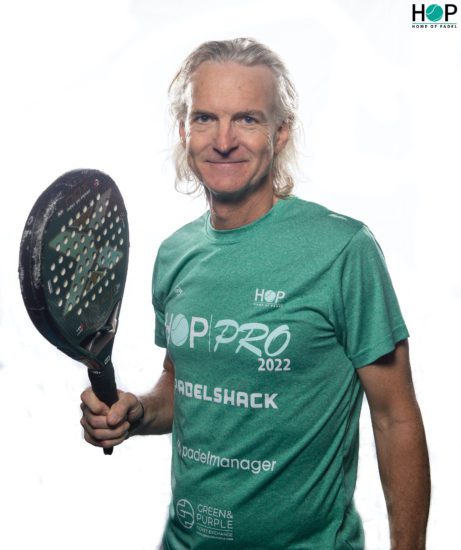
About the host: Minter Dial
Minter Dial is an international professional speaker, author & consultant on Leadership, Branding and Transformation. His involvement in sports has been a lifetime passion. Besides playing 18 years of rugby, captaining athletics teams, coaching tennis and playing squash for his university, he’s been a lifelong player of padel tennis, starting at the age of 10, from the time of its very first public courts at the Marbella Club in 1974.
Then, after a successful international career at L’Oréal, Minter Dial returned to his entrepreneurial roots and has spent the last twelve years helping senior management teams and Boards to adapt to the new exigencies of the digitally enhanced marketplace. He has worked with world-class organisations to help activate their brand strategies, and figure out how best to integrate new technologies, digital tools, devices and platforms. Above all, Minter works to catalyse a change in mindset and dial up transformation. Minter received his BA in Trilingual Literature from Yale University (1987) and gained his MBA at INSEAD, Fontainebleau (1993). He’s author of four award-winning books, including Heartificial Empathy 2nd edition (2023), You Lead (Kogan Page 2021), co-author of Futureproof (Pearson 2017); and author of The Last Ring Home (Myndset Press 2016), a book and documentary film, both of which have won awards and critical acclaim.
It’s easy to inquire about booking Minter Dial here.
Full transcript of interview via Flowsend.ai
This transcription comes courtesy of Flowsend.ai, an AI service for podcasters.
Minter Dial: Mark Hewlett, Great to have you on the Joy of Padel. We’ve met several times. I’ve been finding out more and more about what Soul Padel is all about. But in your own words, who is Mark?
Mark Hewlett: Minter! Thank you so, much for having me on. It’s a pleasure to be here. Who is Mark? Mark is the founder and chief executive of Soul Padel. Mark is married with three daughters and fell in love with padel three years ago. And what a journey it’s been in those last three years.
Minter Dial: All right, well, how on earth did you discover You’re. You’re based up north and padel is. Is. Is obviously now growing in the UK, but what was the discovery? Who, Who. Who brought you by hand to the court?
Mark Hewlett: I have absolutely no right to be in padel. Coming from Wigan, I should be involved with rugby league and, and was a rugby player for well over 20 years.
Minter Dial: Something else we share.
Mark Hewlett: Yeah. Okay. Yeah. You have to. In this part of the world, it’s, It’s. It’s a birthright. I was not handheld or shown padel. I stumbled upon padel on my travels. I’m very lucky to have parents who have a place in Portugal. And that’s where I found it, fell in love and got involved. And it was a sabbatical period for me. It was a period of reflection on what had been a traumatic couple of years. And I guess the timing was just right. I’d never played before, but I do and have played a lot of racket sports. And it was just one of those experiences that you don’t forget. It was a community club. It was kind of rural Algarve, middle of nowhere, kids, grannies, everybody enjoying not just the padel, but the social side of padel. So, that experience, it had quite a profound effect on me. And I guess, you know, as I say, timing was right. Circumstances were. Were good for me. I needed a pivot and a change of direction. And so, yeah, padel found me, really. I think it was in. In a divine way.
Minter Dial: I love that. Without wanting you to divulge the. The trauma you talked about, but what is it that you think makes padel such a therapeutic — if I can put those terms, sport? I don’t know if I want to put that term into such a sport.
Mark Hewlett: Yeah, look, the trauma side of things was pandemic-related, COVID related. I’d worked for the government for two years. I. I led the COVID testing programme. So, that was. That was a tough job. It was, you know, intensely stressful, but very much a rewarding and, you know, just deep and meaningful purpose driven job. I was there to help save people’s lives, quite frankly. So, the pressures of that were obvious but the rewards clearly were far outweighing any pressure or stress. However, that period of time for me was difficult and you know, I felt that I needed to change direction. I’d been in retail for well over 20 years, been all around the world, very luckily to have worked in some wonderful places. The, the therapeutic side of padel was, was for me at first just completely a distraction from everything else that was going on. It was a new thing that I’d never played before. So, I enjoy new challenges technically, socially, everything was new. So, that was the first impression for me when I then got to know the sport a little bit better. This profound connectivity and community was, was where I got really sticky with, with this sport. It was just hard to put it into words and the context really I’ve never found before in, in other sports. And I’ve played a lot of, very averagely a lot of sports. I, with the exception of rugby union, this binding community of people who love the sport and we’ll talk about it before they talk about anything else I’d not seen before. And not just this generational kind of span, it was just this totally binding community that was centred around this club in the Algarve that I just thought, wow, this is, this is different. I’d never, I’d never experienced that before, certainly not in a racket sport.
Minter Dial: Well, that’s the funny thing. I, I tend to also equate it to rugby union. I played for 18 years and I would add a little bit of ice hockey because I feel like there’s a camaraderie that’s special when you go to bat for one another in a, you know, hardcore manner like you do in rugby, which we don’t need to do in padel and, and yet with the combination or the, the, the similarity for me in rugby and padel is the third half. The caña, the beer afterwards, which you talk about everybody’s game. You don’t just say, well you know, me and my, we, we get the opposition together and we shoot the, we shoot, we maybe shoot the boot or whatever.
Mark Hewlett: Yeah, but it’s very similar in that regard. And I think that post game chat where what happened on court happened. Win, lose, draw, it, it, it doesn’t really matter. I think the way that people again this, this kind of social divide that is, is bridged. It’s exactly the same with, with rugby. You could have bricklayers playing with barristers and it’s the same with padel, it doesn’t matter where you’re from, who you are, what. What your economic status is, that’s, for me, what padel should be all about. It’s. It’s. It’s wonderful in that regard.
Minter Dial: Totally agree, Mark. All right, So, you discover the. The society or the. The community of padel in the Algarve, if you come and then this idea of Soul Padel. So, talk to us about the creation of Soul Padel. What is Soul Padel?
Mark Hewlett: Yeah, look, I had this naive view that I was the first Englishman to discover padel and would be one of the first to. To import it back into the UK. Clearly, I was out of my mind and others had been pioneering this well before I had what the. There was. There were two or three clubs that I went to see before I made the decision to get into this, you know, rock slaying with Chris Warren, you know, Middlesbrough with. With Nigel Garton. And then I’d seen others that were doing things differently to how I thought padel should be done. You know, it was. It was premium, it was affluent, it was exclusive. So, I, as you do with. With new ideas, you go to the pub, you have a few beers and you have a chat with the people who are closest to you and you start to brainstorm. And we brainstormed this really kind of accessible and affordable community concept. The bit we struggled on was, what shall we call it? And as blokes do, after a few beers, you get very, very creative. And we came up with some weird and wonderful names. We were put right when we came back from the pub and my wife Tammy said, there’s only really one name you can call this, and it’s Soul Padel. It’s everything that you experienced, it’s everything that we saw. The soul of this sport is exactly what you’re talking about. But you’ve had too many beers and the names you’ve come up with are shit. So, here’s the name. And the name stuck.
Minter Dial: He sounds like a woman who talks straight.
Mark Hewlett: She talks straight and she talks sense and she’s very much, you know, at the centre of everything that we’re doing at the moment and will be for the foreseeable future. So, yeah, Soul Padel, we talked about it, we just couldn’t name it so. And this was back in kind of September of 23. Once we’d named it, it became very, very obvious that we’d got a great name and a great brand, because the extensions to Soul Padel into the concepts that we now run were very easy in the naming rights, but in the operational deployment not So, easy. So, what we wanted to have was this club where everybody was welcome, everybody could meet, play and connect. And there are three values that run through us, like Blackpool, stick of rock. And how do we make sure that those values are brought to life in how we design our clubs, how we employ our people, how we run the programmes that give back to our communities or engage parts of the communities that were disengaged from other sports or unfortunately other padel clubs. And all of that pre work, before we’d even gone to, you know, a design and creative agency, before we’d gone to landlords to talk about deals. That was all there in this kind of foundational, conversational early work. And so, the genesis of Soul Padel was probably always right. The test and the proof was going to be how does it go to market? And that next stage that we’ve gone through in the last, let’s call it, 18 months has proven lots of things. But as you do in a startup organisation, you pivot, you change and you adapt. But we’ve stayed true with we welcome everyone and our values will always be meet, play and connect.
Minter Dial: Brilliant. So, what clubs do you have, Mark? Where are they and how are they going?
Mark Hewlett: They’re going really well. Our first club was Stockport and. And we started with Decathlon, which is outside of Manchester.
Minter Dial: Correct?
Mark Hewlett: Yeah. So, it’s kind of South Manchester. Manchester’s an absolute hotbed now of padel. There are now 31 places to play in and around Greater Manchester, but when we first started, there were only four. We had two courts on a very temporary basis next to Decathlon and Decathlon’s attitude was, you know, you put the money in, let’s see how it goes and we’ll work it out. So, they offered us a three-month licence to operate. Very high risk for a startup. We raised some early seed funding and we got on with it. That was June last year. The two courts went So, well, we were asked to stay, we were extended and then we, we broadened our relationship with Decathlon and We’re now a six-court club with four undercover. And the two OGs are still there.
Minter Dial: Nice.
Mark Hewlett: The club’s going really well. Look, it’s 95 occupied. Throughout the whole time we’ve been open, we have 18 different programmes that run at the club. They’re all full and the community’s really engaged. We then went to, how do we do this everywhere and how do we extend this, the genesis and this kind of bottle the DNA and take it to other parts of the UK? So, we wanted to get into the education sector, because we primarily believe there is a generational moment, I think, in the UK, where if you’re age between 16 and 24, for the first time, you get to own a sport, you know, it can be yours to shape for the next four or five decades. That opportunity doesn’t come along very often. So, how do we put this sport in front of this generation? So, the first thing we did was, was pick up the phone to Loughborough University. It is the epicentre of sport in the UK.
Minter Dial: Certainly is, yeah.
Mark Hewlett: And so, we were very fortunate to be offered an opportunity to put two courts down in a location right in the heart of campus. And again, like we did with Decathlon, we risk the capital, you know, we put in the operational costs and off it goes. It’s been 100% full from the day we arrived, which was the 1st of March this year. Students love it, the community are engaged with the university and the campus life anyway, So, the other. The other aspect we hadn’t really considered was the amount of elite athletes that use our courts in their downtime. Lots and lots of them train and are based there for all the obvious reasons. So, they’re the first two clubs that we’ve opened. We’re now in planning on eight different locations. We’re in build on two new locations, Merseyside and also in Glasgow. And we have a pipeline that could extend into 40 to 50 locations around the UK. And that pipeline we’ve been working on relentlessly, really, for the last 18 months. So, we. We feel as if we’ve. We’ve got a lot of things right, but we’ve now got to test ourselves beyond the two locations where we’ve proven we can fill courts and we can run programmes and we can build communities. But we now need to prove that we can do that in multiple locations.
Minter Dial: Surely in your model, you’re not looking at high pricing to be community oriented in the Decathlon space, for example, or in a university space. And so, getting the right business economics down pat is obviously going to be critical. I’m probably more interested to hear how you put soul into it. And, you know, having been the CEO myself of a company, the idea of having a brand that has some harmony across 40 countries, as it was for me, with So, many different outlets, how do you keep the brand consistent with this notion of meet, play and connect, what do you think are going to be the critical factors in order to keep the soul alive everywhere?
Mark Hewlett: It’s a very good question, and it’s one I’ve also been challenged with in the past, as you have in multiple countries, and getting consistency. My learnings really come from my time with both Lidl and Aldi. How do you scale this model and how do you stay true to the essence of what it is that makes this special? People are the primary driver of culture and are the manifestation of everything that your brand should represent. So, we recruit and we train and we stay very close to the people that we bring within the Soul Padel family. If that bit isn’t right, everything else fails, but everything else involves the application of the brand across, across the buildings, across the physical and digital spaces. The digital space in particular is really interesting and we’ve recently launched our loyalty app, Soulmates. We’re now nearly at 2,000 people. Downloaded in four weeks. That, that again is. Is a channel through which we can reach our brand and, and broadcast what our brand stands for. Because everything about Soulmates is giving back to the community. So, our points are not called points, they’re called almas. Alma, as you know, is soul in. In Spanish. If you earn almas, you can burn them on free courts or you, you can gift them to our programmes, such as what’s that racket and. And pre courts for schools. And so, the people always will be the most important part of our brand, but everything cascades from that and even our, you know, lots of clubs have WhatsApp groups. It’s an unbelievably powerful marketing tool, but it’s how you use these digital tools to speak about your brand stands for. And so, yeah, look and feel is great. Marketing is great. Websites are great. A lot of people tell us that there’s a different feeling around what we do and, and that. That again resonates with me and tells me that we’re the soul.
Minter Dial: Is there nice. Well, of course, that, that for me this is 100% making sense. Culture is in the people. One of the challenges that I would therefore see is in the coaching because at the end of the day they’re the most sort of close to the individuals. You got the reception, the buy area presumably, and that kind depending on the age groups. But the, the coach has to also be the. The coach of padel and bring the padel concepts and culture that you were talking about, the Algarve and then also the soul thing and bringing that energy in So, that it feels right. And I, I suspect it was one of the big challenges that you guys will be facing in the UK. Anyway.
Mark Hewlett: Yeah, it’s a huge challenge and this is one of the things that we’ve. We’ve really scratched our heads on for the last year at least. There’s two things that we’ve done relatively recently. One, one, probably in the more recent past, we’ve partnered with an organisation called LUSU Sports that is run by a lady called Sue Morrison. So, Sue Morrison and her business partner have been in coaching and development for children probably for 40 years collectively probably 80 years between the two of them. So, Lou and Sue. Lou works with the LTA, she is the head coach for the visually impaired Great British tennis team. And sue works primarily with children, but also with people, people with learning disabilities. I don’t think there’s a better kids coach in this country than Sue Morrison. And having just watched two summer camps over the last week, how she engages with young children and early, early teens is wonderful and particularly for those who’ve never picked up a racket of any type. So, we’ve, we’ve basically partnered with that organisation for the next three years to develop not just introductory padel, but junior academies. How do we get kids from that first taster into. I want to play this sport and I want to play this as my primary sport. So, that’s one of the things we had to get right if we were to stand behind this community concept. And with kids comes everything else. Most recently recognising a talent deficiency really amongst our own team, we wanted a technical director. We wanted someone who has played Padel from being a kid, lives and breathes sport coaches at a very high level. So, we recruited David Garrido Garcia, who most recently has been the head coach of the Abu Dhabi national team. He’s coached very high-level players primarily in the Middle east but also in Europe and most recently was the technical director for WPA in Dubai. So, someone like him is not easy to find. So, we went on a large international headhunter style exercise supported by the wonderful David Peacock, who is one of the best headhunters I’ve ever worked with in sport and leisure. However, for David this was a challenge because padel was new to him but he’s deeply networked and so, we shortlisted three people, we flew them to the UK, they spent three days with us each and David was by far the standout candidate. Not only is he uber talented as a coach and a coach of coaches, he gets the community and that’s what we wanted to see. What we didn’t want was a, a journeyman pro promiscuous as, as you know this. Yeah, they are most, the most promise, promiscuous professionals I’ve ever worked with. We wanted someone who really got what we were trying to deliver. So, David’s role will be broad from everything, even the design of our clubs he will be involved with, but the technical proficiency of who we employ to coach our players will be directly under his remit. And with the exception of two or three other clubs in the UK, I don’t think there’s many taking it as seriously seriously as we will under his leadership. And, and I really. He’s only been with us for the last three weeks, but I’m already seeing the impact. He’s with us for the majority of September. He has two jobs, by the way. He’s also the head coach of the Crown Prince of Abu Dhabi, which is more high pressure and stressful than it is working for solar panels.
Minter Dial: But, well, the good news is that David speaks English, perfect English, and that is such an essential component. All right, let’s last few minutes with you, Mark. Let’s just talk about your padel. I always like to talk about padel. Yeah, no, but you got into padel down in the Algarve. You play, you know, relatively frequently, I’m guessing these days if you’re not travelling. But what’s your favourite shot in padel?
Mark Hewlett: Am I allowed to say the serve? I mean, is that, is that just like.
Minter Dial: Sure, you know, you’re allowed to say what you want, man.
Mark Hewlett: Look, I, I, the reason, the rate, the reason I say that is that because we, most of the people who come and play with us are brand new to the sport and most of them have played a little bit of tennis, but of the overwhelming feedback is at least I can get this game going very easily, you know? Right. And that, that for me is, is one of, one of the biggest hurdles for any sport is this. How technically proficient do I need to be just to get going? So, the fact that the serve is very easy for a beginner, for me makes it the best shot in the sport.
Minter Dial: Oh, I love that answer. That is a supremely counterintuitive answer, Mark, and it is delightful. It really does show the nature of the culture of padel in your answer because, you know, the others who want to talk about the serve to win the.
Mark Hewlett: Just get the game going, get the.
Minter Dial: Absolutely, yeah. Try not to double fault, however.
Mark Hewlett: Yeah, yeah, tell me about it.
Minter Dial: I double faulted yesterday. Yeah. What was I doing? But all right, So, I love that. What about your, do you watch any of the pro padel?
Mark Hewlett: Not a huge amount, to be honest. If I catch glimpses of it, it’s highlights. I was very lucky to go to the M3 Academy in Madrid and I watched Galan and Chingotto play in practise. It was amazing. Up front, by the side of the court, with my face to the glass. I’ve never watched a professional game. I’ve never been to a tournament like that. My interest is primarily in the grassroots side of the sport, but to watch it just in practise was outstanding.
Minter Dial: It’s another level. I’m going to Paris for the major to cover it for the Bandeja. And so, I think that one of the big lessons I have, I’ve had many pros, of course, on this podcast is for the regular punters who are trying to learn Padel, watch the women play, because that is a far more accessible, proper learning. You know, you can watch for fun if you want to watch, you know, Paquito or Tapia do their magic shots. But for us, if you want to learn actually how to play, go check out the women.
Mark Hewlett: I agree.
Minter Dial: So. But you also, before they were recording, told me that you have a favourite partner. So, Garton, Theo Garton, who I’m guessing is part of the Middlesbrough gang, and then a lady called Abby Omblertruran, Yeah, I know, I know the name of Theo Garton, but Abby. So, who?
Mark Hewlett: Yeah, this is a great story. So, we hosted the inaugural Stockport Open in. When did we do that? In July. And we invited 40 men and 40 women to take part. And the people who invest in our organisation were very kind to put £10,000 prize pool into the weekend.
Minter Dial: Wow.
Mark Hewlett: However, we stipulated that no one could be a full time professional or a member of a national squad. So, we didn’t want this to be dominated by the usual crowd. We wanted this to be available to very good amateurs, with some exceptions. So, the men’s tournament went as predicted. It was a great tournament, very enjoyable, but the women’s was outstanding. And there was a pair of players that had travelled over from Hull and Abby was one of them. And when you see Abby play, you just know someone’s got the gift. They’re still learning the game to an extent, but she’s already breaking into junior squads for England and Great Britain. Her hands, her placement, her communication. She looks quirky, she acts quirky, she’s got a real court presence and Persona. And she won our women’s tournament and she was absolutely delighted to win because each of the players who won got 1500 quid each, which is a lot of money, good money, the money for a pro in the UK, never mind someone who isn’t. But I firmly believe on the right track, Abby will be one of the best players in the UK.
Minter Dial: Fabulous. Well, I’ll be looking out for her and I. I understand from her last name that she has some French roots as well, which is brilliant as well. That’s lovely. Well, listen, Mark, what would you say is the future of padel in the UK and in the world? How do you evaluate that from your business mind itself?
Mark Hewlett: I think padel’s got a wonderful future in the UK. We. You know, two years ago when I started to talk to prospective landlords, I was given blank stares and the kind of go away treatment. Now it’s the other way around. They want to talk to me. We’ve got to be careful. Obviously, I think there’s a natural handbrake on everything, which is the government and the planning system. But I do think they’ll be sustained growth, there’ll be market segmentation, there will be some failures, there’ll be some casualties. But all the indicators that I see suggest padel’s got a very prosperous and successful future. If we get engagement right, if we get junior padel right, and if we get coaching right, I think the rest will come. There’s enough money available to invest in this sport now and I think growth will be sustainable and we sincerely hope we’re a big part of that globally. We’ve registered our brand in 30 different countries and we are on the ground looking for site in Australia because I’m an Australian citizen as well as a UK citizen and it’s two years behind where we are in the UK. It’s emerging. There are very few places to play and I do think the Aussies will love this game. So, I think the future is very bright. I sincerely hope that Brisbane is the first Olympics that we see Padel competitively played as a recognised sport. And I’ll be there if it is. And yeah, I think you look at the US and markets, where there is liquidity and there is opportunism and there is optimism, padel should be there right in the middle of all of that.
Minter Dial: Well, it makes me think, Mark, it’s not exactly a fully congealed thought, but if we think about Argentina, we think about the growth in South Africa, we think about Australia and the UK, I mean, even going to say, the French, there’s a whole lot of another sport that also is a burgeoning sport in each of these countries.
Mark Hewlett: Yeah, yeah.
Minter Dial: So, let’s have, you know, the six nations and some down under competitions in the future.
Mark Hewlett: That would be awesome.
Minter Dial: All right. Well, Mark, how can somebody. What sort of socials or calls to action. Would you like to be able to.
Mark Hewlett: Shout out for very active on LinkedIn, you can follow my journey and the journey of Soul Padel both via our corporate LinkedIn account or my own personal account. And please do have a look at what we’re doing online with Soulmates and join the journey. Be part of something special.
Minter Dial: Spectacular. Vamos. Mark. Thank you very much for coming on.
Mark Hewlett: Thank you very much for having me.