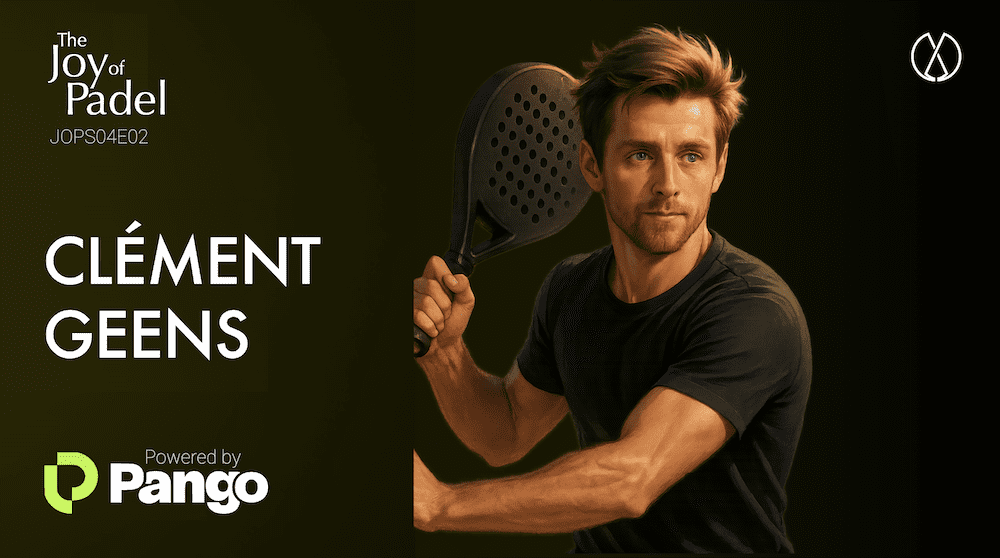
The Joy of Padel podcast with Clément Geens (JOPS04E02)
On the latest episode of the JOY OF PADEL podcast, I had the pleasure of welcoming a truly remarkable guest: Clément Geens. As the kickoff to our fourth season, this conversation held extra significance for me—not least because Clément has made a meteoric rise in the world of professional padel, having achieved a world ranking of 92 after just five years in the sport. His journey is as inspiring as it is instructive, and I’m thrilled to share some highlights with you.
Background on Clément Geens
Clément, hailing from Belgium, grew up in a family of field hockey players and initially followed that path himself. However, he soon transitioned to tennis, reaching a high of 245 in the world before injuries led him to discover padel. What’s extraordinary is just how quickly he adapted: from picking up padel “with friends,” he became Belgium’s number one, traveling across Europe to compete at the top level—all while balancing work and training back home.
Main Topics Covered
Our conversation covered everything from the nuances of athletic cross-training to the nitty-gritty of being a pro padel player. Clément revealed how both his hockey and tennis backgrounds contributed to his game—especially in terms of hand-eye coordination and adapting his style to new challenges. We discussed the learning curve in transitioning from tennis to padel, particularly unwiring ingrained habits and developing padel-specific shots like the Vibora or Rulo.
Clément is a keen observer of the sport’s evolution, often learning by watching countless hours of televised matches and then emulating the strategies of modern greats like Galán. We dived into the importance of tactical choices, the art of overheads, and the ongoing evolution in shot variety—especially how unpredictability and last-moment decision-making have become key at the top level.
Beyond the technical, Clément offered valuable insights into the realities of making a living as a pro. With detailed candor, he described the economics of prize money, travel, coaching, and sponsorships—and how being Belgium’s top player offers certain sponsorship advantages, while training outside of Spain has its own downsides. He also shared his particular approach to finding the right doubles partner, managing communication on court, and balancing consistency with the need for surprise.
Three Takeaways
- Adaptability is Everything. Whether it’s shifting from tennis to padel or adjusting tactics mid-match, Clément shows how elite players continually evolve—learning from others, experimenting, and embracing change.
- Padel is Emotionally and Socially Addictive. Clément echoed something I hear often: the sport’s variety, rapid learning curve, and social nature make it irresistible—not just for casuals but for serious competitors.
- The Professional Game is a Partnership—On and Off Court. Success at the top isn’t just about skill; it’s balancing the right partnerships, open communication, economic realities, and unwavering positivity—even when switching sides or working with new coaches.
If you want to follow Clément’s journey, check him out on Instagram at @clemgeens. And if you’re keen to learn more about how to rise through the ranks—whether as a player or a fan—listen to the full JOY OF PADEL episode. Here’s to the ongoing joy, community, and innovation in our beloved sport!
To find out more about Clément Geens:
- Find or follow on Instagram: @clemgeens
- See his profile on FIP: Clément Geens
To listen to the show:
To listen to The Joy of Padel podcast, you can use the embedded player above, or go find it on Spotify, Apple Podcasts or any number of other podcasting services listed here.
Send in your questions or reactions:
Please send me your questions — as an audio file if you’d like — to nminterdial@gmail.com. Otherwise, below, you’ll find the show notes and, of course, you are invited to comment. If you liked the podcast, please take a moment to review and/or rate it! ¡VAMOS!
Further resources for The Joy of Padel:

The Joy of Padel podcast, hosted by Minter Dial, a padel tennis player since 1974, is an exhilarating show that delves into the captivating stories of notable padel personalities worldwide.
Meanwhile, you can find Minter's other Evergreen podcasts, entitled The Minter Dialogue Show (in English and French) in this podcast tab, on Spotify, Megaphone or via Apple Podcasts.
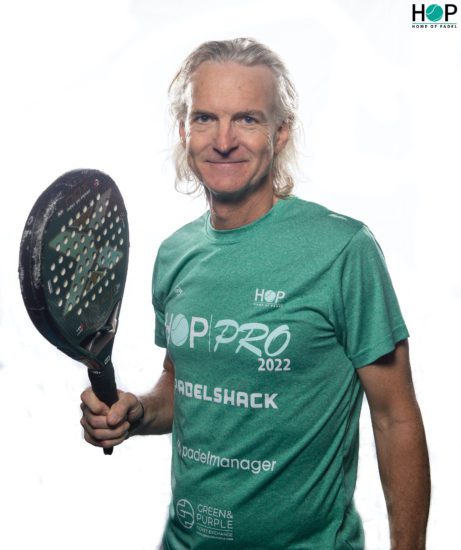
About the host: Minter Dial
Minter Dial is an international professional speaker, author & consultant on Leadership, Branding and Transformation. His involvement in sports has been a lifetime passion. Besides playing 18 years of rugby, captaining athletics teams, coaching tennis and playing squash for his university, he’s been a lifelong player of padel tennis, starting at the age of 10, from the time of its very first public courts at the Marbella Club in 1974.
Then, after a successful international career at L’Oréal, Minter Dial returned to his entrepreneurial roots and has spent the last twelve years helping senior management teams and Boards to adapt to the new exigencies of the digitally enhanced marketplace. He has worked with world-class organisations to help activate their brand strategies, and figure out how best to integrate new technologies, digital tools, devices and platforms. Above all, Minter works to catalyse a change in mindset and dial up transformation. Minter received his BA in Trilingual Literature from Yale University (1987) and gained his MBA at INSEAD, Fontainebleau (1993). He’s author of four award-winning books, including Heartificial Empathy 2nd edition (2023), You Lead (Kogan Page 2021), co-author of Futureproof (Pearson 2017); and author of The Last Ring Home (Myndset Press 2016), a book and documentary film, both of which have won awards and critical acclaim.
It’s easy to inquire about booking Minter Dial here.
Full transcript of interview via CastMagic
This transcription comes courtesy of Castmagic.io an AI service for podcasters.
Minter Dial: I am thrilled to have you on the Joy of. Padel. This is the kickoff session for the fourth season, and your trajectory into padel has been nothing short of phenomenal. Finishing in the top hundred in the world after only starting five years ago. But for those of you, for those of us who don’t really know you, let’s start with who is Clement?
Clément Geens: Yes, hello. First, thanks for having me. I didn’t know it was for the fourth season. So, nice to be here. Well, I’m Clément Geens from Belgium. So, I’m ranked number one in Belgium and now 92 in the world. So, finishing the year in the top 100. As you said, I started five years ago with friends, and then I think, like everyone, I.
Clément Geens: I enjoyed a lot and I start playing more and more and get addicted to the sport.
Minter Dial: So you came from tennis, correct?
Clément Geens: Yes, Correct. Well, I came from hockey. Hockey on grass. I’m from a family of hockey players, so everyone in the family play hockey on grass. But then I started quite early to play tennis. I had a. Yeah, let’s say a small tennis career. I reached number 245, I think was 2016, and then I stopped due to injuries, and then I came into Padel.
Minter Dial: One of the interesting things about padel I’ve been observing is that there are many different sports that can work well within padel. It’s not just tennis players. I, I think of, like you say, hockey players. I’ve already had another hockey player on my show and, and, you know, football players. Which do you think has helped you the most and which maybe has hindered you in your past? To what extent did hockey help you with your hand eye in these things?
Clément Geens: Yes, we have in the national team as well, one player coming from basketball. So, I think, well, it’s maybe more difficult, but it can be some people coming from that sport as well. Well, yeah, as you said, it’s mostly the eye hand coordination that helps a lot. I think as a kid, any sport is helpful to be able to play well any sport in a professional level. I think it helps a lot to develop many, many different things when you’re a kid. And then at some point, of course, you have to specialize in. In one sport, I think from 15, 16. And then, yes, tennis still, I think is the sport that helps the most to be the best in Padel, because it’s.
Clément Geens: Well, it’s the closest one. It’s with a racket. So, yeah, it helped me a lot.
Minter Dial: Well, the funny thing, of course, Clement, is that sometimes padel can be Quite sorry. Tennis can be quite difficult to unwire and, and you have these habits about certain types of plays and certain types of shots that you spent years drilling into yourself. And it can be, it can be difficult. How did you find that transition from tennis into padel?
Clément Geens: Yes, first, of course, the few first months, years, it’s more complicated because you’re not. Not used to play with the. You always try to play fast. It’s more difficult to play shots with more effect, like the Vibora or the ruler or some different shots. So, of course you have to adapt, but I think that’s the skills of a professional player as well, is that they can adapt quite easily. And then. Well, I think while playing, you just notice what you have to do, what you have to change, and then it becomes also natural. The changes are coming naturally, I would say, because I didn’t have.
Clément Geens: Have many lessons. I think if you take lessons as well, when you start, you can, you can improve faster. But it was not my case. I just learned by playing and watching mostly. And then it came. Yeah, naturally, I would say, well, that’s.
Minter Dial: Phenomenal because, I mean, I’ve been a student of the game and I, I feel like the game is so evolved because I started much earlier. When you’re watching, how. Who do you watch? How do you watch? How do you integrate what you’re watching? Because there’s not a lived experience.
Clément Geens: No, of course, but I think by watching, if you watch many, many hours, of course, it’s not just one, one match, but then you see the tactics, you see what the players, what, where they play, how they play, how they move, how they recover the net, where they replace themselves in the court. And then when you, when you go and play yourself, I think I just try to do a little bit what I saw on tv. And then, yes, by playing with better and better opponents, you also get used to the speed, get used to what you have to do, and you realize what you do well, what you do wrong. And. Yeah, I think it can come that way.
Minter Dial: Well, it’s remarkable how we all have different learning patterns, because in the end of the day, a lot of people watch, you know, especially the men’s padel, and say, oh, my God, it’s great. Oh, I could do that. Or, you know, he missed a ball like I miss a ball. You know, he’s only perfect. Hashtag, he’s imperfect like me. But to be able to comprehend the, the times when you hit slowly, you just powder the ball back. Patience, patience, that snap, that moment of decision-making is that Something that you.
Clément Geens: Can observe while you’re watching, I think a little bit. But I think that that is also quite personal to, to every player. The moment where you, you, you, you want to change or do something differently. And as you said, Padel has evolved a lot now. You see, I think now a great player to watch is Galan because he’s like what is modern Padel, it’s. It’s him. Because of course you can, you can watch Tapia, but he will do some, some shots that probably nobody will never be able to do it. I think Gallant is more.
Clément Geens: Well, he’s also very special, but it’s more classic if he is in his game style. I think he practiced a lot and well, he had some talent, of course, but it’s different. It’s so has. Like, if I have players that I want to teach them, I will always say, like you, it’s better to, to look at Gallant than to look at Tapia. But then I think, yes, everything is quite personal. So, some players will do. Think about it that. Okay, I have to change the pace.
Clément Geens: I know I have to change the pace now. I’m looking for the time for some players. It will just came. It will just come naturally, I think. So, it depends who you are and how you see the game. But of course you can always work on it. But it’s something that is really difficult to work on.
Minter Dial: Well, we’re going to get to that, surely. But you know what, one of the obvious differences with padel is the overhead gain.
Clément Geens: Yes.
Minter Dial: And. And you know, if you count there, there are at least seven different shots you can make overhead which require different technique. And you know, sometimes you, you pull out the wrong one because you just have a habit of playing this other shot.
Clément Geens: Yes.
Minter Dial: To know how to decide. How quickly are you deciding when you’re doing an overhead shot? What in terms of which one do you want to play though? Because you play on the left.
Clément Geens: Yes.
Minter Dial: How quick are you going to decide to play the rulo or a gancho?
Clément Geens: I think it depends a lot on the ball you receive. Like, I try to play with like places where I am. I think if the ball is coming to my left, then I will go more for fake overhead or rule. If the ball is coming more on me, then I will play more of Ebola because it’s my favorite shot. If the ball is coming on the right, then I will play more of Ebola. And then if the ball is really easy, okay, I will go for the smash. And then it’s also like I didn’t Try to take too much attention on the technique but more on what I want to do with the ball. And then, okay, now I’m far from the net.
Clément Geens: I will try to play more slow. So, I just try to play slow in that area and then the technique comes also with what I want to do. So, I did it more in that way. I know you can did it, you can do it in another way and you can say, okay, I will learn more the technique and then I will be able to do the shots. But I tried more to first play correctly, like play the right speed, play the right zone. And then I focused more on, on some details technically to progress. But I started more like where I’m on the court and then so I know what I’m, I want to do and also like what kind of shots I want to play in terms of speed and effect. And it, yeah, it came that, it came that way.
Minter Dial: So to what do you credit your success in getting to world number 92?
Clément Geens: Two? Yes, 92. Well, I’ve played with, with different partners, so you always have to, to say thanks to your partners because you, you, you, you don’t play alone as you know, sometimes it’s, it’s difficult but sometimes it’s also really nice in a way. So, I had good partners in a way during all the year. Well, my type, I think it’s what I hear also from my partners that I’m competitive so I will always play well. A decent, a good level. Level. Sorry the, the whole match so I don’t have too much ups and downs. I will always try to find solutions and fight.
Clément Geens: That’s also something that is important. And then, well, I’m playing quite aggressive. I’m playing on the left coming from tennis. So, I have, I have I think good volleys, good vibora, more complicated sometimes from the back to defend and to slow the game. Because that’s not something I’m, I’m used to do. So, yeah, that’s me I think, well, working.
Minter Dial: You talked about your Vibora being your favorite shot. I’m going to put that in the category of in the front of the court. What’s your favorite shot from the back of the court?
Clément Geens: I would say the double handed backhand. It’s also quite not common in the men’s padel. You see it more often in the women’s padel, I think because sometimes they lack a little bit of power and you have more power with the two hands. But it was my best shot in tennis, the double handed backhand. But I didn’t play it for two years when I started Padel. And then at some point one friend told me, yeah, when the ball is easy and in front of you, just try. You had a good, you had a good tennis backhand. Just try.
Clément Geens: And then I tried and it worked quite well. And then I used. I use it now in, in different situations in the game. I use it when it’s in front of me easy and when I can play faster and to. To drop the ball down in the feet and then go. Go to the net. But sometimes I use it also in. In defense, like in service fast.
Clément Geens: Sometimes I have more control with my second hand as well. Of course I don’t use it with the glass, but for example, is. Is doing some bajada in backhand with two hands. I think he’s the. The only one probably to do it, but yes, from the back. I think that’s my, my favorite shot.
Minter Dial: Yeah, I, I do remember Pablo Lima. He used to. Yes, he used to do it. And of course I have Turok now a little bit. Yes, it puts into it amongst the men and it’s interesting to see again, that’s an example of how the sport is evolving. Yeah, it’s coming more and more different, trying to figure out different options. And it’s one of the sports that sometimes in tennis, well, you always have to position your racket this way and you go follow through big. And there’s certain rules.
Minter Dial: It feels like Padel. There aren’t so many rules.
Clément Geens: I think Padel is more about the. Yes, the, the impact that you can have. And regardless, a little bit of the. Of the technique. Of course, there are some bass that you need to have to be able to play at a decent level. But yes, as you say, I think Padel evolved a lot in. In short years. So, it’s nice to see.
Clément Geens: And I think you can also surprise the people by playing differently. I think that was also my case a little bit when I started playing fib and they were a little bit surprised that ok, sometimes I was maybe rushing to the net when I wasn’t supposed to do it, but then I was creating something that they were not used to. So, it was also good in a way. Of course you have to. To balance what you do. But yes, I think there are place there the place to. To be able to play different type of game. Of course, now if you watch the top teams, yes, you need to play fast.
Clément Geens: You need to smash from almost everywhere in the court. So, there are some shots that you need to. To be at the Top level. But for the rest, you can also try a little bit different things. I.
Minter Dial: You said before competitor, I think you meant consistent. You have a. Yeah, the, the challenge with consistency is typically predictability because. Oh, that’s a shot. I know how, oh, he’s going to do a lob. You see it ahead of time. It feels in today’s game that there’s going to be, there’s, there’s increasingly a need for more deception.
Clément Geens: Yes.
Minter Dial: The ability to say, well, I’m going to show you this, but I could do three different things. Is that something that you feel is newish or has always been there?
Clément Geens: I think it’s, it’s been there, but maybe now the, the level increased a lot and you need to surprise the opponents to be able to play and make some. Something different and a little bit of magic. And as you said, it’s correct. I think you need to have the same preparation, for example, to be able to play three or four different shots. So, the opponents don’t know until the end if you’re going to play, I don’t know, Chiquita, lob a fastball or whatever. So, I think, yes, you can see that more and more. I think Tapia is doing it a lot. He.
Clément Geens: Yeah, he decides really at the last moment what he’s going to do and then you never know where he’s going to play and at what speed he’s going to play. So, that’s really interesting. But I think. Yeah, as you said, I was consistent, but I think you can be, you can be consistent, but you, but you have to avoid to be predictable. So, you don’t have to play the same game style always because that’s also consistency. But that’s. Yeah.
Minter Dial: So in the, in the small amount of coaching that I do and I play, I don’t know, five times a week, one of the things that I’m constantly thinking about is providing that consistency but also that unpredictability.
Clément Geens: Yes.
Minter Dial: And the thing that I’m working on often is trying to figure out when do I decide which shot I want to do? Because if I wait last minute, like Tapia, last second.
Clément Geens: Yeah.
Minter Dial: For me that’s an invitation to screw it up.
Clément Geens: True. But that’s, that’s what also, I think that’s the difference also, I think between like a good player and maybe the, the best ones.
Minter Dial: Well, there you go. I guess I’m not top yet. You mentioned that you, you came quickly a addicted to padel when you started. I’d be interested to hear from you what made it Addictive. What, what is it? What is it? The component. I hear it all the time but what is it actually materially that makes it so addictive?
Clément Geens: I don’t know. Yes, you have the way that it’s, it’s for people, it’s fun and it’s social etc for the recreative players, yes, I understand it clearly but for me it was not really that I wasn’t looking for like another hobby or whatever. I just tried but then I felt like okay, I can improve quickly. It’s. There are many different type of shots that you can play, so it’s not boring in a way. Yeah. And I think that attracted me to the sport mostly it was the, the game, the tactic of the game and the way that you can change everything and play a lot of different shots that. Yeah.
Clément Geens: Attract me to. To Padre.
Minter Dial: Right. Well, obviously you also said you, you play with a partner and as we know and of course that’s quite important. Two, two questions. First is how do you find the right partner for you? What in the pro level, what is it that you can look for? What do you. Because if you get, if you say I want to play with, let’s say Coel, it’s unlikely, it’s going to work. He’s going to say I got some other choices. So, there’s, there are limitations to just how far you can go. What are you looking for, Clement?
Clément Geens: Yeah, it’s a complicated area. Of course you all, you always look for the, the best partner in terms of. Of ranking and level because the ranking helps you to enter the tournaments. Maybe be seed in some tournaments, maybe enter in my case now, I mean in qualification of the Premier Padel. So, if I play, for example, if one guy that is ranked 35, 40, maybe I would and I will enter directly the main draw. So, you’re looking at the ranking. Of course you’re looking at the level. But the level is also subjective in a way.
Clément Geens: So you ask also other people or your coaches to, to give you an honest opinion on, on this type of players. Of course I play on the left, so then I look for players on the right. So, at the end the, the amount of players that I might play with is quite limited because if I ask someone that is ranked 50, I’m now 92, he will say no, he will say look, I think I have better options. I can enter mates and I understand it’s normal. So, I can maybe look from players from 75 to the lower. I can but I will also in a way not be interested to Play with a player that is ranked like 200 because with him I will not be seed and maybe his level is not that good also in a way. So, at the end you always look for maybe players that are 15 places in front of you till 15 places behind you. And especially players on the right because I play on the left.
Clément Geens: So at the end it’s maybe 20 players that are potential partners. So, it’s not that much. And then you look also at what you are looking for. I mean I, for example, I’m a left player but I don’t have a so good smash. Like I don’t, I don’t smash protest or to make it come back so easily. So, maybe I will look for a player that has that type of smash. Maybe a left handed, it will be more easy, but there are not so many. Or maybe a right player, but that has a good smash.
Clément Geens: So if the lobby short, maybe he can come. But that’s discussion, discussions I have well with myself alone and also with a coach. And then you can also look at. Okay, which academy is he practicing? Maybe I can practice with him more easily. Well, is it a good friend? Maybe we can speak the same language. I don’t speak so well Spanish. So, for me it’s also more difficult in a way to. To play with Spanish players.
Clément Geens: And there are mostly Spanish and Argentine players at the top right now. Hope and let’s see, maybe it will change. But for now it’s like that. So, yeah, that’s how you look. And at the end you, you just try to call the players or text them and say okay, what do you want to do? How do you see next season? Do you want to try few tournaments? Do you want to play the full year and then. Yeah, it’s just between him and. And you.
Minter Dial: Well, when you put it like that. Clemo, you say I want a right. Right sided player.
Clément Geens: Yes.
Minter Dial: Who has, has a Portress that’s within.
Clément Geens: Yeah.
Minter Dial: Within the next 20, 20 spots or 15 spots. I mean we’re down to one or two. It, you know, comes down to if you’re looking for specifically a right sided player to what’s. Because when you say I’m not a. I don’t hit so well. The Portress is the classic shot, I’d say in the, in the men’s game. To what extent do you feel married to playing on the left is. Have you, have you tried playing on the right? Is that something you’d dare to do or not?
Clément Geens: Yeah, that’s the thing. It’s true. I always Played on the left because when I started I was coming from tennis and mostly, okay, you have good values. You, you have quite an offensive game. So, it, it will probably more suit you the left side. And then I had quite fast, let’s say a good level in Belgium. And then, so if you wanted to, to, to control more the game, then you have more chances to do it on the left. I wanted to win, of course, I felt I had more impact when I was playing on the left and then I quite fast became between the best players in Belgium and so I felt, yeah, I need to play on the left because that’s where I will, I will win most matches.
Clément Geens: So that’s how I ended on the left, but I never really tried on the right and maybe my game style now will shoot more on the right, but I have five hours of, five years, sorry, of battle on the left and I have zero on the right. So, it’s really difficult also to start again also with my ranking. Now if I say to, let’s say I, okay, I contact some players that are playing on the left and say, okay, next year I will play on the right, but they will tell me, okay, but you never played any tournament on the right, so I don’t, it’s not that I don’t trust you, but I didn’t see it, so I will not take that risk. So, for now I’m also stuck in a way on the left because that’s where I always play and that’s where the people saw me play and say, okay, yeah, he’s good on the left. He, he has, well, he’s good, he has that level on the left. So, I know that if I move, I don’t know.
Minter Dial: Well, it’s only a thought. Yeah, I, I typically have to pay on the right now, but I know how to play on the left.
Clément Geens: Okay.
Minter Dial: I always say to everybody, learn the other side. Why? Because that’s your partner.
Clément Geens: Yes.
Minter Dial: And, and so you understand your partner deeply if you know how to play his side. You know what, what are the options when the ball is high far on the right, can he, can he do a ruler or you know, the equivalent sort of a ruler into the, into the net if he’s right handed in this and that. Anyway, I, and plus you might switch in the point. You know, all of a sudden you’re on the right.
Clément Geens: True.
Minter Dial: You know, love went over him and you pick him up and anyway, that’s for that thought.
Clément Geens: True.
Minter Dial: So being a Pro, you’re number 92. I mean, this is a Huge step, I think for you. Congratulations for that.
Clément Geens: Thank you.
Minter Dial: And how can, how easy is it for you to be able to say I’m now a pro and making money from padel? What does it look like? Because we typically hear the big numbers now that are beginning to come in for the top 10. Quail sponsoring. What does it look like at your level? You’re going into the qualified qualifying rounds, so you have to travel with your partner. There’s, there’s always, you know, how far along you get in, in the tournament training and then how. So, what does the economic model look like for you?
Clément Geens: Yeah, well, I think the economic model is different for every player, of course because in my case I live in Belgium. I don’t, I don’t practice too much because I work beside also playing. So, I don’t have so many expenses. If in terms of academy and if, if you have an academy, of course you always have that, that amount. I think it’s around 500 to 7-800 per month to practice in a good academy in Spain. It depends your, your level or which academy also, but it’s that area. And then also it depends if you take your coach to the tournaments, then you have to pay his expenses also his, well, his salary. Normally the coaches, well, the, all the coaches that I had, they used that formula.
Clément Geens: It was 10% of your prize money, of your brute prize money. And if you lose in the first round of quality of Premier Battle, you don’t have any prize money. So, then it was I think ‚100€ the match, something like that divided by two. So, that’s how, oh, it works with the coach. And then it’s your, it’s your choice to say, okay, I’m okay to take a coach with other couple to that tournament or I don’t want because I don’t have the, the money to, to do it. It’s, it’s, it’s okay. It’s like, it’s like that. And then in terms of prize money, it’s very difficult to predict what you’re going to earn because of course it depends on your results.
Clément Geens: So if you play Premier Padel half of the year and you lose first round of quali, you just have zero prize money for half year, which is not much. But then normally you always know like, okay, my ranking now is around 100. Last year I had for example, 15,000€ of prize money. I should get around that at the end of the year. Some, some months I will play better, some months I will play not that good. But at the end it Will be. It will be like that. So, for me, I think finishing 92 in terms of prize money was.
Clément Geens: Yeah, around. Around 15,000€ for the year. I think. Because some tournaments, okay, you qualify in Premier Padel and you have maybe 1500. That is brute (gross). But then you have to pay the tax on the country, maybe the 10% of the coach. So, at the end the net amount is maybe 6-700. But you also have the expenses.
Clément Geens: It depends where was the tournament. You have to take the plane most of the time. So, you have to pay the plane tickets. Generally the hotel and the food is paid on site in the Premier Padel. But it’s not the case in FIP. So, it in FIP is more expensive because you have to pay the travels, the food and the hotels.
Minter Dial: And the price point isn’t as big.
Clément Geens: And the prize money is less. Of course, yes. If you win a fib silver is 700. So, it covers maybe the expenses you had. Depends where was the FIP? So, most of the time when you play a tournament you will lose money. But for my case it will be compensate because I have quite some sponsors because I’m ranked number one in Belgium. So, I’m lucky in a way to. To have more sponsors because I’m from Belgium.
Clément Geens: Also in a way it’s a little bit a disadvantage because I’m not practicing in Spain and I don’t speak the language. But in a way it’s an advantage because I get more money from this point source. So, I think a Spanish player in my ranking would. Will lose money at the end of the year. I’m not because I’m from Belgium or, or players from France or Sweden, they will earn more as well. So, yeah, I think it’s a little bit like that. And then. Well, it’s your choice to, to.
Clément Geens: To decide how you do it. Okay. I want, I want to invest. Invest on myself and take a coach. And maybe I will lose 10,000 at the end of the year. Okay, it’s your choice if you want to make money. Maybe you will play more. I don’t know, some.
Clément Geens: Some money tournaments close to your home where you can get money. Maybe you will not travel with a coach. Maybe you will say to the academy. Okay, I will come only two days a week because at the end of the week I’ll be playing a tournament. And then you will try to, to reduce your cost. That’s your choice, right?
Minter Dial: What you were talking about coach. So, so when you have a coach with you.
Clément Geens: Yes.
Minter Dial: And what, what, what Are you looking for from the coach? What are the. What’s the big things you’re looking for?
Clément Geens: I. Most of the times I didn’t have. I. I don’t really have a coach in Belgium that is following me. So, most of the times I had the coach of my partner. I had different. Had different coaches. I think this year I had maybe seven or eight different coaches.
Clément Geens: First thing is that, yeah, I think you have to trust your coach, both of you, because if you don’t trust him, well, he will tell you the tactic and everything. So, if you don’t trust him, it will not work. So, first you have to trust your coach, that’s really important. And then the coach is there to help you first to stay in the match. I think to give your best during the first point until the last point, that’s the first thing. Most of the times the coaches, they know the other pairs because it’s a small world. It’s only in Kamer padel the top 125, 30 maybe that is playing. So, it’s all the time the same pairs.
Clément Geens: And the coaches, they are there from for a few years now. So, they know everyone. So, that’s good. So, he knows already the weaknesses and what they do good, the other pair. And then he will say before the match, he will always put a tactic, one tactic in attack and one tactic in defense. And then it will evolve during the match, how the matches go. Then he will change the tactic or not. So, that’s the first thing, sorry.
Clément Geens: And then he will also be able to act on the emotions. If he sees like the team is a little bit too calm and too down, he will try to put emotions and to bring energy to the team. And he can also do it the opposite. If you’re too excited, he will try to calm you down. So, I think that’s the area he can have an impact. And at the end I had, as I said, seven or eight different coaches and it always helped me and my partner. Maybe some matches the coach helped me more than my partner. Maybe it was so much is more my partner than me, but at the end we are two.
Clément Geens: And if the coach can help both players, okay, it’s perfect. But if he can already help one of the two, it’s already an advantage as well.
Minter Dial: Fabulous insights. Thank you for that. Clement. The put it. Let me give you a scenario. There’s something that we amateurs frequently have is we. We get a match and we’re coming and let’s say it’s competitive on Playtomic or something or you know, it’s a tournament and, and you got a new part partner. And so, how do you decide? I mean, you know, let’s say you, obviously you’re not a pro, you’re not a pro in this scenario, but you’ve got, you’ve got a game deciding who plays left, who plays right, because, hey, I pay left too, you know, you face that when, you know, I come, I put.
Minter Dial: Yeah, well, I, you know, look at me, I’m six foot four. I know how to portray, you know, so dealing with the sides and then what else do you really think about when your first conversations with your partner?
Clément Geens: Well, that’s tough. Of course, if you arrive to a game and you both want to play on the same side, then to decide it’s difficult. I would say just put the best player on the left. But if, if you don’t have an objective ranking or system that can say, okay, he is maybe better than, than the other one, then it’s difficult. Of course. And then I think when you start with someone that you don’t know, you just have to be really positive and don’t speak, don’t speak too much about, about him, about what he has to do or something like that. Just, just play, be positive and then you will see what you can maybe adapt or evolve a little bit. But firstly, you don’t know the other person if he’s, maybe if he takes the things maybe personally, maybe not.
Clément Geens: Some people, they’re willing to listen. Some people, it’s more complicated. So, first I would say to be a little bit neutral, to see how it goes. And then maybe, yeah, you can try to talk. But as I said, I would say not to, not to complicate too much the tactic, Stay really simple, stay positive. Because at the end, I think every player is, is a human being and it’s always nice to receive positive feedback and to hear nice things. So, it will always help. Of course, you don’t have to fall into that area or you, you just say the positive and then he’s like, hey, okay, so I play good, I don’t have to change anything.
Clément Geens: No, it’s not the case, but it helps to be positive, I think. Yes.
Minter Dial: And what about communication? So, you can communicate positivity. Let’s go. Don’t worry, not a big deal. What about the thought I’m thinking of is with regard to the ball’s up in the air and your partner’s hitting the shot. How do you call? And it’s one of the things I regularly talk about when I come on the court and to my sort of sometimes horror, there are so many players that have no idea. And yet I have to. In my opinion, it is absolutely vital to success to be able to help your partner to know where the opponents are while they’re hitting the ball.
Clément Geens: True. I think first you have to start with just me or you first, like just talk to know who takes the ball. That’s the first thing. Like, okay, you want to play the ball, say me and say say too many times maybe, but it’s better to say too much than not to say it. So, first, like you have to agree. Okay. And the first person that said something, we listen to him. If I say me and then he says me, also it’s me because I said it first.
Clément Geens: So you have to follow the first talk and then about the position. That’s already more difficult in amateurs level. They don’t know so much about who they have to speak, how they have to speak. So, I would say if they can just say that he’s at the net or he’s back, the player in the diagonal of the partner, that’s already enough, I think to start and then you can complicate the things. But that’s already enough.
Minter Dial: Well, this is one of the daily battles in my amateur world. But when you, when you are the balls up in the up the sky, what do you want your partner to tell you? Because we have different styles, you know, you want to know who’s up, who’s back. Especially when it’s one up, one back. If they’re both up, you know it’s up or back.
Clément Geens: Yeah.
Minter Dial: Or cheating, you know, when he’s trying to cover the rule.
Clément Geens: Yeah.
Minter Dial: What about when one is up, one’s back, what do you prefer?
Clément Geens: I. There are different type of players, they do it differently, some pairs, but I prefer to know who is up personally.
Minter Dial: The person who is up?
Clément Geens: Yeah, just the person who is up. And then I know, I know, then I know the rest. It’s okay, because sometimes they say, okay, this guy is back, let’s say a right back. So, the guy on the right is on the back. But then, so in a way I feel like I have to play on him because the other one is in front. But maybe what my intention one was to play a fast vibora. And okay, if the guy is coming, I don’t care, I will play anyway a fast vibora. If my intention was more to change and play slower, then okay, I know he’s in front, so I can play on the other guy.
Clément Geens: So I prefer to receive that information because that’s what I’m. I was more used to. But I know some players, they, they say differently. They say like they tell you where they want you to play. So, they say, okay, left is back here, so they want you to play on the guy on the left. So, they, in a way they, they, they made you play what they want to do. And personally, I don’t like it so much when it’s that way, but it’s personal.
Minter Dial: But I mean. And this speaks to this notion of having that communication in the first place, talking through how you are, what you’re like building that trust.
Clément Geens: Yes.
Minter Dial: All right. Clement, I really appreciate you taking the time to come on been absolutely. I loved the insights you’re giving. It’s. It’s always phenomenal how feel I can learn even after playing for 40, 50, 51 years now moving to my 52nd. How can people follow your.
Clément Geens: Your work?
Minter Dial: Check you out. What’s the. Yeah. Insta YouTube.
Clément Geens: Well, thanks for having me. It was really interesting and yes, mostly on Instagram. My Instagram is Clem Gains so well, my nickname and family name so quite easy to. To follow me.
Minter Dial: Indeed. Well, brilliant. Thank you very much.
Clément Geens: Thank you.