For this interview, conducted in Spanish, may I recommend you check it out via my Joy of Padel Youtube channel. It has subtitles!
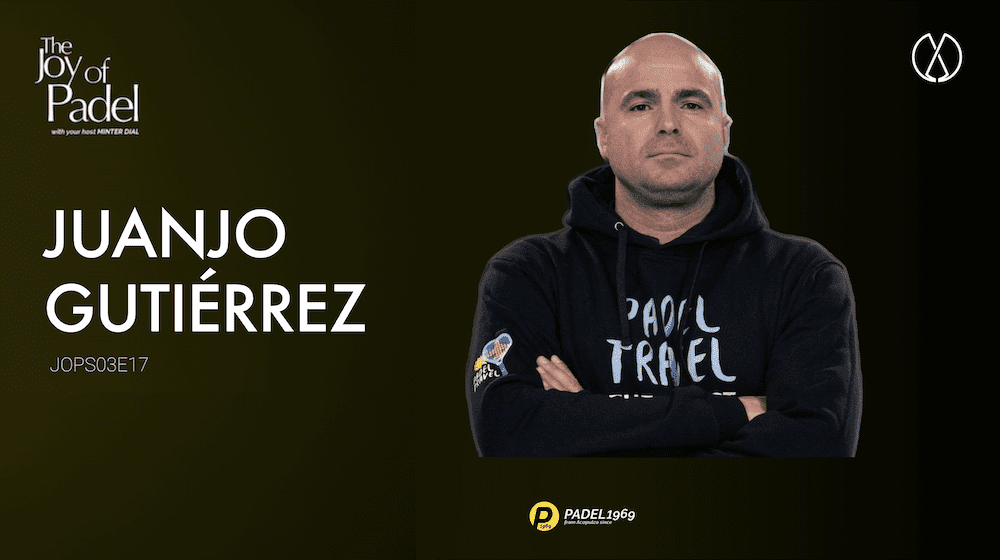
The Joy of Padel podcast with Juanjo Gutiérrez (JOPS03E17)
Juanjo Gutiérrez, former professional padel player and current Spanish coach and national team manager, shares his experience in the world of padel. He discusses his transition from tennis to padel, his career as a professional player, and his evolution into the role of coach. Gutiérrez highlights the importance of commitment and connection between teammates in padel, citing the example of the Coello-Tapia pairing. As a national team coach, he emphasizes personality management and group dynamics. He reflects on the 2024 Doha World Cup, where Spain came close to victory. He describes his approach as a coach, including pre-match preparation, in-game management, and post-match analysis. Gutiérrez also addresses the evolution of padel, predicting a faster and more athletic game in the future. Finally, he highlights the importance of data and statistics in game analysis, emphasizing the need to understand the complete sequence of each point.
P.S. Below you can find an English translation of the transcript.
To find out more about Juanjo Gutiérrez:
- Find or follow on Instagram: @juanjogutierrezvicario/
- Read another English language interview of Juanjo here (courtesy of FIP)
To listen to the show:
To listen to The Joy of Padel podcast, you can use the embedded player above, or go find it on Spotify, Apple Podcasts or any number of other podcasting services listed here.
Send in your questions or reactions:
Please send me your questions — as an audio file if you’d like — to nminterdial@gmail.com. Otherwise, below, you’ll find the show notes and, of course, you are invited to comment. If you liked the podcast, please take a moment to review and/or rate it! ¡VAMOS!
Further resources for The Joy of Padel:

The Joy of Padel podcast, hosted by Minter Dial, a padel tennis player since 1974, is an exhilarating show that delves into the captivating stories of notable padel personalities worldwide.
Meanwhile, you can find Minter's other Evergreen podcasts, entitled The Minter Dialogue Show (in English and French) in this podcast tab, on Spotify, Megaphone or via Apple Podcasts.
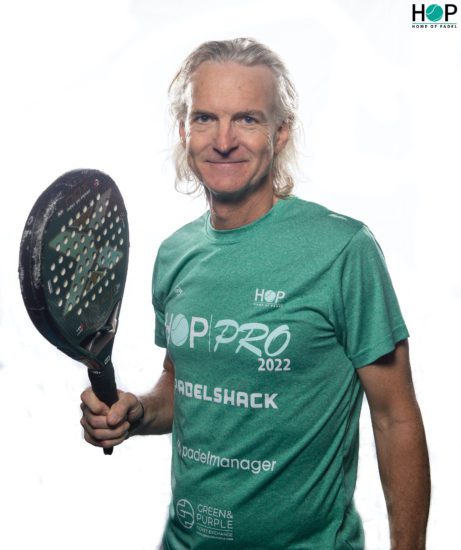
About the host: Minter Dial
Minter Dial is an international professional speaker, author & consultant on Leadership, Branding and Transformation. His involvement in sports has been a lifetime passion. Besides playing 18 years of rugby, captaining athletics teams, coaching tennis and playing squash for his university, he’s been a lifelong player of padel tennis, starting at the age of 10, from the time of its very first public courts at the Marbella Club in 1974.
Then, after a successful international career at L’Oréal, Minter Dial returned to his entrepreneurial roots and has spent the last twelve years helping senior management teams and Boards to adapt to the new exigencies of the digitally enhanced marketplace. He has worked with world-class organisations to help activate their brand strategies, and figure out how best to integrate new technologies, digital tools, devices and platforms. Above all, Minter works to catalyse a change in mindset and dial up transformation. Minter received his BA in Trilingual Literature from Yale University (1987) and gained his MBA at INSEAD, Fontainebleau (1993). He’s author of four award-winning books, including Heartificial Empathy 2nd edition (2023), You Lead (Kogan Page 2021), co-author of Futureproof (Pearson 2017); and author of The Last Ring Home (Myndset Press 2016), a book and documentary film, both of which have won awards and critical acclaim.
It’s easy to inquire about booking Minter Dial here.
Full transcript of interview via Flowsend.ai
This transcription comes courtesy of Flowsend.ai, an AI service for podcasters. (Translated into English)
Minter Dial: Juanjo Gutiérrez. What a pleasure, what a privilege to have you with me on the Joya Paro podcast for those weirdos who don’t know you, like, Who is Juanjo Gutiérrez?
Juanjo Gutiérrez: First of all, thank you for counting on me. I’ve told you many times that the pleasure was first and foremost mine to meet you and then to be here, and I don’t think I have much interesting to say, considering everything you’ve already said. But anyway, let’s see if I can contribute anything. Who is Juanjo Gutiérrez? Well, Juanjo is a child. At one point, he loved tennis, the racket sport of tennis, and by chance, he discovered padel, and through a series of factors, he decided to continue playing padel until it became his profession from different angles.
Minter Dial: So how did you decide to get into padel? What were the things, the ideas, the ambitions that you had?
Juanjo Gutiérrez: Always? I think it depends a bit on the environment and the context in which the person finds themselves. And padel, when I started playing, which was the first time in 1997, well, it was in its early stages of development in Spain, and I really liked that individual sport, but also for couples, that community that was being generated around it, since tennis at certain levels is much more solitary, and it was already too expensive at different levels to be able to compete internationally.
Minter Dial: And why is that?
Juanjo Gutiérrez: Well, because you have, playing at a global level all over the world, which is what is happening a bit at the father now, you are starting to see those types of situations, because you already needed first against some big team of technicians around you, of professionals around you, and then have the capacity and the economic resources to be able to travel all over the world to try to gradually gain points in the ranking, to grow, to improve and to be able to maybe reach those goals objectives that everyone has.
Minter Dial: It can’t be because there would be more money, more silver to earn in tennis which makes it a little harder this way.
Juanjo Gutiérrez: Obviously, when a sport like tennis, which has a much longer history than many other sports, not just padel tennis, and is a mass-market sport, what does that mean? A sport. From my point of view, a mass-market sport is one that’s watched by people who don’t practice it, of course, it moves other kinds of interests and obviously kinds of economic amounts.
Minter Dial: Of course, it’s very strange in padel that in all sports there are more players than those who watch professional padel.
Juanjo Gutiérrez: Well, padel, in fact, not all players watch professional padel. And there we have the industry, and in this case, the circuits and federations have that goal, which is that at least people who play padel can get to see a professional padel match. And I think the long-term goal is to become as attractive as soccer, tennis, and basketball, which gets people who haven’t played it to watch it or become interested in watching it.
Minter Dial: So, tell us about your career as a professional player. What was your experience like? What was it like being a professional player?
Juanjo Gutiérrez: Well, I lived through, enjoyed, so to speak, the creation of the national circuit and its subsequent transformation and development in the different private sectors. I participated in the Spanish Federation circuit, then later when the Padel Pro Tour was born, which was a promoters’ circuit, I also participated in it, and later in World Padel, the Premier Tour, I didn’t get a better result or a better ranking. 10th pair between 9 and 10th with Agustín Gómez Slingo, Juanma Rodríguez and I played with the national team in the World and European Championships. Finishing in the European Championships, we won 4, I think I remember, and we even finished runner-up in the World Championships in Mexico, since the main players didn’t participate due to a series of disputes with the Federation, and we were like the young players in 2002 in Mexico, we participated and made it to the final against Argentina.
Minter Dial: Who was your favorite most delicious companion?
Juanjo Gutiérrez: Several. Luckily, I’ve played with many players. I couldn’t tell you just one because I’ve learned things and had fun from each one. From my first, most important teammate at the regional level when I competed in Málaga, who’s a friend, Willy Ruiz, to Javier Limones, Juanma Rodríguez, Agustín Gómez Slingo, I was also able to play with Gastón Malacalza. I’ve played with many, luckily with many players. In many cases, I even saw them as more complete or more experienced than me, and they achieved good results. So, I’ll tell you those without thinking too much, but I’m sure I’ll keep them, I’ll keep them, I’ll leave some out.
Minter Dial: You played with LeBron, right?
Juanjo Gutiérrez: Well, it’s true, of course. I play for LeBron. I play with Paquito. I played with LeBron in my later years as a professional. We started in the qualifying phase because Juanito was either a minor or had just turned 18, and we went through several qualifying rounds. We played in the first round. We also won a round in the final draw of some tournament. I want to remember what it was. I think it was for the Pro Tour. I’m wondering if it was for the Pro Tour or the World Tour. For the Tour. The first stage of World Padel Tour. I also played with Paquito, where we played in Argentina. We played there, we won one of our best matches, at least the ones I fondly remember against the 7-8 pairing, which was Raúl Arias and Ramiro Nani. Paquito was already starting to do his tricks on the court. He did it in a ball, I remember in that match, in the tiebreak. In the second set, he left the court, and, look, he left the court. At that time, courts weren’t as well-equipped as they are now, allowing players to easily follow wide gates, spaces between each other, the referee’s space, or the court boundaries. He came out, and from under his legs, behind his back, the court put the ball through the gates. Paco’s magic was just beginning to be glimpsed.
Minter Dial: Magic. That’s it. Well, I’m impressed that you remember all that. And as a player, what are the skills or qualities you look for in a teammate? Because, as far as I’m concerned, when I look at it all, amateurs don’t really know how to select. Just peace, empathy, competition. How do you see that?
Juanjo Gutiérrez: Well, all of this has obviously evolved a lot at the beginning. I have an opinion, and it’s obviously evolved, developed, and improved as you learn. As I said before, sport, from my point of view, is an individual sport, played in teams, in pairs, and you spend a lot of time off the court with your partner. And of course, the moments of greatest tension are greater. Well, the greatest stress is experienced on the court. For me, first, they have to fit the game patterns, they have to interpret padel in a similar way—I’m not saying the same, but interpret padel in a somewhat similar way. And beyond the fact that it’s obviously very personalized now and performance has to prevail, if there’s no connection or a certain feeling between the players, it’s difficult for me to perform. It’s difficult for me to perform. Also, the more mature you are, the easier it is to understand your partner and their reactions, their ways of acting, their behaviors. You have to understand everything; you have to work hard on yourself to be able to perform with your partner by your side.
Minter Dial: That is, to know each other.
Juanjo Gutiérrez: Absolutely, absolutely. We need to do a lot of self-criticism, a lot of self-reflection, because we often struggle to see the mistakes we make, and we only demand or point out to our colleagues that on other occasions we’re just talking about ourselves.
Minter Dial: There’s a balance to be found between taking responsibility for every mistake when you fail and having the confidence to be brave when you need to be brave. It’s a difficult balance to find.
Juanjo Gutiérrez: Well, for me, there’s something even more important, and that’s having real commitment. Here, it’s not enough to be motivated; motivation is a state of mind, and motivation is temporary. When there’s real commitment to your teammate and the team, everything looks different and everything happens differently. If there’s an agreement or a deal with the team because they see it that way, because part of the team sees it that way. You decide to go for a line of play that might be being brave, pressing with positioning, etc. You have to be consistent with that, and you ask, or if the players themselves ask for it, that you act coherently, that you act in harmony, and that it doesn’t generate any kind of error, doubt, or problem, that it doesn’t erode the relationship. If something is decided and everyone follows that line, then be consistent.
Minter Dial: Without specifically mentioning what happens between some players, you see from time to time that there are pairs where they feel better on the court outside than others. It seems to me that they fight each other from the outside. I said it can’t happen well, it can’t last. And today it seems to me that the patience of the players in the pairs seemed even less than before. Even less.
Juanjo Gutiérrez: Yes, I partially agree with what you’re saying here. This is based on the expectations each person has, on how I value myself as a player. For me, the example here is Coello Tapia. Coello Tapia. Look at the relationship they have with each other, not just off the court but on it. How they understand each other, support each other, respect each other, and how you can see they want to play together. In fact, when they started the project, they clearly said they wanted to play together, and we believe this is the time to begin this stage. For me, there are few couples who truly want to play together.
Minter Dial: At such a level, some have lost against each other a few times, but I have never seen one stand up to the other because they support each other so beautifully.
Juanjo Gutiérrez: I don’t know if I said it, but yes, in a way. In a real way, in a sincere way, in a pure way. Yes, yes, yes, yes, that’s right.
Minter Dial: So Juanjo, you’re a coach. How are you finding the decision to become a coach?
Juanjo Gutiérrez: Well, look, it was a natural thing. At the time I was competing, it was very difficult to make a living solely from padel tennis. The top four or five in the rankings made a living. The rest of us had to combine competition with lessons, and normally, to be able to travel and avoid problems with different clubs or companies, you had to have private lessons that you could move around in schedules and dates to allow you to travel and compete. So, well, I started working. I liked it. I liked helping the person who chose to train with me. They gave me the opportunity at the time from different angles, like training competitive players, amateurs, teams. And it was a natural thing, really. I didn’t force it, I didn’t force it. Yes, I’m quite restless personally and I do other things, but I’ve never stopped working on the court because I like it, I like it. I continue to learn today, and it’s also a very nice way for us to contribute to the padel industry.
Minter Dial: I don’t know what the difference is between being a coach and a team and a national team, a coach, a coach of a senior team, let’s say a men’s team in Spain. What are the necessary skills to do one versus the other?
Juanjo Gutiérrez: Well, in this case, there are many qualities that are similar in both positions. It’s easier. Look, now that I think about it, there are things that are easier as a national team coach and others that are easier as a coach of a single team or two teams. Working with the team is a daily job, and the national team coach needs to be constantly monitoring, evaluating, talking to, and scouting all the eligible players. Fortunately, with the job of coaching a team or several teams, you naturally travel and have to meet the other players. Aside from the fact that I was fortunate enough to have been a player, I was also with my generation, and there are few who have continued working in padel. I lived almost, well, I’m living now, and I can tell you three stages of generational change for good players. The first, where there were Gattiker, Lasaigues, Piñon, Semprún, Arias, etc., and then the beginning of Juan Martín, Bela, Pablito, Paquito. And then there’s this new and latest generation of Coello, Tapia, Galan, Chingotto, etc. So, of course, you never stop being with them, even if it’s from different angles. So, for me, it’s also very easy; it’s very natural, aside from competing with everyone on teams, both as teammates and opponents. That dynamic is familiar to me and isn’t difficult, but of course, it requires being constantly with them on the circuit, traveling because otherwise you lose a bit of contact and the bond, or promoting tournaments, which I’ve also done as a tournament organizer. So, in the end, if you start with them close and end up maintaining a relationship for a long time at varying intensities, as happens with normal friendships, it’s comfortable for me. It’s also easier for me as a coach, knowing all the players as I do and following them.
Minter Dial: And do you remember the moment you were selected to play for your country?
Juanjo Gutiérrez: I was selected as a player, yes. It was very early. Jorge Martínez gave me the opportunity to compete in the 2001 European Championship in Sabadell, Spain.
Minter Dial: And how is the emotion right now?
Juanjo Gutiérrez: Man, of course, it shows there, you understand when they say that your country’s shirt weighs because you are no longer playing only for yourself and even so, as we already know that racket sport is usually a selfish sport, in quotes, the athlete, the good athlete has to.
Minter Dial: Have.
Juanjo Gutiérrez: A bit of selfishness, of course, to want to be more. But you have the responsibility of playing for your country, and that obviously adds stress. It adds stress, pressure, of course.
Minter Dial: And between a player and a coach who is part of the Spanish team, how do you deal with the burden of being a heavyweight?
Juanjo Gutiérrez: They’re different sensations, but they’re experienced with great intensity. I also understand what they’re going through because I’ve experienced it firsthand, even though I haven’t had the same level of leave as the current national team players, the first-team players. It’s a beautiful, rewarding experience, but of course, you also have a lot of responsibility.
Minter Dial: And the selection of the teams, obviously I want to talk about what happens in Doha, but selecting a couple with so much talent and so many personalities, baggage or let’s say background, the past, the history between all of them, how do you see the best way to select the best couples to participate?
Juanjo Gutiérrez: Well, luckily, Spain has a large pool of players at all levels. Fortunately, since they haven’t been around as long as the Argentine national team or Argentina as a country, developing professional padel among them, we obviously still have a large gap with the second, third, fourth, and fifth-ranked countries. Although they’re getting closer and closer in level due to the good work being done by the federations, fortunately, and that timeframe will get shorter. However, I still believe that, based on what I see at the European and World Championships, there’s still little time left, with so much competition, to assess the NIF of the players and get to know them personally. Well, the way to select them is obviously first by level, by performance at that time of year or month. And of course, character, personalities are very important too. We’re fortunate that in Spain, we’ve always played a lot as a team, both in the junior and senior categories, and from different backgrounds, and they know the dynamics very well. It’s easy, it’s easy to do, but also in the end, having such good, successful players, my job also focuses a bit on managing the personalities of each of them. What am I going to teach them about padel? I can’t offer them a different perspective or opinion on anything. But more than anything, the coach’s support is tactical and emotional. Tactical and emotional.
Minter Dial: Living through what happened in Doha was an incredible experience. Watching it from the bench was almost like a dream for me. But I suppose it’s etched in your mind that it happened, and he told you, and he told you, that you would have done something differently. How do you see it? Are you experiencing it today?
Juanjo Gutiérrez: Well, look, since the World Cup began in 2021, with this current team, more or less with the structure, we actually have ten or eleven players who could have participated in the team. But well, it also depends a bit on the moment of each of them and…
Minter Dial: On performance, injuries, or something else.
Juanjo Gutiérrez: Correct. We’ve been working hard on the group dynamics, because it takes into account that these players are usually competitors among themselves throughout the year. So, although the vast majority get along quite well, they’ve known each other their entire lives. I put a lot of emphasis on everyone feeling very comfortable, both individually and as a group. I carry out group dynamics, group dynamic work so that we become increasingly cohesive. And in Doha in 2024, for me, it was the best week in terms of group dynamics. We had very good momentum, better than Qatar 2021 and better than Dubai 2022. Although they were good, they were really good. But the dynamic we had last year as a team was great. I felt we were ready to win the final. Well, as it turned out, we weren’t far off at all. What could have been done after the fact? After the fact, it’s easy.
Minter Dial: We are here quietly.
Juanjo Gutiérrez: Of course, without making drastic changes, for example to the pairings, maybe I should have tried to get Miguel Yanguas in particular to play more calmly. Perhaps I’m also responsible for not getting him to play more calmly and freely, as he was the one who suffered the most in the last match because Paco, Paco has more experience, Miguel not so much, but Miguel is one of the best competitors, younger players competing at the world level. Of course, and as I told you before, the shirt weighs on them, and it weighed on them, the shirt weighed on them with the game quite in their favor, with a set up, a break up, but hey, that’s sport, you have to learn. The team reacted well, and I think all of them already have the image of the 2026 World Cup in their heads. Spain wants revenge. Spain wants revenge. Normal, normal, healthy, healthy, but revenge. Yes.
Minter Dial: That’s the pride that works. We’re talking now to finish the work on the bench because that’s not well known. We always see the players from time to time, there are about 20 seconds where we see or hear what’s happening around Padel, but in terms of a coach, when you’re on the bench, how do you break down the elements before, during, and after the game?
Juanjo Gutiérrez: Well, normally each couple has their own different routines. In the case of the last couple I’ve been working with, Lucas Bergamini and Paquito Navarro, along with Ramiro Cholla, we share a team, but together, very close together. The truth is that it’s been very easy for me to work with the team this year, very easy, even though at times there have been better or worse results, but it’s been very, very easy to carry it out, even though I have a long-standing personal friendship with Paquito, and I’ve also known Ramiro for many years and I respect him a lot, and I’ve been working with Lucas for 7 years now, if I remember correctly. So it’s been very easy to work, and they already have a routine. What we do is, approximately two hours before the scheduled match time, we go to the court where we’re playing. An hour before, we usually prepare for the match, or with a text in the group that Ramiro and I prepare about the players, about the analysis we make of the pairing we’re playing against, and some initial tactical ideas. Then we discuss it there in person with them, with the players, we exchange opinions, and when we have a clear roadmap for the start of the match and analysis of the players beforehand, where the players also have, Paco and Lucas, of course, also have a lot to say. It’s extremely important. We mustn’t forget that they’re the ones playing. We have to help, contribute, contribute. We can’t make it difficult for them to compete, which is already complicated during the match. Well, during the match, we first see if the tactics are working or not, so we continue to remember, reinforcing a little everything we’ve discussed, or we look for alternatives and modifications to redirect the match or redirect the dynamic a little. There are moments, we experience all kinds of moments. In the end, I also have to play with a very important part, which is tactics, detecting things that work, things that don’t, discussing them with them, understanding what they feel on the court, how they see it on the court, because I can see it however I want, but I see it from the sidelines; they’re the ones playing, and from the inside, it always looks different. Besides, they’re players with a lot of experience, so you have to believe in them, respect them, and of course, control your emotions, manage them, because in the end, there are many peaks during a match, and especially Paco, being such a temperamental, passionate player, has even greater peaks of passion or intensity during a match, and you have to modulate it so that in the end, everything is channeled into a great performance. After the match, we usually let them breathe a little and think calmly, whether they won or lost, and at dinner, at lunch, or even the next day, we discuss various points or situations that occurred in the previous match.
Minter Dial: Are you watching the game again on film?
Juanjo Gutiérrez: At least I do. At least I do, because obviously you see different things from the back than from where the games are filmed from a full-back. You can practically see the plays better from the back than from a full-back. I like to review it.
Minter Dial: The last question is about the 90 seconds between switching sides. How do you manage this time each time? Because it’s very short. 90 seconds.
Juanjo Gutiérrez: Yes, it’s short. First, I try to see if they want to say anything or if I’ve seen any gestures or attitudes on the court that require them to speak or say something. First, I let them loosen up a bit during the changeover. If not, what I do is take the floor and try to analyze or talk to them about the last game they played, and then I go on to comment a little or reinforce the idea for the next game they play. If the rest are for refreshers, tactics, or reinforcement on some topic, or if it’s for service, then the same, but I comment on the last one and then move on to talk about the one they’re about to enter the court and play.
Minter Dial: For someone like you, so close to everything, what do you think about the current state of padel? Because it’s evolved a lot in the last 10 years, what are the avenues, let’s say? For a type of Carlos Alcaraz in tennis (in padel), what’s going to happen in padel? In terms of change.
Juanjo Gutiérrez: You mean at the industry level, at the marketing level, at the level.
Minter Dial: At the player level, how will the player evolve?
Juanjo Gutiérrez: Well, the trend in all professional sports with a high impact on people or the industry is physical development. They’re increasingly becoming more physical sports. There are training systems, more trained coaches, more cutting-edge equipment, and we also have more information to assess and analyze what’s being done and what’s happening. That’s right, what happens, what happens on the court, in any other sport, the equipment will also improve. Therefore, on a technical and biomechanical level, the players will also improve a bit, and mentally, they will also be more mature, they will compete better, and they will better control their entire environment to benefit their performance. Padel is played faster and faster. If no rules or features of the court are changed, the game will become faster and more powerful, and the players will become better athletes.
Minter Dial: In terms of data, I’ve spoken a lot with Diane from Padel Intelligence, but it seems to me there’s very little data in Patent right now, and how to slice and dice it. What’s the most important data? I’ve seen in intelligence things like assists, the ability to help your teammate kill, and finish the ball. But for you, what’s the most interesting data when you look at it?
Juanjo Gutiérrez: Well, I love the work Vianney does at Padel Intelligence. I think it’s spectacular, very necessary. Luckily, they’re back to work, doing things with professional padel tennis. Thank God. Thank God. They’re very necessary. I love how they translate, how they interpret the sport of padel tennis at the statistical level. And for me, the most important data, evaluating a bit what they already do, such as Padel Intelligence, and what you said before, which I completely agree with. I think that assessing a winning point or a forced or unforced error also depends on what happens before, what happens before, the quality of the first shot with which the point begins, which may or may not influence its development and may end one way or another. For me, the most difficult thing to measure is the development of the point from its beginning. Luckily, here we know that there is a beginning and an end with the serve and with the moment the ball is won or lost. And the complexity of measuring that entire sequence still makes it difficult for companies to audit it. But for me, the key is understanding the entire sequence of the point.
Minter Dial: I have a correlation in my head with rugby when there are phases—it could be fifteen, twenty phases before scoring, I don’t know how to say it in Spanish, but. And also, in rugby, there’s always the third game, the third half.
Juanjo Gutiérrez: There is.
Minter Dial: Same thing with padel. I loved it. Juanjo, it was a pleasure talking to you. Nice to meet you, much success to you and the team, and see you soon. Thanks.
Juanjo Gutiérrez: Well, thank you very much, thank you for the work you do, which is extremely important, and I recommend everyone who sees you read all your books because you learn a lot.
Minter Dial: Thanks Juanjo.
Juanjo Gutiérrez: To you.