
The Joy of Padel podcast with Gonzalo Lorenzo (JOPS03E15)
The Joy of Padel: Insights from a Padel Aficionado and YouTube Sensation
Are you ready to elevate your padel game? Whether you’re a seasoned player or just starting out, this episode of the Padel Podcast is packed with invaluable insights from Gonzalo Lorenzo, the mastermind behind the popular YouTube channel Padel Drive. As a padel coach and aerospace engineer, Gonzalo brings a unique perspective to the sport, blending analytical thinking with a passion for teaching.
In this engaging conversation, we explore the culture of padel, effective communication on the court, and the exciting future of technology in the sport. Get ready to challenge your assumptions and discover new strategies to improve your game!
The Engineering Approach to Padel
Gonzalo’s background as an aerospace engineer brings a fascinating dimension to his padel coaching. He draws parallels between engineering problem-solving and padel strategy:
“I think padel and engineering are really similar because you have a given problem with given conditions and you have to find a solution for it.”
This analytical approach translates into practical advice for players:
- Analyze the court conditions and your opponents’ strengths and weaknesses
- Develop a clear strategy based on your observations
- Adapt your game plan as the match progresses
By applying this engineering mindset, you can approach each match as a puzzle to be solved, rather than simply reacting to what’s happening on the court.
The 80% Rule: A Game-Changing Perspective
One of Gonzalo’s most impactful insights challenges the common desire to hit spectacular winners. Instead, he advocates for a more measured approach:
“The way I see padel is if you are able to bring one more ball back than your opponent, you’re going to win the point.”
He introduces the 80% rule:
“At least 80% of the balls that you hit, they need to go in.”
This perspective shift can be transformative for players at all levels. By focusing on consistency and smart shot selection, you’re more likely to outlast your opponents and win points through their errors rather than your own risky shots.
Communication: The Secret Weapon of Successful Padel Partnerships
Effective communication is crucial in padel, both during points and between them. Gonzalo emphasizes two key aspects:
- On-court communication: “You don’t look at your partner. You look at your opponents and you have to be calling your partner where they are.”
- Between-point strategy: “Keep things simple… Try to be empathetic.”
He advises using “we” language instead of “you” when discussing strategy with your partner, fostering a team mentality. This approach can significantly improve your on-court dynamics and overall performance.
Overcoming the “Fridge” Mentality
Many amateur players complain about being “fridged” (consistently targeted by opponents). Gonzalo offers a refreshing perspective on this common frustration:
“If you are much better than your partner, the reality is that you want to move away from your partner, you want to start playing with a new partner.”
This insight challenges the assumption that being targeted is always a negative. Instead, it can be an opportunity to improve your game and develop strategies to counter this tactic:
- Play more down-the-line shots to force diagonal returns
- Communicate with your partner to adjust your positioning
- Take calculated risks to disrupt your opponents’ strategy
The Future of Padel: AI and Analytics
Gonzalo is excited about the potential of AI and analytics in padel:
“I’m extremely curious about AI and stats generation… After a game, give me the stats. I don’t want to be counting for hangout. I just want to have the table that I can put in Excel and that I can analyze by myself.”
This technology could revolutionize how players and coaches approach the game, offering detailed insights into performance and strategy. As an amateur player, you can start embracing this data-driven approach by:
- Tracking your own statistics during practice sessions
- Analyzing match footage to identify patterns and areas for improvement
- Exploring apps and tools that offer basic padel analytics
What We Learned About the Joy of Padel
Gonzalo’s insights remind us that padel is more than just a sport – it’s a blend of strategy, communication, and continuous improvement. By adopting an analytical approach, focusing on consistency, and embracing effective communication, you can take your padel game to new heights.
The Joy of Padel lies not just in winning points, but in the process of learning, adapting, and growing as a player. Whether you’re a casual player or aspiring pro, there’s always room to enhance your skills and deepen your appreciation for this exciting sport.
Ready to dive deeper into the world of padel? Check out Gonzalo’s YouTube channel, Padel Drive, for more expert tips and insights. And don’t forget to tune in to the full episode of the Padel Podcast for even more valuable advice from this padel aficionado!
To find out more about Gonzalo and Padel Drive:
- Visit Gonzalo’s site, PadelDrivers
- Find or follow Gonzalo on Instagram: PadelDrive
- Find or follow Padel Drive on YouTube
To listen to the show:
To listen to The Joy of Padel podcast, you can use the embedded player above, or go find it on Spotify, Apple Podcasts or any number of other podcasting services listed here.
Send in your questions or reactions:
Please send me your questions — as an audio file if you’d like — to nminterdial@gmail.com. Otherwise, below, you’ll find the show notes and, of course, you are invited to comment. If you liked the podcast, please take a moment to review and/or rate it! ¡VAMOS!
Further resources for The Joy of Padel:

The Joy of Padel podcast, hosted by Minter Dial, a padel tennis player since 1974, is an exhilarating show that delves into the captivating stories of notable padel personalities worldwide.
Meanwhile, you can find Minter's other Evergreen podcasts, entitled The Minter Dialogue Show (in English and French) in this podcast tab, on Spotify, Megaphone or via Apple Podcasts.
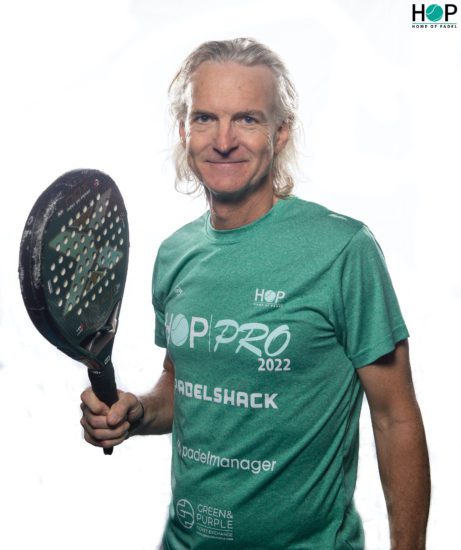
About the host: Minter Dial
Minter Dial is an international professional speaker, author & consultant on Leadership, Branding and Transformation. His involvement in sports has been a lifetime passion. Besides playing 18 years of rugby, captaining athletics teams, coaching tennis and playing squash for his university, he’s been a lifelong player of padel tennis, starting at the age of 10, from the time of its very first public courts at the Marbella Club in 1974.
Then, after a successful international career at L’Oréal, Minter Dial returned to his entrepreneurial roots and has spent the last twelve years helping senior management teams and Boards to adapt to the new exigencies of the digitally enhanced marketplace. He has worked with world-class organisations to help activate their brand strategies, and figure out how best to integrate new technologies, digital tools, devices and platforms. Above all, Minter works to catalyse a change in mindset and dial up transformation. Minter received his BA in Trilingual Literature from Yale University (1987) and gained his MBA at INSEAD, Fontainebleau (1993). He’s author of four award-winning books, including Heartificial Empathy 2nd edition (2023), You Lead (Kogan Page 2021), co-author of Futureproof (Pearson 2017); and author of The Last Ring Home (Myndset Press 2016), a book and documentary film, both of which have won awards and critical acclaim.
It’s easy to inquire about booking Minter Dial here.
Full transcript of interview via Flowsend.ai
This transcription comes courtesy of Flowsend.ai, an AI service for podcasters.
Minter Dial: Gonzalo Lorenzo, Great to have you on. You and I have had several occasions to meet. We’ve. I know you’re the padel guy down in Bristol and thought it’d be great to have you on my show. So, in a few words, who the heck is Gonzalo?
Gonzalo Lorenzo: Well, hello, Minter. It’s a pleasure to be here. I’m Gonzalo. Most people know me now as a pilot drive, and I think to keep it simple, we would say I’m a coach with a YouTube channel that loves Padel and is just trying to share that passion with all my audience.
Minter Dial: How did you get into Padel? I mean, obviously you are español. That helps. What was your route into Padel?
Gonzalo Lorenzo: Well, I started playing around 15 years ago because pad was becoming really popular in Spain. My father was one of those people that started to get hooked into Padel. So, he was playing every week with his colleagues, and one day I went to see him after the game. I remember that his colleagues asked me to join for an extra set. I used to play tennis at that time, and as soon as I hit a few balls, I was like, oh, my God, this is part, this part is So, much fun. So, I play casual with my friends for So, many years at a really bad level. And then it was just before, during COVID really, it was when I started to play much more and, and I learned almost everything that I know today. And this was when I started to get more immersed into padel.
Minter Dial: And so, you’re. The learnings that you’re talking about were in Spain because you live in Bristol now. You’ve been here for a few years, it seems. So, tell, tell us how you figured out how to learn because obviously you’re a coach now. You, you, you educate everybody. What was the, the key to getting you to, to this level?
Gonzalo Lorenzo: Well, I’m a really analytical person and I feel, I’ve always said, like, I think Padel and engineering, at the end of the day, they are really similar because I didn’t say that in the introvert. I’m an aerospace engineer and this year I’ve taken a sabbatical leave to go full time on padel. But yeah, coming back to the topic, I think they are really similar fields in the sense of you have a given problem with given conditions and you have to find a solution for it. And then your work as an engineer or as a coach is to find that way from going to A to B with the resources and tools that you have. It might be the tools that you have as a player and the conditions that your opponents have and your partner has, or it can be the tools that you have as a coach with a given student to go from the level that he has currently to the level you think he can get to in the next few sessions. So, that’s more or less the way I approach Padel. So, every time I jump on court, I try to think what’s happening, why is it happening and what is that in there that I can do a bit better to make it a bit more challenging for. For my opponents.
Minter Dial: So, this is the, the engineering piece where often we use sports analogies to help in business. And I’m wondering to what extent your life in padel on the other side has helped you as an engineer.
Gonzalo Lorenzo: Yeah, that’s a, that’s a good question as well. And I think it goes both ways because the fact that I said that I feel they are pretty similar in that sense of finding the solution. Obviously the, the coaching, I think has a more human factor in the sense of, as an engineer, the, the problem that you’re facing is something physical like can be a piece of machine that you’re. Or a software that you’re dealing with to model what’s happened physically. So, I would say that as a coach, you always have to be able to understand the client or your student as a human, like what’s inside of his head, what are the fears that he has, why he’s blocking himself. And that human part, I think it can be really useful in engineering as well, because at the end of the day when, whenever you have to ask for data, whenever you have to ask for help, you’re. You’re asking to a human. So, all those human interactions, I think being a coach, it has definitely helped towards engineering, I would say.
Minter Dial: Yeah, let’s just, you know, between us, engineers aren’t known for being the social party animals in general anyway. But. So, you’re. Let’s just talk about your padel for starters. You came from tennis. Your dad said, come along, go on, let’s. Let’s play a game. What sort of style of game do you have as a player?
Gonzalo Lorenzo: Well, the. I think some people say that I’m not aggressive at all, which is kind of true. And it’s one of the things that I’m trying to improve this this year for the way I see Padel is if you are able to bring one more ball back than your opponent, you’re going to win the point. And, and in order to do so, I always tell my students was the easiest shot that you can play, which Is safe and you have margin to play, but is still challenging to your opponent. Like, that’s the way I, I see Padel. You have to think how to play safe, how you can make it challenging for your opponent. But always play percentage. Like at least 80% of the balls that you hit, they need to go in. So, is the, the way I teach and the way I play.
Minter Dial: Right. So, I know you have rule number one of padel.
Gonzalo Lorenzo: Yeah, yeah, that’s it. That’s it.
Minter Dial: Hit more balls in then hit than hitting balls out.
Gonzalo Lorenzo: Yeah, it’s like, it sounds like a meme, right? Like you’re telling me something obvious. But I guarantee, I can guarantee you that nobody does it. Like, I sometimes when I’m waiting to jump on court and I see the, the guys of the club playing or whoever is there playing, and I see the way they, they try to beat the opponent is like. Don’t you notice that for every winner that you try to hit, you are hitting seven balls out and three winners. Yeah, like the three winners, they are amazing and they give you that boost, but you are losing seven points along the way. So, clearly the stats, they’re telling you you’re doing something wrong, but you just don’t see it.
Minter Dial: There’s the stats in the pro level where it’s something around 70% of their shots are just basically easy shots. Shots that you and I can do which corresponds to sight. I mean, it’s true. You look at them, their shots, they’re driving and they, they’re not, they’re not flying that you know, So, close to the neck. That’s too dangerous. It’s, it’s got to be. I mean, I, I’m not trying to compare ourselves to the pros, but in general, 70 of the shots are, are risk-adverse shots. It’s in the 30% that, that where you have to choose your time to go in and snack it, crack it.
Gonzalo Lorenzo: Yeah. I mean, it depends. I think pro level is a completely different story. Those guys, they, they really know that it’s important to play with, with tight margins because otherwise it’s too easy for your opponent to, to destroy you. And even though it seems easy, I can guarantee you that is extremely hard to, to return those roles. Like if they will. Like imagine that we jump on court with Coyo and Coello says, I’m going to serve 10 times. Your only goal is to bring the ball back. To bring it back. Yeah. That’s the only goal I can guarantee you. Is So, difficult, like just to bring the ball back. And it doesn’t matter if you play this tight to an ad or this tight, it’s difficult. Yeah.
Minter Dial: And they make it look So, easy because how often do they even ever screw up a server turn? Very fair point. Of course. So, your side of play is like, like you say with your coaching, you’re, you’re working on trying to get a little bit more killer shots. But what is your favourite shot?
Gonzalo Lorenzo: Well, the, the one that I like the most I would say is the, the bandeja. Yeah.
Minter Dial: Why?
Gonzalo Lorenzo: I don’t know. I think I got obsessed back at that time with, with that shot because I remember there that I was facing a opponent that was much stronger than me, according to Play Talk Meek, but also Play Tom was very much right. And then we finished the, we finished the game and I asked him, like, why was it So, easy for you to, to beat us? Right? Like, what was I doing wrong? How can I, how can I improve? And he said, when I was at the back and every time I was playing a lob to you, your Vanda was generating too much rebounds. So, even though I was at the back, I was still attacking and I was thinking, okay, So, how can I make that shot to bounce low? And all of a sudden I started to become a bit obsessed with hitting the Vanda with the right length and with the right spin So, that it gets low and is what I try to, to teach my, my students that they don’t need to play fast. It’s a shot that everybody loss and everybody wants to play us. Such a. Such a fancy shot. But if you are able to keep it low and you hit long, you’re going to be safe.
Minter Dial: Yeah. There’s something about the engineering and what you’re talking about where basically you have these vertical. This space you’re trying to get into. So, aerospace, you’re. You’re basically trying to get this ball at a certain length, at a certain speed, at a certain velocity and then to bounce into this space. It sounds like I could be talking about aerospace.
Gonzalo Lorenzo: Yeah, it’s what I told you. Like, it sounds like I’m a nerd, but. But it’s true. I see it the same way. It’s like I have a given problem, which is I’m playing against these two eyes. The guy on the left, let’s say he has amazing volleys. The guy on the right is super consistent. I play. You have to know yourself, what are the things that you can do, the things that you can’t. And my partner plays like this. What can we do as a team? To make it challenging for them and to try to use what we have to win this match. Sometimes you. You’ll be able to find a solution. Sometimes you will. You will find the solution, but I still. You will lose. But you will learn something along that, that match, I can guarantee you.
Minter Dial: You were just talking about team, and one of the areas I love to explore is how to find the best team. What is it that makes for the best partner? So, for you, Gonzalo, how do you go about choosing a partner? What do you look for in your partner?
Gonzalo Lorenzo: Well, to be honest, the number one rule here is that you guys have fun playing together and that you want to spend time together. Really? Like, if I see the pros, for example, and I see the, the pairs that they do really well, they don’t see each other just as colleagues. They. They see each other as a friend. They want to spend. They want to spend time together and, and they like to play together, really. And I think that’s, that’s really important. I feel like one of the biggest mistakes in Padel is thinking that you are better than your partner, because at the end of the day, it’s a really fair sport. If you were much better than your partner, there will be people calling you to play with them, that they are much higher level. If you are playing with given partner is because you are really likely at the same level. So, thinking that you are better than him or than her can be temporary. But if you’ve been playing with the same people for one year, there is a reason behind that.
Minter Dial: Yeah, there’s one of the, one of the peculiarities is the lack of awareness about oneself. You know, you, you. You’ll focus on your partner, make you screwing it up. Oh, that he should have done this, this, and this. And you sort of try to whitewash the errors that you made. And, you know, like the, you know, the, the number of times you sort of can roll your eyes like, you know someone who double faults. Wow. You know, that seems impossible, but by the way, it happens at least at our level, or at least my level anyway. What about when you’re coaching Gonzalo? What do you find is the hardest thing for people to get when it comes to padel?
Gonzalo Lorenzo: Well, that’s a, that’s a really good question. I feel the, the one that I see the most and the one that I, at the same time that I like the most is people that they are becoming obsessed with the sport and they want to try to go faster than they can. So, I have a few of those and in one way is super satisfying because you can see that those, those players, they are putting 100% of their effort into getting better. So, as a coach, that’s really satisfying because it’s the type of people that you want to work with and at the same time, it’s your job to tell them things. They go at a certain speed. Like, of course, everybody wants to play much, much better every day, but the reality is that you want to reach a point where you have to focus on really small improvements. They do take time and it is really easy to find frustration when. When you see yourself not going as fast as you would like. But that’s why the role of the coach is So, important, in my opinion, because sometimes we think we are not making any progress, but we are. And the fact that every day or every week we are putting ourselves into a challenging situation for us, even if we don’t find the solution for it. And at the end of the session, we couldn’t do the exercise as we were expected. Just the fact of being able to give it a try and to challenge yourself, I can guarantee you that he is driving an improvement.
Minter Dial: I just. As I’m listening to you, I’m thinking of certain profiles of players and one that I frequently see is just. Just wants to play, doesn’t really want to practise or actually learn. In his mind, he’s thinking, I’m learning by playing, but I find that’s a slow route to improvement. And then I’m also thinking of the few players and I’m sure you have in mind who just love to make magic shots. You know, pretend like they’re tapia and they, they and, and, and they’ll do the tweener, they’ll do the behind the back, they’ll do La tontona, they’ll do. Do So, all these fancy shots and if you don’t do them ever, they, you’re not going to be able to invent them when you need them. But at the same time, if you’re just relying on. On magic, it seems you might lose out on the basics. How do you deal with that?
Gonzalo Lorenzo: I tell them, like as I said, the way I see badly is it doesn’t matter what. So, you play the ball has to go in at least 80% of the time. So, let’s say I have especially I have one guy in mind. O if you’re watching this, he’s one of my students that he’s extremely talented, he has good hands, he comes from tennis and he plays shots that technically they are really difficult. But the, what we’ve been working lately is the decision making. It’s like, okay, you have the skill to play that shot, but it doesn’t make any sense if out of 10 times that we played, only to go in because it looks amazing on the video for the film or whatever and to show your friends. But if you want to be competitive and you want to win the numbers, they need to tell you that, that you’re right. So, we are working a lot on, okay, you want to do this shot, when is the right time to do it? Okay. And at the same time, not becoming too predictable because the first drop shot of the game, probably I catch you off guard, the second drop shot, the other guy is there to put the ball in my chest. So, all these things, if you, if you are good, that you have good hands and, and you enjoy, I mean, at the end of the day you have to enjoy padel. And if this makes you happy, of course. But if you want to be competitive, there is a really hard work to do on choosing when is the right moment to go for them and, and also understanding what’s the purpose of, of each of the shots that you’re playing.
Minter Dial: I, I also coach. And so, I’m wondering how you live through this, Gonzalo, because you’re a player and a coach and you can be doing coaching, but when you play with somebody, let’s say in a tournament, how, how do you deal with the coach hat that you’re wearing?
Gonzalo Lorenzo: Yeah.
Minter Dial: Would you, do you put it aside? What, what parts of, of you do you bring when you’re coming to play with a player? Let’s say you’re being competitive and you want to, you want to win. What type of advice do you have in the communication that you have with your partner when you’re in the heat of the moment?
Gonzalo Lorenzo: Yeah, I mean, for me, it’s been one of the, one of my biggest problems that, for example, the last two years I’ve spent a lot of time on court coaching but not playing. So, I always have that analysis mode in, in my head and too often I’m analysing myself or even worse, analysing my partner. And, and that’s something really hard to deal with and that I’ve been doing a lot of research and, and making a really big effort to, to try to address. It’s good that, that you analyse your opponents So, that you can understand what’s your game plan going to be. But for yourself and for your partner, you have to keep things easy. Like, for example, Whenever you are playing with someone, there is no room for. For coaching. Like, you cannot tell him, listen, you are doing the forehand volley and you’re touching the ball really in front. If he. If he doesn’t know how to do it before the game, he’s not going to learn it during the game. So, technical advice, completely out of the table. Strategies, yes, they can work. Keep it simple. Let’s say, hey, I see that the guy on the right, he’s struggling when we serve to the back end, why don’t we go there? 100. That’s. That’s more than welcome. But as I said, try to keep it simple, because I also see So, many players developing a extremely complex strategy that they’re not going to follow. So, focus on 12 things. Try to make it simple and you’ll see that it works. And in amateur games, to be honest, it’s always the case, like, nobody is a complete. Like nobody has a complete game style. You will barely see someone that is completely balanced in all the shots that they can play. The forehand, the backhand, the bandeja, the smash, the volleys, everything with the same quality. You will always find people with a strong forehand, with a really weak backhand. They don’t know how to lobby, they are moving too slow. So, there is always something that you can target. Keep it simple. You’ll find a way of doing that.
Minter Dial: Maybe this is a preamble, but let’s start by talking the culture of padel. Is there such a thing as the culture? You know, since you work in a large company, you know what business culture is about. What about the culture of padel? Do you think there is such a universal culture? And then how is it being interpreted in the UK, where you live?
Gonzalo Lorenzo: I mean, for me, the culture of padel is just organising a game with your friends. Have fun and also try to be a bit competitive. And after you finish, you shake hands, you go to the bar, you get.
Minter Dial: A beer, Una caña.
Gonzalo Lorenzo: And that’s what I like. If you say padel culture, that’s what it comes to my mind. And that’s the way we’ve seen paddling in Spain for. For So, many years, which I think for the majority of the people, it should be like that, because it’s a really easy way to forget about all your problems, to do some cardio, to try to get yourself into a healthy lifestyle and at the same time spend time with friends, quality time doing a bit of sport. I think it’s a magic combination and I truly think is the reason why Padel is becoming So, popular.
Minter Dial: All right, now then just. We’ll circle back in this communication piece because it’s been my observation that certainly. Let’s start with the pro level. The amount of communication that’s going on is huge. And every time I interview any of the big pros, Yanguas, Laguna, Ortega, they talk about how important communication is as part of the game. Let’s say we’re moving away from just having fun to be more performance interested. How do you assess or when you get a new. A new partner on the, on the court. And, and, and maybe you can even talk about how you coach communication. But when you, when you have a new partner, let’s say I’m your partner. Oh, mentor. Let’s. What are we going to do in terms of communication? How do you organise the. What you know, the, the, the amount and, and style of communication?
Gonzalo Lorenzo: Yeah. So, well, there are, I would say two types of communication. The one that is on court while you guys are playing. So, for example, I always teach them. Teach these things to my students. Like they play a lot on, on your partner. You don’t look at your partner. You look at your opponents and you have to be calling your partner where they are. Okay. So, that, that would be one. And that’s something that doesn’t come out in a natural way. You have to train it, otherwise you won’t be able to. To do it in a game. So, train how to communicate these things in an effective way is not easy. That’s one. And then the second one is what we said like the point. We are not playing and we are talking about a strategy that we want to follow. As I said, keep things simple for me is extremely important because if you start going too complex, it’s not going to work. And then try to be a bit. You say empathetic.
Minter Dial: Empathetic.
Gonzalo Lorenzo: Yes, empathetic. You say empathetic. Try to think what would be the way that you would like someone to give you feedback or tell you something and do it in that way. For example, we always say don’t say you need to do this to your partner. Is we as a team? I think it could work if we play the love on the guy on the right but not a list. And you need to play the love on the. Because he’s a bit too much direct. So, these things obviously the, the pro players, they know how well sometimes, right? Because in the bench in, in premier battle we see a bit of everything, but they normally know how to say it. And also the fact that they have a coach in the bench that it can help and it can guide and is the figure that you need to trust, also offloads yourself from. From a lot of stress. But in amateur games, we don’t have that. So, as I said, keep things simple and be empathetic with your partner.
Minter Dial: Love it. Something that, I mean, also happens at the pro level, but more often than not happens at an amateur level, I would say is the fridge concept getting fridged. So, when you’re, when, you know, let’s say some. Your students come back and complain, oh, this weekend I played, I got totally fridged. What advice do you provide to the fridged or actually the person who’s being targeted for that matter?
Gonzalo Lorenzo: Yeah, in. In amateur games is extremely common and it’s always going to be there. It’s also true, similar to what we said before, that So, many people have that idea in their head that they got freeze. But the reality is that that didn’t happen. You played like 55, 45 or 60 40. But it was not a clear strategy to target your partner because as I said before, if you are much better than your partner, the reality is that you want to move away from your partner, you want to start playing with a new partner. So, first understanding that many people see a fridge when there is no Fritz. But also in. On the other way, let’s say if, if you are getting fridge, there is certainly things that you can do to play a proper game and to try to move away from that fridge. And if you’re clever and you are a good player, you will find a way of, of hitting more balls.
Minter Dial: Indeed. I mean, I, I talk about specifically if you are the one being fridge or, sorry, you’re the one who’s being attacked, you know, because it happens to me that I’ll be attacked when I’m playing with younger players because they, you know, and they know that I’m slower. So, what I will do, I will play more down the line with the effort to hopefully tease out the more diagonal shots. But of course you need to have enough on it in order for it to be more likely to go diagonal, because if you just powder the ball back, it’s going to be easy to go back to you again. So, you have to somehow move that and then of course, talk about it with your partner, you know, 100. I realise I’m being fridged or I realise you’re being attacked, you know, and you have to make it a Wii, as you say. I think that was a really good insight.
Gonzalo Lorenzo: Yeah, no, definitely. And as I say, there is always something that you can do to make it a bit more challenging to, to your opponent. It doesn’t mean that you’re going to win, but definitely, if things are not working well, you should try to change the approach that you are following on, on that day and definitely try to find a solution. Like, for example, let’s say I’m injured or I’m playing with someone that is much slower than me. If that person hits the ball in an easy way for them, they will be, they will always be able to control the ball and place it where they want. Right? So, imagine that’s the problem that we are facing. We cannot say, okay, you want to run faster because it’s not a reality and it’s not, it’s not going to happen. Right? But instead we can say, okay, you’re going to play more than more down the line and, and I’m going to go towards the centre of the core and I’m going to try to leave a space on my left and help you a lot with, with this area of the court. Or you can say, listen, we’re going to take a bit more risk on your shots. If you miss, it’s okay. It’s a risk that we’re taking. But I want you to be more aggressive. So, that is much harder for them to control where they play. For example, these two things. Okay, again, it might be the case that we start doing this and we still get destroyed. It’s part, of course, it’s part of. So, that’s, that’s what you have to. That’s the way I would approach every single game. And again, if every single game that you play, you think you are being freezed, there is something wrong there for sure.
Minter Dial: 100%. 100%. In terms of the new technologies that are showing up, I’m sure you’re aware. What are the things that excite you in terms of how new tech is coming in to change the world of padel?
Gonzalo Lorenzo: Well, for me, I’m extremely curious about AI and stats generation, right. Because as a coach, for example, if I was coaching pro players is definitely a tool that I would like to have like after a game, give me the stats. Like, I don’t want to be counting for hangout. I just want to have the table that I can put in Excel and that I can analyse by myself and try to see what are the trends that we need to follow as a pair and what are the trends that we need to follow against a given team. So, I’m really curious to see how that’s going to evolve And I’m pretty sure it’s quite close because when I was in the Padel World Summit, I already saw that there are some companies doing some work in image recognition and understanding what’s happening on court. And once that’s done, the generation of the stats is pretty straightforward. So, I think that’s something that is going to come quite close to Propanel.
Minter Dial: I’m very curious to see how it progresses as well. I’ve talked. I was there, of course, with you, and a lot of companies saying they have AI, but padel is a complex game. I suppose many sports really are complex at some level, but there are So, many different angles and different types of shots that you can make. It feels very complex compared to tennis, for example, where you have. It’s amazing sport. It’s just that the variety of shots that you have in padel. Thanks. And because of the walls and the netting on the side makes it more complicated. So, we’ll see. But one of the, one of the big areas that I’ve been interested to look at is the ability for AI to detect unforced errors versus forced errors. It seems to be that that’s a. A quantum leap of difficulty to, to figure out. I mean, how do, how do you.
Gonzalo Lorenzo: Assess those now, even for humans? Right. Like, where, where is the limit?
Minter Dial: Yeah, because an unforced error for Galan is, you know, 98 of the time a forced error for me.
Gonzalo Lorenzo: That’s it. No, no, he’s a. Is basically what you said. Like, what do you consider as an enforced error?
Minter Dial: And like you say, or my cousin always says, you know, it’s. It’s more about being unhappy with the unforced errors than being happy with the winners that you make. You agree with that one?
Gonzalo Lorenzo: No. 100% is. I always say this, like in some of my coaching sessions, one of the exercises that we do is we play a little game where everybody’s keeping a personal score. Instead of using the normal score, we use a personal score. Every time you hit a winner, you get a plus one. And every time you make an unforced error, you get a minus one. And I always tell them if you manage to get zero score at the end of the game, you’ve done pretty well. Because what I see, I see every, every day is that the average is minus three. So, if you are able to keep your score to zero, you’re going to win because the other guy is going to give you the mistakes that you need to win.
Minter Dial: So, you keep the same score. 15 love. 30 love. But you’re also counting the personal.
Gonzalo Lorenzo: Yeah, that’s something that I. I mean, that’s an exercise that I do. But also, we. We are going to be rotating. I’m also going to be jumping in and. And I don’t care at all about the 30, 15, 40, 15, whatever. I just. I just want them to be aware of themselves because nobody, Nobody take these stats right at the end of the game. We remember the 62 or the 6 3, but nobody knows. Oh, I attempted 12 winners, nine went out, the rest went in. Nobody. Right? So, for. For. Just for a couple of minutes, let’s say. Let’s say five, ten minutes, you’re going to be just focused on yourself, like, what’s your personal score? And the average is minus three. So, he’s telling everybody that they’re making is So, easy. It’s So, easy to make an. Sorry. To hit a winner. No, as I’m saying it the other way around, it’s So, easy to make an enforced error, and it’s So, hard to hit a winner. So, it is much more efficient to try to reduce the enforced errors than try to play more winners.
Minter Dial: All right. Amen. All right, let’s talk about Padel Drive, Gonzalo, to end with. So, it’s. It’s a very popular YouTube channel. Talk. Talk us how you got into this and why has it become such a successful channel in your mind?
Gonzalo Lorenzo: Well, we didn’t know how it was going to be.
Minter Dial: The.
Gonzalo Lorenzo: The only thing that I knew was that I love coaching, I love Padel, and I wanted to share with everybody the way I see Padel and the way I coach. So, if. If there is someone that can benefit from everything that I’ve learned these years to. To help, like, to play a bit better, definitely there was a room for a YouTube channel. This started really when I moved to Bristol and I met Thomas, my videographer. And he mentioned, like, hey, would you be up to do this? I didn’t have the knowledge at that time to film or to edit. That’s what he does. So, it was like a perfect combo. We started filming, the YouTube started going much better than we thought. Here we are today with 40,000 subscribers and still a really healthy growth. So, I have the feeling that it’s going to be much more at the end of the year. And it’s one of the things that makes me happier at the moment in my life because we receive such positive feedback and. And there are So, many comments from people that they feel the videos are helpful. And this is just amazing. I always compare it to engineering. Imagine I come into the office and everybody is like, oh, amazing. What you did yesterday, that tool, that model validation or whatever you did was amazing. So, this is what we’re getting in YouTube, right? Like you, you read the comments and everybody, oh, amazing video. It helped me a lot. I’m super thankful. So, I don’t know if it just feels, it feels great when, when you see that you’re helping people and hopefully we can keep growing, keep bringing Padel to, to new areas of the world where it’s still an immature market and hopefully we can keep helping people drive their, their best padel.
Minter Dial: Well, it certainly must be very gratifying. I could totally relate to that. You presumably have a lot of stats as well. So, I’m just wondering, you’re based in Bristol, the fact that you speak English, because there’s a dearth of good quality videos on padel. Where are the majority of your viewers coming from?
Gonzalo Lorenzo: Well, it changes really fast and it’s one of the things that surprised me the most. Like for example, at the moment, one of the most trending audiences is the one from Indonesia all of a sudden. Like it used to be UK, one of the biggest. We also have a big audience in, in Denmark. In the Netherlands is quite big as well. And funny enough in. In Spain. But yeah, the, the big surprise now has been like all of a sudden from. I think it was like three, four months ago, Indonesia started to appear in the. In the stats and is one of the biggest audiences right now. I was like all of a sudden.
Minter Dial: I suspect, I’m thinking there must been some sort of acolyte student who went to Bali and said, hey, have you seen Padel Drive? You should go check it out.
Gonzalo Lorenzo: I don’t know how. But yeah, I was like Indonesia here in the, in the studs and started to grow and it’s one of the biggest audiences right now because obviously I knew for example that in Netherlands Bali is huge or in Denmark, like people love it. I was thinking, yeah, maybe UK because I’m based here and people talk about this and they see me in the club and they come, they say, oh, you are the guy with the YouTube channel. Or they ask a few questions. But yeah, the Indonesia or even Spain makes me super happy that with all the videos available that you have in Spanish, you still come and watch my videos in English. That that means a lot. And, and I’m super happy about that one as well.
Minter Dial: Well, it’s a beautiful thing. So, I don’t mean to be applying into space I’m not allowed to go to. But at what point does this become your main source of revenue? I mean, how big does it need to be? I have no idea what it means to have 40.
Gonzalo Lorenzo: Oh no, it’s a, I think the revenue from YouTube is, is not worth it in at least with the, at least with the size that we have right now. Like I can guarantee you that, that the amount of effort and hours that we put in and it could make. It wouldn’t make any sense compared to the amount of money that we are receiving from YouTube every month. We do it because we like what we do is an extra income, of course. But you cannot live from YouTube. You are nowhere near to live with the stats that we have right now. So, I think you have to do something on top of, I don’t know. I would like to know also how, how different creators approach this topic. And, and I assume that I honestly think no one in Padel can live just with the income from, from YouTube. Like not even the, the big ones. That’s my guess. Yeah.
Minter Dial: And at the end of the day though, Gonzalo, is that you’re building a platform.
Gonzalo Lorenzo: Yeah.
Minter Dial: And, and you just, you can’t make it out of thin air. So, you’ve got a solid base and who’s to know how the future of padel will go? And, and you know, if, if, if padel grows, So, shall you and if you become the dominant English language video source, then it for sure augurs well. But anyway, I really appreciate you coming on and talking about this Gonzalo. We just, we have to have a time to play together So, we can actually put it, put it all into practise. Give us where people can go and find you. Where would you like to go? Have people track you down? We Talked about the YouTube channel, of course. Anywhere else.
Gonzalo Lorenzo: Yeah. So, if you are curious about the videos that we make for sure, check out our YouTube channel. And then the other two things that I want to mention is, well right now if you want to coach or be coached by me, but you don’t live in Bristol. Well, there is a chance because we are organising a pilot trip to Alicante and I think it’s a really nice experience that if you know me or you want to be next to me for a couple of days and learning the way I see Padel probably is a good time to do it.
Minter Dial: And when are you doing that?
Gonzalo Lorenzo: We’re doing this the 30th of September, So, it’s a four-day strip and yeah, maybe I can send you the link with all the info but if anyone has some questions. They can also reach out to me in Instagram or wherever, and then I’ll be happy to. To answer the questions. And then the, the last one that I’m extremely passionate about is padel rackets. Like, at the moment, I work with a brand called Hook, Hook Padel because I really trust the quality of the rackets and I have a really good relationship with the people from the brand and I know what’s behind every racket and who’s the people behind those rackets. And. And yeah, I’m. I’m really happy working with them. So, yeah, if you want to check the, the rackets, you are probably. You have probably seen the, the store that we have in. In the YouTube channel is www.PadelDrivers.com and.
Minter Dial: Is hook a padel only brand?
Gonzalo Lorenzo: Yeah, Hook padel is padel Rockets only.
Minter Dial: And where are they based?
Gonzalo Lorenzo: In Madrid.
Minter Dial: Madrid. Beautiful. Well, and what, what about the, the Instagram account you want people to go to?
Gonzalo Lorenzo: Oh, yeah. Padel Drive.
Minter Dial: Padel Drive. All right, there we go. Well, I just say it out loud. Is Will put these in the show notes. Of course. Gonadalo muchos ca.
Gonzalo Lorenzo: Vamos Padel.
Minter Dial: Thank you very much.
Gonzalo Lorenzo: Thanks a lot. It has been a pleasure to be here with you. And yeah, we, we look forward to that game indeed.