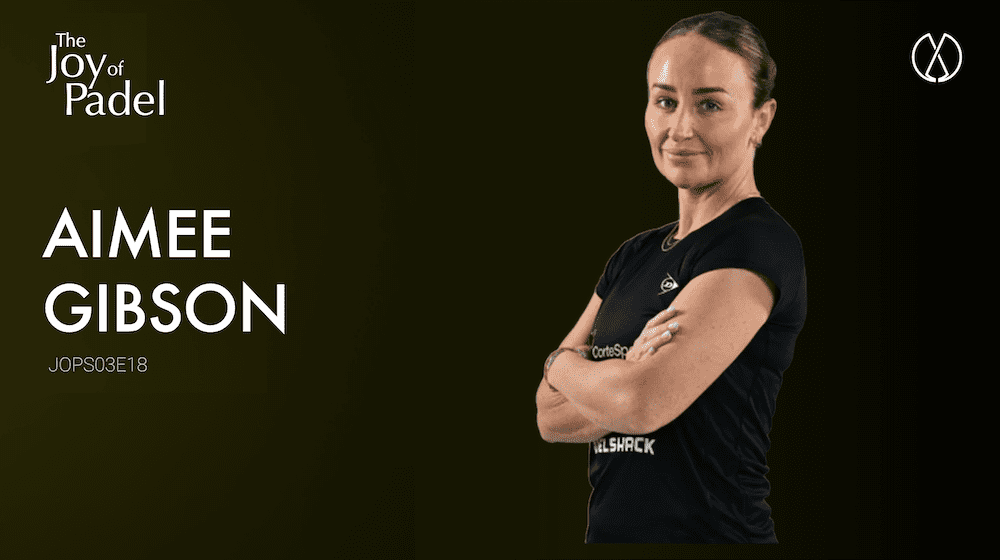
The Joy of Padel podcast with Aimee Gibson (JOPS03E18)
Aimee Gibson, GB’s number one padel player and world-ranked 85, shares her journey from tennis to padel in this Joy of Padel podcast. She discusses her transition, training methods, and the mental aspects of the game. Aimee offers insights into professional padel, including partner selection, tournament strategies, and the challenges of competing at the top level. She emphasizes the importance of mental strength in padel and shares her admiration for top pairs like Ariana Sanchez and Paula Josemaria or the new #1 duo of Gemma Triay and Delfi Brea. Aimee also reveals her favorite shot, the chiquita, and her current focus on improving her smash. The conversation provides a fascinating glimpse into the world of professional padel and Aimee’s aspirations for the future.
To find out more about Aimee Gibson:
- Find or follow Aimee on Instagram: AimeeGibson.x
To listen to the show:
To listen to The Joy of Padel podcast, you can use the embedded player above, or go find it on Spotify, Apple Podcasts or any number of other podcasting services listed here.
Send in your questions or reactions:
Please send me your questions — as an audio file if you’d like — to nminterdial@gmail.com. Otherwise, below, you’ll find the show notes and, of course, you are invited to comment. If you liked the podcast, please take a moment to review and/or rate it! ¡VAMOS!
Further resources for The Joy of Padel:

The Joy of Padel podcast, hosted by Minter Dial, a padel tennis player since 1974, is an exhilarating show that delves into the captivating stories of notable padel personalities worldwide.
Meanwhile, you can find Minter's other Evergreen podcasts, entitled The Minter Dialogue Show (in English and French) in this podcast tab, on Spotify, Megaphone or via Apple Podcasts.
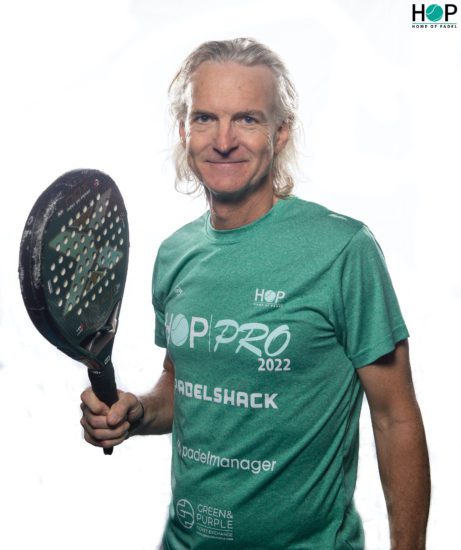
About the host: Minter Dial
Minter Dial is an international professional speaker, author & consultant on Leadership, Branding and Transformation. His involvement in sports has been a lifetime passion. Besides playing 18 years of rugby, captaining athletics teams, coaching tennis and playing squash for his university, he’s been a lifelong player of padel tennis, starting at the age of 10, from the time of its very first public courts at the Marbella Club in 1974.
Then, after a successful international career at L’Oréal, Minter Dial returned to his entrepreneurial roots and has spent the last twelve years helping senior management teams and Boards to adapt to the new exigencies of the digitally enhanced marketplace. He has worked with world-class organisations to help activate their brand strategies, and figure out how best to integrate new technologies, digital tools, devices and platforms. Above all, Minter works to catalyse a change in mindset and dial up transformation. Minter received his BA in Trilingual Literature from Yale University (1987) and gained his MBA at INSEAD, Fontainebleau (1993). He’s author of four award-winning books, including Heartificial Empathy 2nd edition (2023), You Lead (Kogan Page 2021), co-author of Futureproof (Pearson 2017); and author of The Last Ring Home (Myndset Press 2016), a book and documentary film, both of which have won awards and critical acclaim.
It’s easy to inquire about booking Minter Dial here.
Full transcript of interview via Flowsend.ai
This transcription comes courtesy of Flowsend.ai, an AI service for podcasters.
Minter Dial: Brilliant. Aimee Gibson. Oh, it’s such a pleasure to have you on the show. I’ve. We’ve been trying to do this for such a while. I got to see you in action in Paris. For those of you don’t know you yet, who is Amy Gibson?
Aimee Gibson: Aimee Gibson, GB number one and world ranked 85.
Minter Dial: Brava.
Aimee Gibson: Yeah.
Minter Dial: All right, talk about your transition into Padel. Give us an idea of how you. When did it happen? And, and, and how did you transition into it?
Aimee Gibson: So I played tennis all my life and I was. The time I actually picked up Padel, I was teaching tennis in Dubai, so I was living in Dubai and padel is crazy out there. So, I actually took on a job where I was looking after two Padel courts in Dubai, small club. I got asked to run it and then, yeah, I just started playing a little bit out there. And then when I moved home to England, that’s when I fully started having coaching and transitioned properly.
Minter Dial: So when you were playing tennis, you were coaching, Were you playing. You were a tennis coach or a tennis pro trying to play on the circuit as well?
Aimee Gibson: Tennis pro. So, I played tennis until I was 24 and I played from the age of seven. So, that was a long. Yeah, I put a lot of effort into my tennis. My parents supported me a lot. And then I went into coaching when I was around 23 and yeah, coach for six, seven years and then found padel when I was in Dubai and I was 29. 30 years old then. Yeah.
Minter Dial: Well, you, you still look stunningly young. And let’s talk about this transition into Padel because, you know, you see the courts over there, you go and play and tell us about your journey into Padel. How, how was it dealing with those Seamus walls and letting balls through?
Aimee Gibson: Yeah, it’s funny because when I look back at sort of videos of me playing padel when I was in Dubai, I was, yeah, as when you start, you’re playing tennis on a padel court. So, it took me a long, it did take me a while to get used to the glass. I think that came with having actual lessons from a coach and starting even just from the beginning, just throwing the ball onto the glass to learn it and then gradually working my way up because I had, I had good footwork from tennis. I’ve always had, I’ve always been able to move quite well. So, I think that helped me a lot. But, yeah, adjusting to the glass was definitely, definitely a challenge. Yeah.
Minter Dial: And, and, and then. So, what, I mean, what I’m hearing is that you, you got someone to throw some Balls and just really get the mechanism of, oh, the ball’s going by me, ah, it’s hitting the wall. Now what do I do with it is, is because basically what I’m looking, often I’m playing with players who, who sort of struggle to make that, that disconnection, that rewiring that’s necessary. So, so your recommendation is to have a coach and do some drills?
Aimee Gibson: Yes, because I think when I, when, when I first started playing, I was always trying to half volley the ball, volley the ball. I didn’t want to let the ball go past me off the grass because obviously I didn’t know what I was doing. So, when I had my, when I moved back to England, I did have a little bit of coaching in Dubai, but when I came back to England, had a coach and he just started throwing the ball onto the grass. A whole basket of balls, forehand, backhand, just to get used to it. Because obviously from tennis your swing needs to change as well. I was used to taking a big swing from tennis. In Padel, you have to have a shorter swing. So, I was getting used to that as well. But I would definitely recommend starting out throwing the ball, then the, throwing the ball in the double glass, throwing the ball on the side glass and then yeah, just, just keep working at it and it, it soon comes and then you can obviously transition to them feeding with the racket, making the ball go faster off the glass and get used to it like that.
Minter Dial: Yeah, when I play, I, I, I, so I, I, I try to make it something of a rule. I say, listen, oh, you know what, it would have been good to let that ball go by, by the way, it might have been going out. But you know, half volley or volley, when you are around the service line is, is a silly idea. Would you not agree?
Aimee Gibson: Generally, genuinely, but watching a lot of the, the player, the top players now, they are stepping in front of that line and they’re, they’re not always letting the ball hit the glass.
Minter Dial: That’s right, because especially it can be slow. Right. You know, the ball goes through, then it gives them too much time at the net to really be at position.
Aimee Gibson: Yeah, if you watch a lot of the men’s game, they are stepping in front of the line to block. But yeah, obviously on some balls it’s very important to let the ball hit the glass because it gives you time, it gives you time to be able to play the lob, to play the chiquita. Otherwise you’re constantly trying to block and you’re rushing and you don’t have time to think about what shot you want to hit.
Minter Dial: Do you coach as well? Are you coaching players occasionally in padel? Yeah.
Aimee Gibson: Yeah. When I first started, I, I was teaching and playing, so I taught a little bit at a club in Malden and then I was teaching padel at Stratford padel Club for a little bit and then, yeah, as my schedule has got busier, it’s difficult for me to coach and be able to do what I’m doing. So, I’m hoping I’ll go back into coaching maybe one day after.
Minter Dial: So you mentioned in the men’s game and for sure there’s a speed. I just had Juanjo Gutierrez on my podcast talking about how the game is becoming more physical, stronger, specifically in the men’s game. Anyway, how do you, what, what do you look for? How do you find inspiration and learn? I mean, other than just, you know, going and do your two hours of training every morning or whatever?
Aimee Gibson: Yeah, I love watching Padel, so I have learned a lot of my padel from watching just the premier, the Premier Padel girls. I’ve watched so many matches and yeah, I’m left-handed, so I like to watch Paula Josemaria, for example. She’s left-handed also.
Minter Dial: You’re both comparable size as well. Yeah. Nice combination.
Aimee Gibson: Yeah. But, yeah, I would, yeah, if you’re starting out, I would definitely recommend watching because I’ve learned so much just from looking at their positioning, looking at what, what shots they’re playing and then you can go on to the practise court and actually just try it out a little bit. Yeah, definitely, definitely. Watching pedal, I’ve learned, I’ve learned a lot.
Minter Dial: Well, as opposed to watching the men you were talking about, because my, my instinct would say when I watch a Tapio or Coello charging the net, doing half volleys and volleys.
Aimee Gibson: Well, yeah, yeah, it’s not realistic. Yeah, so I think the women’s game is a lot more tactical than the men’s game. If you watch the women’s game, the rallies are obviously a lot longer because we’re not, not able to smash as much as the men. But yeah, the men at the moment, the top men there, as you said, stepping in half volleying, usually when the lob is short, the point is over. So, yeah, I would say that the men’s game is a lot more aggressive than the women’s.
Minter Dial: If you take one of those things you learned by, let’s say, watching Paola Josemaria, do you sort of focus on one shot that she’s making? How do you transfer from watching to the Court into your game. Is there a specific mechanism that you follow?
Aimee Gibson: Well, she has a double double-handed backhand like me and it’s coming more into the women’s game now. I’m seeing quite a few women.
Minter Dial: Well, there are even Momo Gonzalez and, and Coello.
Aimee Gibson: Yeah. So, I sort of watch, I watch how she changes the pace of the ball because she doesn’t always. She has a great smash but she’s, she’s able to change the pace all the time. You know, she has, she maybe will play 1, 1 volley slow and then the next volley is with a little bit more power. And yeah, I just like to, she runs, she hustles around the court and I like to be that sort of player. I mean if you watch me play, I love, I’ll always chase every ball down. So, I like to sort of, yeah, when I watch her, I try and try and copy what she’s, what she’s doing a little bit.
Minter Dial: Well, she, she’s a force to be reckoned with.
Aimee Gibson: Yeah.
Minter Dial: One of my observations about the pro game that you’re playing is, is the need for variation and deception because especially at a certain pace it’s balls are easy or easier to pick up, pick off. And, And so, to what extent do you feel that this has been in part of the change in the game and or should be part of your game?
Aimee Gibson: Yes, I’m feeling at the moment that I’m playing, I’m playing a high level. So, I’m playing mostly girls weekly that are in, you know, inside the top 70. And I’m sort of finding that I’m at the similar level to these girls. But I think what makes a difference from this level of being top 17 to top 50 or top 40 is they have a little bit more firepower. I think, you know, they’re able to finish the point. So, that’s something personally I’m working on. As a left hander I can be a little bit more aggressive on the right-hand side. So, yeah, I think bringing, I’m a quite an aggressive player but I’m working on them at the moment trying to find that ball where I can, where I can look to finish because I think that’s what’s going to take me from this level to the, to the next level.
Minter Dial: Yeah, the, the, the challenge of decision making and, and, and something that is probably obscure to most amateurs. This is idea the sequences. To what extent do you work on sequences is that, I mean obviously you’re less, you’re playing on the right, left-handed. Maybe there are Some specific elements to that. But to what extent do you work on sequences? And do you think that’s something that amateurs should be thinking about?
Aimee Gibson: Yeah, definitely. With my coach, we work a lot on when I serve, what is my next volley going to be? My first volley is really important. So, we work on serve. First volley, where you’re going to return the serve, have it clear in your head where you’re going to return. Because I think having a clear plan of where you’re going to play the ball really helps when you’re in the point. But, yeah, sequences, it comes more. I think if you can train with your partner, I think you can practise that, that sequence work. But a lot of the time I am not able to train with my partner, so it’s difficult to practise us working as a team. But I think once, once you get to that higher level, you’re able to, you know, train with your partner more. And if you watch the pros, they know exactly where their partner is going to be hitting the ball. So, I think, yeah, more at the top level, they practise that. But individually, I do work on. Yeah. Where I want to place the ball on each shot.
Minter Dial: So, for example, and I suspect this will change according to who you’re playing, but you will say, I’m going to serve down the. Down the line and then I. If the volley comes to my forehand, this is what I’m going to do down the middle. If it comes to my backhand, then I’m going to go cross court or. I don’t know. Do you have sort of patterns like that that you create?
Aimee Gibson: Yeah, so when I serve, I always tell my partner where I’m going to serve. So, if I’m serving to the glass, usually that next volley will go to the middle to make that same player move. If I serve to the. To the. To the tee, then my next volley will look to go to the corner, to either side.
Minter Dial: I mean, it could be the returner. Yeah, exactly.
Aimee Gibson: Yeah. Usually try and make the same player move because the other player is standing there ready, waiting. So, it’s good to move that same player for a couple of shots.
Minter Dial: I like that we’re going to get to partners in a moment. But what do you. How you prepare your game? To what extent is it possible in the pro level, when you’re faced with a 17 and 80, say, seeded players, do you say, well, oh, well, the 80th seed is the one we should target more? Or is it really, really always a case by case?
Aimee Gibson: Yeah, I Mean, I think after, like I did when you were watching me in Paris, played against the number, I think 74 and 80 maybe. But in that instance I felt like the 80 was stronger in the day. On the day. On the day, yeah. And I think you only work that out after a few games. It depends, as you said, what day they’re having. And some players have more weapons than others. So, it’s trying to, you know, in those first few games really work out what the strengths are and what the weaknesses are.
Minter Dial: So let’s talk about the communication. Naturally I’m going to suspect that this will depend on who you’re with. But talk about what’s type of communication you have. You’re right now in Copenhagen, I believe in Denmark anyway. And you, you’re establishing communication with your partner. You may or may not have had many opportunities to play with her in a prior tournament, but what’s your sort of approach to communication with your partner?
Aimee Gibson: So at the moment I’m playing with the Portuguese. So, we speak English on the court.
Minter Dial: No, father, Portuguese.
Aimee Gibson: Which isn’t always easy for, for Katarina because it’s not obviously her first language and. But we’ve been playing together for a few tournaments now and obviously she had to adjust playing with a left hander because the middle is very different when you’re playing with someone that’s left-handed, isn’t that so? Yeah. And she’s in a very aggressive player. So, after these last few tournaments we’re starting to adjust that. When that shorter lob comes in, I move and I let her go. But obviously it’s different for me as well because playing with someone that’s so aggressive, I’m not used to. So, yeah, and we just always try and after every point, you know, we give each other a high five. We try and stay positive. Obviously there’s moments in the match where it gets difficult. But we’re both quite similar in terms of we like to show a lot of fight on the court and I think we get on well because even if we lose a point, we know that we’ll slap each other’s hand, we’ll go our separate ways and we know we get ready for that next point and just sort of get on with it really and just try and fight.
Minter Dial: Both Sanyo Gutierrez and Juanjo Gutierrez, not related to, have said on record that it’s a sport of. It’s an individual sport played by two.
Aimee Gibson: And that’s what coming from tennis because obviously tennis. I was on my own a lot. It’s taken me a While to adjust, to have been someone there constantly, because in tennis, you know, I would lose a point, go to the back.
Minter Dial: You had no one else to blame but your racket.
Aimee Gibson: Yeah, exactly. And now I have to think, no, like, I have someone there that’s there to support me when I’m feeling, like, feeling down or. Yeah, so, yeah, it’s definitely adjusting, but I’m the sort of player where when I make a mistake, I like to go to the corner, take a few seconds, and then I’m ready for the next point. And I think Katarina knows that, and she’s. She’s the same. So, it’s. It works quite well.
Minter Dial: And in that corner, when you have, let’s say, made a mistake that you know you can do better on, what do you. What are you doing in your mind? What’s the routine you have?
Aimee Gibson: I take a few seconds just to, like, breathe, take some deep breaths. And then I just trying to remind myself that, you know, I’m going to make mistakes at this stage in my career. Everyone makes mistakes, obviously, but I try and use. Use that to sort of give me confidence for the next ball. You know, I missed that one. But I know from all the training that I’ve done, next time I have it, I’m going to. I’m going to make it in and, yeah, just try and, like, forget it and move on to the next point.
Minter Dial: If you had, let’s say, to choose one of the four things I’m about to give you, which is the most important to progress and have good performance. One, technical skill, hand, eye and stuff like that. Two, ability to get over mistakes. Three, the mental game. And four, physicality.
Aimee Gibson: Mental. I think, yeah, because I think in technique, you don’t have to have the perfect technique. Everyone’s got their own styles of play. I think mental is a. Is a big thing because, you know, you have to have perseverance, patience. You have to have. You have to be competitive when you’re down, you know, you have to have the confidence to fight back. I think a lot of. A lot of this, a lot of sport, comes from the mental side. I think you have to be very mentally strong.
Minter Dial: So obviously for the amateurs, it’s also a challenge finding the right partner. But it’s very different. It feels in the pro level. On the one hand, I hear about how it can be different for women to select women, as opposed. Where the relationship seems primordial. I would argue it’s also very important in the men’s. But I’d like you to comment. And then secondly, as much as you might like to play with, you know, let’s say tomorrow, Icardo or, you know, Gemma3i on the. On the left, you’re not going to get that because of the levels and also you don’t actually probably want that. So, how do you go about in the pro level, finding your partners and how tricky is it? You know, like the WhatsApp. Hey, would you like to pay with me? I have to dish. I have to get rid of somebody else. And this. These type of trades must be complicated to deal with.
Aimee Gibson: When I first started, I find I found it really hard because I was new on the scene, I was turning up these tournaments. No one really knew who I was. And it is very Spanish, Italians, you know, they don’t really. I think they don’t really speak great English. It’s difficult to sort of get involved with them. So, yeah, I was almost over a year sort of playing with different people and trying to get to know people. I went to an academy in Spain quite a lot to train, so I got to know some players there and some coaches. But, yeah, I just, I was patient. I knew that if I kept working hard that players would recognise that I’m improving. And, yeah, I managed to get some good results. And, yeah, and then when you, when you come to tournaments, obviously you seem. See the same girls every week, so you get to know them, you message each other on Instagram and, yeah, they’ll ask you, you know, are you available to play next week? You give it a go and if you get on, then you. Then you go for some more tournaments together.
Minter Dial: I have to imagine, despite being so highly ranked, that it’s the challenge of getting enough revenues, winning enough points, you. You’re. You end up having to really look at your calendar, what you can afford to do in terms of what’s the right approach, where how many points you’re going to get. Because if you go for a P1, great, a lot of points, but got to get in, you know, and finding your calendar, mixing, feasibility, logistics, getting a partner and points, it’s a lot of things to put together.
Aimee Gibson: Yeah, it’s a lot. And not only do you have to perform when you get there, you have all of this other stuff to think about, you know, hotels, flights, as you said, finding a partner, choosing the right tournaments. Yeah, as I said, it’s not easy, but if you can try and find someone that’s sort of on the same mindset as you, same sort of goals. I mean, I know Katerina is, you know, she’s taking this very professionally, she wants to improve her ranking. I’m lucky enough to have, you know, the LTA sponsorships helping me so I’m able to travel to these tournaments. Otherwise without, you know, their help, I wouldn’t be able to afford it. And yeah, it’s. Yeah. And you know, looking at the tournaments, seeing how far we have to travel from the airport to the club and yeah, just choosing, obviously choosing the right appropriate tournaments for you and your points and your ranking.
Minter Dial: And then there are people who annoyingly ask you to get on podcasts.
Aimee Gibson: Yeah, I have to find 30 minutes in my day.
Minter Dial: Exactly in, in the way you look at building a partnership, what are you looking for? I mean, outside of the fact that they might speak English, that sounds like an important one. But how do you qualify? What are the sort of the, the elements you’re looking for? Obviously plays, knows how to play the left, that’s another thing because you’re a left handed player. So, that’s sort of two easy marks.
Aimee Gibson: Speaks English.
Minter Dial: Speaks English and plays on the left.
Aimee Gibson: Yeah.
Minter Dial: I mean, are those the two primary categories then? What else do you look for?
Aimee Gibson: Someone that. So, for me, I like to try and look for an aggressive player on the left because as I said, I mean, I am aggressive but I think on the left I definitely need someone that is not afraid to go for their shots. For me, I really look for professionalism. So, someone that is as professional as me.
Minter Dial: Says what she does, does what she says, that kind of a thing.
Aimee Gibson: Yeah. And also like being able to get on with someone on and off the court, I think that’s a big thing because travelling to these tournaments, I’m travelling alone most of the time. But when I arrive at the tournaments, I like to feel comfortable with the person I’m with. So, yeah, that’s a big thing because you do spend a lot of time with them. Offensive as well. So, that has to be, that has to be an important and things.
Minter Dial: So talking about the pros again, what. Who are the pairs that you most admire? Not just the individuals, but the pairs. What jumps up to you as, as being a sort of model pairs?
Aimee Gibson: Ari, I think, you know, they’ve won multiple tournaments together and I think, you know, right now they’re, they’re having some losses against Gemma and Delphi, the new pair. But I still like how they, you know, they’re sticking together. They’re. You can see that they’re, you know, maybe, you know, they’ve got to knuckle down even more now and work harder to improve both of Their games. But no, I like them. They’ve been together a while, they stick with each other. They’re both very professional. So, yeah, I really like them. But I also like. I also like Delphi and Gemma. I think this pair is quite exciting to watch. And yeah, obviously Gemma is a legend and she’s able to, you know, play well with any partner, it seems. So, it’s.
Minter Dial: One of the, the ideas that I hear a lot about is, well, we want to build a project, so I’m going to play with this partner and what’s our reacto? What’s our project? When you’re vying for number one, it feels obvious, but you’re not yet vying for number one. But how do you, how do you construct that project with your partner? Especially since you have to sometimes change partners according to the tournaments.
Aimee Gibson: Yeah, so I would say I haven’t really like done a project with anyone yet. I was saying this to someone the other day. I think that at the moment I am, you know, playing with different people at this level. I think, I think when you’re in that top 50 bracket and you’re playing premier Padel, it seems that a lot of the pairs stick together a little bit. So, I would say don’t necessarily have a project, but with Katarina, you know, we decided to do one month together and in that month our goal is to both try and play premier next year. So, this year, you know, we’re really fighting to try and get consistent results and just try and build our rankings up as much as we can.
Minter Dial: That’s great. Well, I mean, there was a rash of pair breakings in Paris amongst the men, which was quite, quite surprising. How quickly, how, I would say almost impatient some of the players are. And it seems a quote or at least a feedback to me, knowing how to deal with the losses and to get through that actually should reinforce the strength of the bond.
Aimee Gibson: Yeah, I think so because I, you know, you can have all these amazing wins and it can feel great, but having tough losses is. It’s such a mental battle because after that, you know, you’ve got to pick yourselves back up and go into a new week and be ready. Me and Katarina, we’ve had a couple of. Last week we lost in the semi finals in three sets. The week before in Jersey, we lost in three sets in a tough battle. So, yeah, since those matches, you know, But I think it’s good to experience tough losses together because then you’re able to become stronger together and know what you, what you need to work On.
Minter Dial: Yeah, I mean, I. In life in general, I think it’s really important to know how to get through hardship and not sort of crumble at the first fall.
Aimee Gibson: Yeah. And then it’s playing me and Katarina, you know, we’ve had some good results. But then it’s also, you know, you find out a bit more about your partner when you’re not maybe having such an easy time on the court. So, we’re still learning that about each other. You know, how I can build her up, how she can build me up when we’re in those. Those difficult moments.
Minter Dial: All right, Amy, what’s your favourite shop?
Aimee Gibson: My favourite shot? Chiquita.
Minter Dial: And what is the shot that you’re most working on right now? The Smash Portraits.
Aimee Gibson: Yeah.
Minter Dial: When. When you don’t. When you’re. When you’re aiming for portress. To what extent do you feel you need to get it out of the court or are you trying more to get it back onto your side?
Aimee Gibson: Obviously, in some tournaments you can’t play out of court, so if you have a short lob, it’s good to go for the portraits. Because if you get it, the point is. The point is over. In Premier Padel, I think now these players are so good at running out of the court. It’s actually a lot. I can see a lot of the players are trying to bring the ball back over the net. Yeah. I think if it’s a short lob, you know, you should try to go for the portraits. And also if you have a player that’s moving forward, when you’re about to smash, you also have the deceptive. You need to change it and hit the deep smash to the feet. So, it’s all about, you know, where your opponent is, how confident you’re feeling.
Minter Dial: Brilliant. What’s the future of padel in your mind, Aimee?
Aimee Gibson: My future?
Minter Dial: Yeah.
Aimee Gibson: Yeah. So, I want to. I mean, I said I wanted to break the top 70 by the end of the year. The tournament is very strong and there’s a lot of. It’s very competitive around my ranking now. So, I’m just doing my best to. I’ve got some. I’ve got to defend some points coming up in November, so I’m just doing my best to try and have consistent results and. Yeah. And most importantly, try and enjoy the rest of this year. And, yeah, next year I want to. I want to try and be playing Premier Padel a little bit more in the qualities.
Minter Dial: All right, listen. Brilliant, Aimee, thank you for spending some time with me. Best of luck in the tournament. You know, I’ll be following you. And. And how can people follow your padel life the easiest?
Aimee Gibson: So FIP Federation International of Padel, they have a link on YouTube, so you can actually follow all the tournaments on that link on YouTube. And my Instagram is Aimeegibson.x and I upload where I am some pictures, videos. So, yeah, you can follow me on.
Minter Dial: All right, I’ll put those in the show notes. Muchos gracias, Aimee.
Aimee Gibson: Thank you so much.
Minter Dial: Keep on going. Good luck.
Aimee Gibson: Thank you.