
FYI: Dario and I recorded this conversation over a video call; the transcript below is lightly cleaned up for readability, but nothing in the audio was re-voiced.
The Joy of Padel podcast with Dario Miceli (JOPS04E22)
In this episode, I sat down with Dario Miceli, a Brooklyn-based serial entrepreneur and the founder of Padel Magazine. Dario shares his unlikely path into the world of padel, from wandering into the first Padel Haus in Williamsburg to building a vibrant New York City community around the sport. We dive into the unique culture of padel in the United States, how it serves as an equalizer across backgrounds, and the importance of grassroots growth—especially among college students.
You’ll discover what makes padel so appealing for newcomers and veterans alike, and why print publishing is making a comeback in this fast-growing sport.
A bit of background on Dario Miceli
Dario Miceli is a Brooklyn-based serial entrepreneur who never set out to be a padel evangelist. A nightclub near his home in Williamsburg closed down, and in its place opened the very first Padel Haus. He wandered in out of curiosity, booked a private lesson, and within a few years had built one of New York City’s strongest padel communities around him. He had never been a racquet sports player before — growing up, like most American kids, on baseball, football, soccer and a little basketball — which makes his read on why padel works so well as a newcomers’ sport all the more interesting.
Main topics we explored
We talked about the unique culture of padel in the United States, and why Dario thinks the sport works so well as a social equaliser — you don’t need a racquet-sports background, or much of a budget, to walk onto a court and feel at home. We dug into the grassroots side of growing American padel: college outreach, building community club by club, and why the Padel Haus model took off in Brooklyn the way it did.
We also spent a good while on Padel Magazine itself: why Dario decided a fast-growing, digital-first sport still needed a premium, tactile print product, what goes into putting a pro player on the cover, and why he’s convinced print publishing has a real comeback in it. He finished with where to find the magazine, how to get in touch, and what he’s personally still working on with his own game.
Three takeaways from my conversation with Dario Miceli
- Padel is a genuine social equaliser. You don’t need a racquet-sports background to belong on court, which is exactly why it has spread so fast through communities like Dario’s in Williamsburg.
- Grassroots growth is the whole game in the United States. College outreach and club-by-club community building, not top-down marketing, are what Dario credits for American padel’s momentum.
- Print isn’t dead — it’s a differentiator. In a sport whose coverage is almost entirely digital, Dario bet that a premium, tactile magazine would stand out, and it has.
And the joy? For Dario it’s the community he never expected to find: a sport he wandered into almost by accident is now where most of his friendships, his workouts and his working life happen. Don’t miss the full JOY OF PADEL episode for more stories of passion and perseverance from the people who make this sport so special. See you on the court!
To find out more about Dario Miceli:
- Read Padel Magazine: readpadelmag.com
- Shop the magazine: shop.readpadelmag.com
- Follow Padel Magazine on Instagram: @padel.magazine
- Visit Padel Haus, where Dario’s padel journey began, in Williamsburg, Brooklyn
To listen to the show:
To listen to The Joy of Padel podcast, you can use the embedded player above, or go find it on Spotify, Apple Podcasts or any number of other podcasting services listed here.
Send in your questions or reactions:
Please send me your questions — as an audio file if you’d like — to nminterdial@gmail.com. Otherwise, below, you’ll find the show notes and, of course, you are invited to comment. If you liked the podcast, please take a moment to review and/or rate it! ¡VAMOS!
Further resources for The Joy of Padel:

The Joy of Padel podcast, hosted by Minter Dial, a padel tennis player since 1974, is an exhilarating show that delves into the captivating stories of notable padel personalities worldwide.
Meanwhile, you can find Minter's other podcast, The Minter Dialogue Show (in English and French), in this podcast tab, on Spotify or via Apple Podcasts.
About the host: Minter Dial
Minter Dial is an international professional speaker, author & consultant on Leadership, Branding and Transformation. His involvement in sports has been a lifetime passion. Besides playing 18 years of rugby, captaining athletics teams, coaching tennis and playing squash for his university, he’s been a lifelong player of padel tennis, starting at the age of 10, from the time of its very first public courts at the Marbella Club in 1974.
Then, after a successful international career at L’Oréal, Minter Dial returned to his entrepreneurial roots and has spent the last twelve years helping senior management teams and Boards to adapt to the new exigencies of the digitally enhanced marketplace. He has worked with world-class organisations to help activate their brand strategies, and figure out how best to integrate new technologies, digital tools, devices and platforms. Above all, Minter works to catalyse a change in mindset and dial up transformation. Minter received his BA in Trilingual Literature from Yale University (1987) and gained his MBA at INSEAD, Fontainebleau (1993). He’s author of four award-winning books, including Heartificial Empathy 2nd edition (2023), You Lead (Kogan Page 2021), co-author of Futureproof (Pearson 2017); and author of The Last Ring Home (Myndset Press 2016), a book and documentary film, both of which have won awards and critical acclaim.
It’s easy to inquire about booking Minter Dial here.
Full transcript of the interview
Minter Dial [1:11] Dario Miceli. Ciao.
Dario Miceli [1:14] Com’è vai? Com’è vai?
Minter Dial [1:18] Brooklyn-based dude who has discovered padel. But in your own words, Dario, how would you like to describe who is Dario Miceli?
Dario Miceli [1:28] Well, I’ve kind of been a serial entrepreneur probably since sophomore year of high school and that’s given me lots of successes and failures and a little bit of trouble. But I think I really enjoy bringing ideas to life and providing great products to customers and creating lifestyle products. That stuff has always been really exciting for me. And for me, padel really caught me off guard. I was never a racquet sports player. I think like every American kid I played baseball, football, soccer, all the good stuff, a little bit of basketball. And my girlfriend who’s now my wife was living near this nightclub that we used to go to. And when it closed down-
Minter Dial [2:14] Is that where you met? Is that where you met?
Dario Miceli [2:18] We did not meet there now. We met even before that. But there was a nightclub down near the water here in Williamsburg. And when it closed down, it was empty for a while. And then they opened the very first Padel Haus in that building. And so I would walk by it all the time because she lived across the street and I was like, what is this? I did the normal thing, like is this pickle ball? I wasn’t 100% sure what it was right when they very first opened. And then one day I think I had some extra time. So I just walked in, I scheduled I think a private lesson and then I went right into clinics. And then I’ve been playing about three times a week ever since then. And I’ve built a really strong community here in New York City. And we’ve been having a blast through past three years. And I think we owe it all to Padel Haus down there.
Minter Dial [3:07] Beautiful. Well, I know the folks at Padel Haus. I’ve played at Padel Haus. I actually plan to play there in about 10 days time. And you’ve also, of course, launched the Padel Magazine, which we’re going to get into. But let’s just talk about your padel life. So one of the things that’s curious about padel is that it’s extremely easy. And you don’t have to have played tennis to actually get into it. So how is it that you with your non-racket sports, how have you experienced it? And what elements of other sports have actually helped you, do you think, and hindered you in padel?
Dario Miceli [3:47] Well, I played sports when I was a really young kid. And then in my late teens, I stopped. And then padel was me getting back into sports. And what I wanted out of it was an exciting way to get into shape and to sweat a little bit, and maybe meet some new people, which was like, I had a really strong friend group from the decade or more that I’ve been living in New York City. So I was like, if I meet some people, that’s cool. And now I look around at my social circle, and most of my friends come from padel. Most of my workout routine is based around padel. So it started as a way to just get back into shape and get moving, something fun to do. Because I can’t run. It’s like my brain doesn’t let me run. You and my son, you don’t like to run. I hate running. It’s mind numbing. I like to ride bikes. I like to get my cardio in other ways, but the running just drives me crazy. I can’t and going to the gym was not very exciting either. So I just wanted to do something different. And now I find myself running and going to the gym to get into shape for a battle. So it’s kind of full circle. I just worked out this evening and some guy said to me, well, you’re playing padel.
Minter Dial [5:06] I said, no, I’m working out. So well, why is that? Well, you can’t get in shape playing padel. You actually have to get in shape to play padel if you want to play at a serious level. Yes, you got to push yourself beyond anywhere where padel would take you to make sure
Dario Miceli [5:20] that you’ve got what it takes to like, you know, my goal now is to play at a really high level for two hours. At first I was struck. I could play for like 15 minutes and then I get tired and I’m up to like 45 minutes or an hour. And I’m trying every time to just like, how can I push that at that really high level for another 15 minutes, another 15 minutes. And it’s like, you can’t just play padel and get there. You’ve got to be doing stuff in the gym. You’ve got to be running riding your bike, whatever it takes.
Minter Dial [5:45] All right. So you bring up the notion of getting better. How do you know where your level is and how do you know you’re getting better? How does Dario Miceli look at that type of question? Because obviously it’s a question I’ve been looking at for all of my life.
Dario Miceli [6:01] Yeah. Well, you know, it’s funny. It’s actually winning is not the metric that I use to see if I’m getting better. I find when I make improvements, I start losing a lot because I’m trying new things. My brain is kind of open and I’m trying to bring the technique that I’ve developed so far to catch up with the new things that I’ve learned. So winning is not really the metric when I’m starting to make those little incremental increases. For me, it’s like the pace of play shot selection. Am I feeling more comfortable with my overheads? Am I standing in the right place? Am I communicating with my partner better? And I love to just scroll through my phone and go back six months or a year or two years and watch footage of me playing because I have, you know, every once in a while set up a camera or something. And it’s like, Oh my God, I can’t believe that was that bad. I can’t believe I was that bad and thought I was doing great. So yeah, I mean, for me, it’s also the people that I’m playing with. When I first started, there was a kind of a group of guys that I thought like, you know, I kind of want to play with those guys. I want to get into that group. And once they let me in and I was able to play with them, I felt my level of my game going up and up and up. And that’s the kind of thing. Winning for me is not the ultimate metric. I try to do as much winning as I can. I do a good amount of winning. But for me, it’s like, who am I playing with? What’s my pace of play? Is my shot selection where it should be? Do I look better on tape? Am I playing at that high level for the hour, hour 15 that I’m trying to be at? Stuff like that is what I’m looking at. Interesting. And because the end of the day, it’s not about whether I win. The other day, it’s about whether we win. And that is such the imponderable. To what extent do you look at the pros and how do they participate in helping you to learn better and improve? Not on court. I think especially the pro men are playing such a different game. It’s not, I don’t ever watch, you know, Galan and Koei, I don’t watch those guys and think like, oh, yeah, I should add that to my game. Because, you know, I’m not there. It’s not going to happen. So I love watching the guys who are just above me, watching the girls who are just above me, the ones who are playing the advanced open plays, the ones who are winning the D2 and D1 tournaments here at Padel Haus and around the United States, USA Padel tournaments. That’s who I watch. And I look at their footwork, look at their shot selection, how they’re communicating with their partner. What are they doing to win? Did they come back from a, you know, were they way down and they came back? Did they blow a lead? That’s the people I’m learning from the most. Did you watch the World Championship Spanish Chants? Yeah, they were great. That final? Yeah. You down 7-5, 4-2, love 30. Coming back and winning? Wow. You know, the mindset that goes into that, it’s hard to read. You certainly can’t learn that stuff. One of the things that we talked about just now is the looking at Padel is way back into sport. I’m thinking United States, the sport that everyone talks about is the other one, that little noisy racquet sport called Pickleball.
Minter Dial [9:30] How do you look at Pickleball versus Padel? What’s your spin? Because obviously United States is sort of leading the Pickleball Parade.
Dario Miceli [9:40] Is it? Yeah, what’s your spin? Yeah, I really enjoy Pickleball. I play it whenever I go to Los Angeles and see some family.
Minter Dial [9:52] I play with my mom. She lives in the DC area, so I love going to play.
Dario Miceli [9:56] It’s a great game. It’s super fun. It’s social. It gets people together. I don’t think it’s terribly helpful for the Padel world to, you know, talk down on Pickleball. I think we should be open and say like, hey, you guys should come join us on court. We’ll come play your game. We should exchange ideas. Pickleball to me is a completely different game. It’s really fun. And I think most importantly, it’s a feeder into Padel for a lot of people, especially young people. And I think when what you’re going to see in the United States is you’re going to have a lot of multi-sport clubs. Pickleball over here, Padel over here, and a lot of people are going to go for a corporate event or go play with family and friends. And they’re going to go and play Pickleball and they’re going to have a great time and they’re going to have a blast because Pickleball is super fun. And then they’re going to look over. And if they see some high level players playing or they look over and see a bunch of people having fun, they’re going to be like, you know, what is that? And I think getting them on court just that one time is going to be the tipping point to getting them to stay there full-time. So, I mean, this may sound like a little heresy, but why didn’t you call it the Padel and Pickleball magazine? We only cover Padel. That’s it. I mean, I wanted to focus on the lifestyle and culture of just one sport. And I think Pickleball is a completely different lifestyle and culture. And so even just like the fact that we put this on premium materials, it leans towards the Padel demographic, which in the United States, skews, affluent, all that stuff. Pickleball is a little more down to earth. And I think it would have been a completely different product.
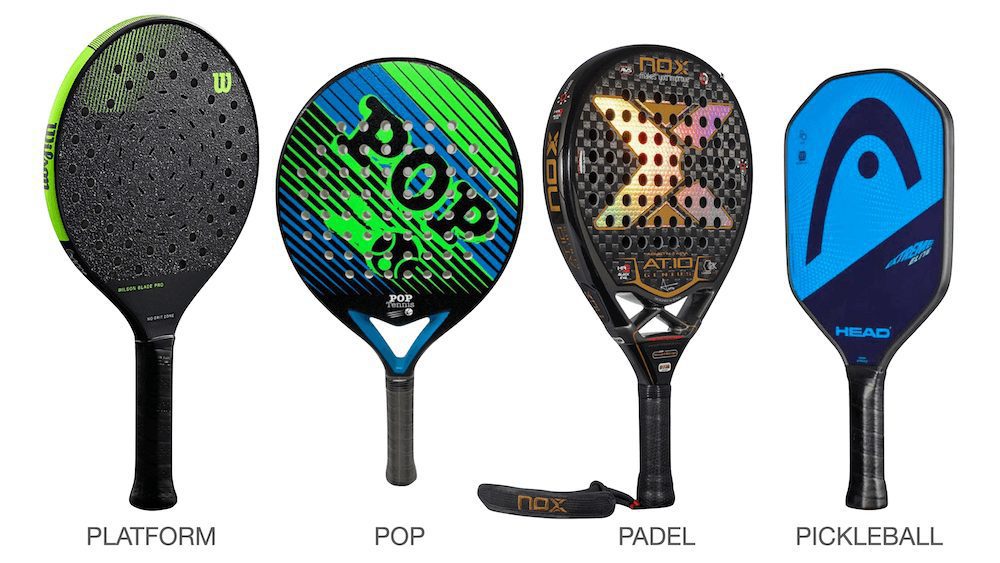
Minter Dial [11:41] I’m sure it would have been. I was only being provocative naturally. The culture of Padel, because in the United States we call it Padel, which is inaccurate as far as the Spaniards are concerned, which is where I come from in and Padel, with an accent on the A, Padel, because that was different from Padel, platform Padel, and all this. How would you describe the Padel culture in the United States as it sits today?
Dario Miceli [12:12] Well, today, there isn’t one culture. I’ve had the great privilege of playing all around the country. You play in New York City. It’s, I would say, it’s a great way to meet people, but Padel itself isn’t terribly social. We don’t stick around the club and drink beer together because we’re in New York City and we’re surrounded by world-class nightlife, world-class eating and drinking and entertainment. And so a Padel club is not going to compete with that, but you go to more suburban places and it’s an amazing place for people and families to sit around and treat it like a co -working space and get a coffee or a beer afterwards. I think if you look at the social scene in Austin, which I just came back from, it’s different than what it looks like in Los Angeles, vastly different than what it looks like in Miami, and totally different than what it looks like in New York City. And then we’re going to see what Denver looks like, what places like Phoenix look like. But that’s kind of a great place to be in America. It’s still in a massive place with hundreds of millions of people. Every city and every region is going to have its own culture. But I think in that sense, it’s truly American in that it’s diverse. It’s hard to pin down. It’s vibrant. It’s firing on all cylinders. And I think it’s this like crucible of creativity and sportsmanship and competition in this uniquely American way.
Minter Dial [13:44] I like that combination. And certainly the crucible, there’s a feeling when you’re in the cage, not it’s not UFC cage, but it certainly at a certain level, it does feel like you’re battling and you’re hitting the ball at the partner, at the opponent sometimes. And you still say, I’m sorry, but that’s the gig.
Dario Miceli [14:06] And there is that battle component.
Minter Dial [14:08] And you do see at the highest level, how that stress of being in the cage is challenging mentally, because you’re playing for maybe let’s say 90 minutes in a high competitive space. And it every points a battle and it generally feels like that. So with regard to Padel, you created the magazine, Padel magazine, and you went for human stories. And something I, in reading about you, Dario, is that you were looking at how Padel players are part of your zeitgeist and your community. What makes them Padel players part of your zeitgeist? What is it about Padel players that attracts you to it and made you want to write, create a higher end magazine about Padel?
Dario Miceli [15:06] You know, I think when you are in a community communal event like this, and you’re all just wearing a t-shirt and shorts and some, some, some sneakers, there’s this equalizing factor there where when you step on the court, you’re only as good as your last shot. And in that sense, we are removed from any other type of classification, especially in the United States. We have, you know, class, a class system here, race plays into so much stuff. And when you are on the court, it’s this tremendous equalizer. And you have no idea who you’re on the court with if you, if you don’t know them personally, which when you’re first starting out, you don’t know who you’re on the court with. And I remember one day I was reading a book about the real, like really high end real estate in New York city. And there’s, they’re talking about Arab princes, and they’re talking about Chinese owners of conglomerates there. And I saw my friend’s name in the book. He was one of the purchasers of one of these like $100 million condos. And I’m like, wait a second. And I text them and I go, is this you? He goes, yeah, yeah, we bought that place a while ago. And I just like, we’ve been playing together for a while. And I see you and you got your t shirt on and your sneakers on and that just opened up my mind. It’s like, you have no idea who you’re on the court with. I play with pilots. I play with defense contractors. I play with children of oligarchs. I play with it’s New York City. And you kind of, I just felt this like insane urge to tell those stories. And there’s so many they’re everywhere. You have people coming from all around the world, overcoming all different types of obstacles to get on the court and play. And when you’re there, you’re only as good as your last shot. And it’s like, I couldn’t help but not get involved with that in some way. And I think that’s a big part of what we do with the magazine. We want to tell those stories. We don’t do press. We don’t do PR. I’m not trying to help anyone sell anything except for our advertisers. But those are clearly marked. But if you’re reading these stories, I want it to be a window into someone else’s world. Read it like a National Geographic, read it like one of those great travel books. And I hope that my readers feel that way when they read that. So why is it that Padel allows for that to happen as opposed to perhaps a golf, a tennis, a pickleball? Is there something, is it because it’s new? What do you think is it that allows for a billionaire and a college, you know, acne infested kid to play together?
Minter Dial [17:46] Yeah. I’m not saying you’re an acting invested kid. That’s okay. I’m a few decades away from my acne infestation. But I would say it’s new. So it’s like a very ragtag.
Dario Miceli [17:57] I think people like me just literally wandered into these facilities. And I the kind of person who is just going to wander into one of these facilities and then dive in head first is the kind of person that’s going to have some type of interesting backstory. There’s something with their personality that’s going to make them interesting. And like you said, like, I think that probably happens on a golf course a little bit. But if you’re going to go golfing, you’re probably going to go golfing with people you know, you’ve got cousins you go with, you go with your dad, you go with your work buddies, your fraternity brothers, your whoever, it’s like, it’s people you already know you’ve already self sorted. When you’re playing Padel, that’s so new in the United States, you’re wandering on the court and you I don’t know, I feel like I’m kind of in high school or college again, like I’m just, I’m thrown into this equalizing environment with people that come from all different types of backgrounds. And when we’re here, you know, we’re kind of all the same, and at least some really unlikely friendships, but it’s been it’s been a blast.
Minter Dial [19:00] Yeah, the notion of the equalizer is really interesting. And perhaps it is because it’s new. But I always I regularly will mention my friend Chris, who a Greek guy who was a driver on the London Underground, driving at the beginning of the train, and he would sometimes it goes overground in London. And he spotted these people playing the sport and everyone looked like they’re always having fun. So he ended up giving up his job and is now a padel coach. And, and, and I mentioned it because Chris now plays with CEOs. He would never have had that opportunity sitting in the front of his tube. And, and the idea that, you know, you can be playing with the CEO just because they’re the CEO or gazillionaire doesn’t actually mean that you don’t hit the ball at them hard, that you can give them credit so we can laugh and we can actually have a beer as well. Afterwards, I think part of my desire is to Dario’s to cultivate the culture of padel and allow for us wherever we are to keep an idea of the roots of padel. As much as we are doing our own club, high end, low end, whatever, there is a culture of padel and I’m trying, I’m keen to keep it despite the growth. And so Chris, you, sorry, Chris, Dario, you Chris, padel buddy, Dario, you have created a magazine and publishing is an awfully difficult business to launch yourself into. If you’re your age, I’m thinking digital is the thing that everyone does. Mobile, iPad, but paper. Really? Are you an analog anti-diluvian? What, how on earth did you think that having a paper magazine for padel was appropriate?
Dario Miceli [20:51] I think it’s very fitting. One of the great things about padel is that when you’re there, you can’t check your phone. You’re on the court, the ball’s coming at you. There’s no pausing. There’s no, you know, there’s no, hold on one second. Let me check my phone. It’s, you know, you’re there. So one of the great things that I think brings us together is the fact that it’s one of the few times of my day at this point when I’m talking to someone or I’m doing something with someone, I don’t have my phone. They don’t have their phone. And that’s, I think that’s a beautiful thing. Also, print is having a big comeback. If you look at magazine stores all around the world, New York City, Madrid, Porto, God, everywhere, print is having like a huge comeback. People want an excuse. They’re begging for an excuse to put their phones down and kind of get lost in something. People love collecting them. They love having them around courts, clubs, by the magazine in bulk and just leave them around for their members. They love having them at the front desk. They love having them in the members areas, locker rooms, restaurants, cafes. And what we’re doing is not just a magazine. What we’re doing is building an immediate ecosystem for the world’s fastest growing sport. So our magazine is something tactile. I think it’s something that builds our brand. It gets us in front of so many people, but we are investing big time in our digital platforms, our Instagram newsletter, LinkedIn, that stuff is really important in what we do. But yeah, I think it’s the magazine is kind of the central part of a more holistic environment that we’re trying to build. Print is hard. I understand why people have a hard time doing it. It’s passion. It’s tricky. It’s expensive. But I would say there’s, I feel like a kid on Christmas again, when I go to pick up the first issues of the magazine, when we get them printed, it hasn’t, we’re only on our third issue, but it hasn’t gotten old. I love picking up and seeing that idea come to life.
Minter Dial [23:02] It’s great. So yeah, we’re not demanding it anytime soon, for sure. Yeah, the special notion of physicality.
Dario Miceli [23:11] Padel is not a virtual sport.
Minter Dial [23:14] And it makes me think of Amazon that’s sort of done everything virtually, but turns out that they’re feeling the need to make physical spaces. And as a society, the need to meet, to sweat together, to high five, to embrace, to have the beer afterwards, it feels part of that zeitgeist as opposed to the sort of the virtuality of life. Yeah. I mean, I always talk about the term alternative fitness, which I don’t know if that’s a thing or if I made it up.
Dario Miceli [23:48] But I think if you look, if you walk towards Padel Haus, from, you know, I’m here in North Brooklyn, if you walk towards Padel Haus, you pass gyms that have like very specific themes. You pass a rock climbing gym. You pass tennis courts that are constantly packed, yoga studios, Pilates. People want to be in shape, and they want to do something beyond just, you know, lifting weights or running around a track, they want to do something that gets them in shape and stimulates them intellectually. And there’s a social component to it. Padel falls right into that. And I think it’s a huge trend in the United States. You look at what’s going on with like high rocks and solid, all that stuff, orange theory, you can’t just build a gym anymore. You’ve got to build some kind of social component to it, and Padel fits right into that.
Minter Dial [24:37] All right. So I want to take a little bit of a, let’s say, diversion from the business side, because obviously there’s the business element of making your business work. And the fact that it’s a higher end magazine, prestigious paper, you’ve made it look good. And Padel at this moment is still more of a premium activity in the United States. The court costs, let’s say, $50,000 as opposed to Pickleball, which costs you $4.5 to build. There’s a necessary element to it. So to what extent do you think that Padel will become more mainstream? How do you see in the United States Padel sort of winding down, downstream? Colleges are a part of that.
Dario Miceli [25:25] Kids programs are a part of that. Having it enter the mainstream, I think when we see professional basketball players playing, when we see Formula One drivers, when we see municipal courts, which there’s a few in the United States, when we see pop ups at shopping malls, which there’s a few in the United States, people walking by going, what is that? I read someone, I never worked in sales, but someone told me that when you reach out to somebody, it usually takes around seven interactions to hook someone, to get them to respond or to notice your product. Building one Padel court in an industrial part of town is not going to blow this up into the mainstream. People need to see it at the magazine stand. They need to see it on their Instagram feed. They need to see it in their email inbox. They need to see it on reality TV. I could keep going and then they need to Google, where can I play this in my town? Oh, my 20 minute drive, that part of town I’ve never been in where all the warehouses are. Guess what? They’ve been there. When I go there, there’s a cafe and there’s Wi-Fi and I’m making friends and I’m getting in shape. We’re getting there as a country. When it enters the mainstream and people are seeing it all the time, prices are going to start to come down. That’s going to happen. It’s going to create winners and losers. That’s the name of the game when you open a business. That’s how it is. We’re going to see it integrated into fitness facilities. We’re going to see it, like I said, I think at the beginning, we’re talking about multi-sport facilities. You’re going to have to couple this with pickleball and squash in a small soccer field and a gym and a yoga studio. It’s going to work its way in. Anyone who says what they know it’s going to look like 10 years from now or five years from now, I mean, they’re whatever, they’re full of it. I think the idea is just keep pushing this, making sure it has a great reputation, making sure that we’re open and that we are welcoming to newcomers. That stuff is what we can do today to make sure that we’re at least still around in 10 years. That looks like who knows.
Minter Dial [27:35] In Dario, I have this in my new book. It’s called The Avatar Trap. I have a whole section I’ve actually written about padel tennis and in the context of The Avatar Trap.
Dario Miceli [27:47] The notion is padel is a tremendous response to today’s difficulties,
Minter Dial [27:56] different from other sports. I was wondering if I just launched that to you, Dario, why do you think padel would be a good and different response to today’s difficulties? Well, think about what are today’s difficulties.
Dario Miceli [28:14] We talk a lot about loneliness, especially in men. We talk a lot about isolation, working from home. You might not leave your house until five, six o’clock at night doing that every day, lends into loneliness. People are trying to get into shape. It’s so easy to fall into a sedentary lifestyle. I think that’s why it is a good response to those things. It checks all of those boxes. Why it’s different is I think just because it’s new and it’s novel. I think because it’s easy to pick up and hard to master. You can play for a month and be like, I’m having a blast. This is great. Or 52 years and still feel like I’m learning. 100%. You talk to the pros. They’re constantly talking about improving their game. You don’t talk to a single pro who says, I’ve got it and I’m as good as I can be. You can play this sport forever. It’s great. Golf is a blast, but it’s really hard. Tennis is super fun. It’s the king of racquet sports, no doubt about it. But it is not really fun for the first few years when you’re picking it up. I think you can be on one court in padel and just having a great time with your friends. It’s your third time playing. You’re getting the ball across. It’s fast paced. You’re actually playing and you look at the people next to you and they’re trying to go pro. You’re like, that looks like it’s a blast. That looks like it’s fun too. It feels achievable in this weird way of like, I could, if I worked hard enough at this, be going in the right direction. I think other sports fall off. They lack in that way.
Minter Dial [30:07] The way I see it to add to that Dario is, for example, like in a squash court, the ball can’t be that far away. You don’t have to go walk for 10 extra meters to pick up the ball. Of course, you can have the Porteres and the balls that go out, but for on balance, you’re spending 80% of your time playing as opposed to picking up balls, which in tennis is not the case. The second thing, which I always remark is that padel requires humility. In the world championships final between Argentina and Spain, so good players, they whiff. You whiff at the ball. You can strike out in baseball. That’s part of that gig. So humility is part of that.
Dario Miceli [30:58] But in padel, the ball’s not coming that fast.
Minter Dial [31:02] You got a big racket. It’s not like a round small thing. And you still whiff. And then you have the netting around where the ball can just go anywhere. So pros, the best players in the world, will miss an easy ball. They might even miss an easy ball into the net that was just a little cheeky that it’s easy to learn, but it takes a lifetime to master. Want to finish the area just on the college world in the United States, because as you know, my niece and nephew and the US family, they all play padel UVA, Skyler, Brody. So tell us about the world of college, because at the end of the day, like you say, if padel is to succeed, it will need to have the grassroots. So where and how is padel working at the grassroots in the United States?
Dario Miceli [32:07] Well, at the grassroots stage, I think it comes from people falling in love with the sport and deciding I want to get involved in some way, a lot of people are creating clothing lines. People are deciding to go and open their own clubs, their own courts. I have lawyer friends who are starting legal consultancies for new clubs. And I think that’s obviously like, it’s such an American thing to do to monetize your hobby. We can’t help ourselves sometimes, but the grassroots is people, young people all the way up to adulthood chipping into the ecosystem in one way or another. My way is through the media ecosystem, some people, legal and regulatory and clothing brands and logistics and supply chain, all that stuff. Everyone wants to chip in. I think college is a really big part of that. But what I’ve learned over the past few months, we’ve been doing some work in the college space, is that you’ve got to go through the students, you can’t go to the head of sports, you can’t go only to the students. So you’ve got to go to people like your nieces and nephews and say, talk to the sporting director and let’s get some space and let’s do it. And I tell you what, like turnaround, they’ve got space for us. They’ve got a budget, they’ve got a few sponsors. It’s a great way to get a court somewhere close by. Yeah, so I think from the grassroots, college is playing a huge role in that. And after that, it’s going to be getting even younger kids involved, which is going to be tough because I was talking to an Argentinian friend yesterday, two days ago. And he’s like, what’s it going to take to get kids to play? It’s like, well, it has to be an alternative to baseball, football, soccer, basketball. Why would a parent put their kid into padel if colleges aren’t offering scholarships, if high schools don’t have courts, if it’s 60 bucks an hour and you’re trying to take them every day after school, like it’s kind of a non-starter for a four or five, six, seven year old. So the grassroots is there, it’s growing, it’s up to all of us to support it. And I think that is a responsibility of the big leagues. I think a premier padel wants to be involved in the United States. They need to care about what kids, American kids are thinking. Premier padel, they do youth days, youth outreach, pro-padel league, sorry, they do the PPL. They do youth outreach, every stop they make in the United States. And that kind of stuff is just so important. So it’s going to take all of us watering that grass and it’ll grow.
Minter Dial [35:01] Anyway, a shout out to Sky Brody, UVA, hopefully Annapolis and Clemson with Ariana. Just to finish, let’s just talk about your Padel area. You are progressing, you’re seeing people who are better on the court beside you. What are you personally working on? What’s your favorite shot and what are you personally working on to make your game better?
Dario Miceli [35:26] My favorite shot is I have a natural knack for defense off the glass. That was not easy, but it came to me more naturally not having a racquet sports background. I think maybe it felt maybe more like baseball where you’re getting kind of sideways to the ball and you’re kind of doing that like rotation up here and it’s there’s a lot of timing involved. Because I don’t have a racquet sports background, my overhead is terrible. Not like these tennis players who kind of have a natural smash. I worked with an amazing coach here at Padel Haus, Alvaro Pecos. He’s the top guy here in New York. We all love him. We all like idolize him. He was like very much about getting the basics right. So when I started working with him, it was like months of like forehand volley, backhand volley, playing from the defense, forehand that transition up to the going back lobs, like really, really, really fundamental basic stuff. And that was two years ago. And to this day, like I’m very thankful that we did that because I see the tennis players who never took a lesson, who have great overhead smash, great footwork, they can place the ball in places. I can’t follow these. I mean, incredible everything, but I’m able to outthink them and I’m able in ways to outplay them because they have the fundamentals that I got working with him. So, you know, I’m still working on things, but I went to Madrid over the summer and I spent seven days training there. We were in a Euro indoor and G24, went over with a few guys from New York and made it a whole vacation. And it was just, it was amazing to go play with in new places, with new coaches. That’s great. You pick something up from every new coach you work with, you pick something up and that’ll make you a better player just doing that.
Minter Dial [37:18] Hablas español?
Dario Miceli [37:20] No. I can understand it a little bit — I think, from the little bit of Italian I know, so… it’s okay.
Minter Dial [37:29] Yeah, I interviewed Luis Estrada, the U.S. player. And he said — I think it’s really useful — I spent a year losing to learn. And as a tennis player, so many of these people come in thinking, “I can hit” — look at my volleys, they’re great. My overheads are great, like you say, but actually the game of padel is so much more and it takes a whole, it can take more than a lifetime to get to know and be played good padel. All right, Dario, beautiful. Thanks for coming on. Lovely chatting, chatting with you. How does someone, what are the links for getting to read your, because, you know, a lot of my audience will be over just not necessarily in Dumbo. Where can they read your, your magazine, follow you, track you down, get more from your juice.
Dario Miceli [38:18] So a great place to find us is on Instagram, padel.mag. We post all the time. We read our DMS. That’s a great way to get ahold of us, learn about what we’re doing, learn about the sport. If you go to shop.readpadelmag.com, you can pick up our most recent version here. We’ve got Don Lito Aguirre. This was, this was a lot of fun.
Minter Dial [38:41] There’s a whole story behind getting him on the cover. It was great, but you can buy the
Dario Miceli [38:45] magazines there. Our back issues are always discounted. And if you’re a student or something and the price is too much, DM me. I’ll take care of you. And you can also reach us on LinkedIn, our newsletter, which you can sign up for on our website. We send out weekly. If you want to learn about the tournament that happened over the weekend or a new club that’s opening, we talk about investment news, things like that. The newsletter is a great resource for people trying to learn more about the sport and the ecosystem all around the world. It’s very global. So those are good places to do it. And you can see me at Padel Haus Greenpoint most days buying a smoothie or working on my forehand. So.
Minter Dial [39:27] Excellent. Working at work. They’re working it. All right, Dario, thank you. Vamos! It’s a great pleasure.
Dario Miceli [39:33] Thank you. Yeah. Thank you very much, I appreciate it.