FYI: English Subtitles. To display the English subtitles for this video, click the CC (Closed Captions) button at the bottom right of the video player on a computer, or tap the screen and select the CC icon or three-dot menu on a mobile device.
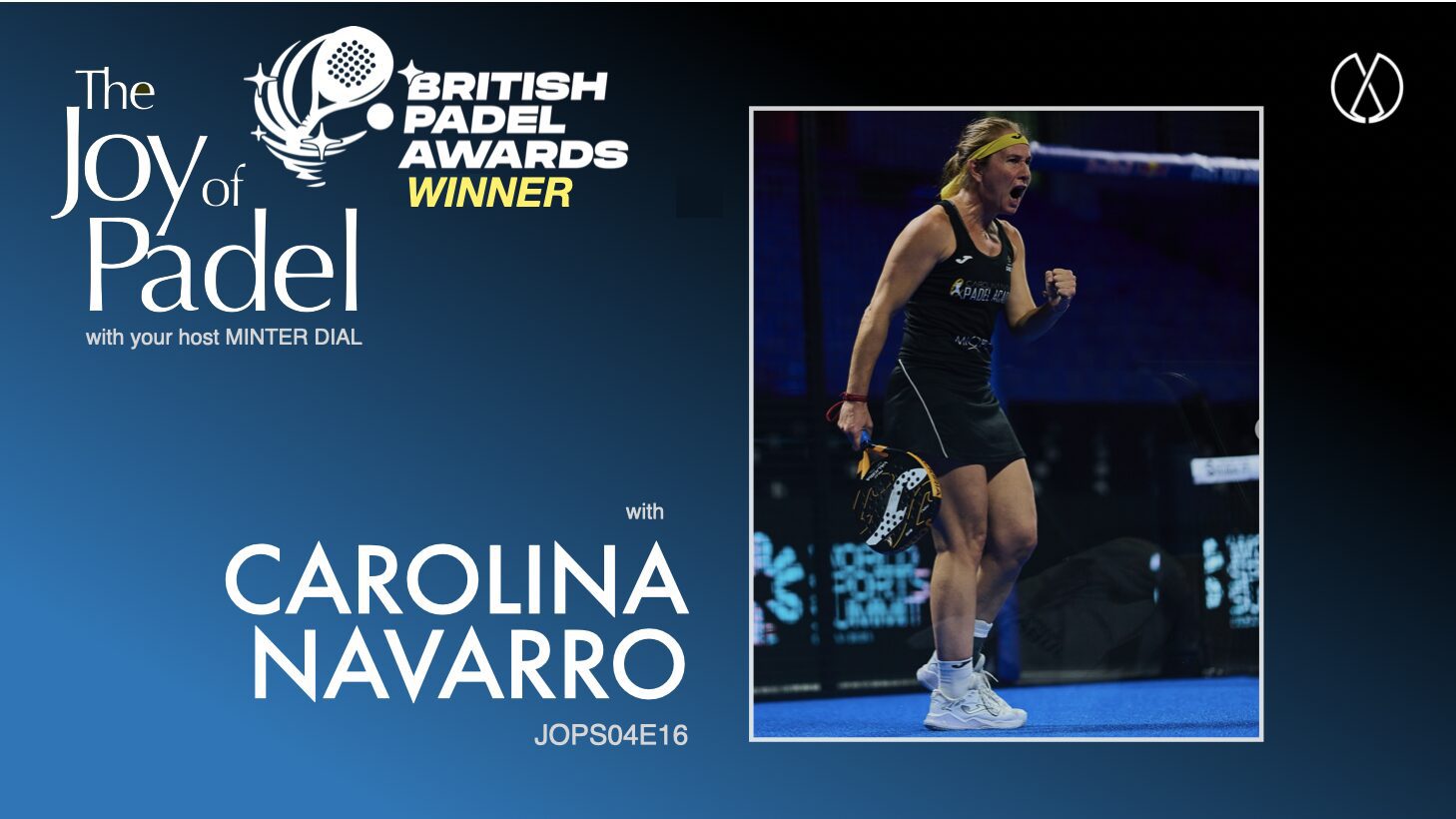
The Joy of Padel podcast with Carolina Navarro (JOPS04E16)
On the latest episode of the JOY OF PADEL podcast, I had the deep pleasure of hosting Carolina Navarro Björk. If you follow the world of padel, her name needs little introduction—she’s not just a former world number one, she’s a pioneer who helped elevate the sport, a leader in the Spanish national team, and an inspiring figure in the world of padel adaptado.
Background on Carolina Navarro
Carolina’s life story is as vibrant as her on-court personality. Born in Málaga to a Spanish father and Swedish mother, she combines the “garra vikinga” with the “toro andaluz”—a winning fusion that shows up powerfully in her game and her character. She grew up competing in tennis, but as fate would have it, a friend introduced her to padel, just as the sport was starting to blossom in Marbella. What started as a new way to exercise with friends soon became her whole life. Carolina’s evolution from amateur to legend was neither easy nor immediate—she had to leave her comfort zone, moving from Málaga to Madrid to pursue her dreams. That decision took courage, but her love for competition and growth drove her forward. What truly sets her apart is her commitment off the court, especially with “Palas Para Todos,” her inclusive padel school for kids with diverse abilities.
Main Topics Covered
Carolina and I dove into the heart and soul of padel—its social side, its accessible play, and the magic of building community. We talked about the evolution of padel in Spain and Sweden, why it’s so addictive, and how the culture changes from country to country. Carolina gave me brilliant insights into switching from tennis to padel—the technical challenges (hello, bandeja!) and the mental flexibility needed to truly thrive.
We spent time decoding partner chemistry—how choosing a teammate shifts as you evolve, what it means to play left or right side, and why adapting your expectations leads to better connection and results. Carolina also got candid about the pressure of holding on to the number one spot, and how to balance personal ambition with team harmony, especially as the coach of the Spanish women’s team. Finally, her passion for padel adaptado shone through; she described the profound perspective and happiness her pupils share with her.
Three Takeaways from My Conversation with Carolina
- Stepping out of your comfort zone is key. Whether on the court or in life, growth and improvement require a willingness to face new challenges and learn from every experience.
- The true magic of padel lies in the community. Regardless of skill level, passion and camaraderie outweigh any individual victory; that sense of belonging is what wins everyone over.
- Sport is a powerful tool for inclusion and joy. Carolina demonstrates this not only at the elite level but also by opening doors for children with different abilities through “Palas Para Todos”—where the focus is on celebrating every achievement, no matter how small.
If you are passionate about padel or looking for inspiration to keep growing—both on and off the court—don’t miss my conversation with Carolina. It was a true honor to share her vision and infectious energy. Catch the full episode of JOY OF PADEL—and remember, in this sport, the greatest triumph is enjoying the journey!
To find out more about Carolina Navarro:
- Find or follow on Instagram: @CarolinaNavarro
- Palas para Todos
- Joma linktree
To listen to the show:
To listen to The Joy of Padel podcast, you can use the embedded player above, or go find it on Spotify, Apple Podcasts or any number of other podcasting services listed here.
Send in your questions or reactions:
Please send me your questions — as an audio file if you’d like — to nminterdial@gmail.com. Otherwise, below, you’ll find the show notes and, of course, you are invited to comment. If you liked the podcast, please take a moment to review and/or rate it! ¡VAMOS!
Further resources for The Joy of Padel:

The Joy of Padel podcast, hosted by Minter Dial, a padel tennis player since 1974, is an exhilarating show that delves into the captivating stories of notable padel personalities worldwide.
Meanwhile, you can find Minter's other Evergreen podcasts, entitled The Minter Dialogue Show (in English and French) in this podcast tab, on Spotify, Megaphone or via Apple Podcasts.
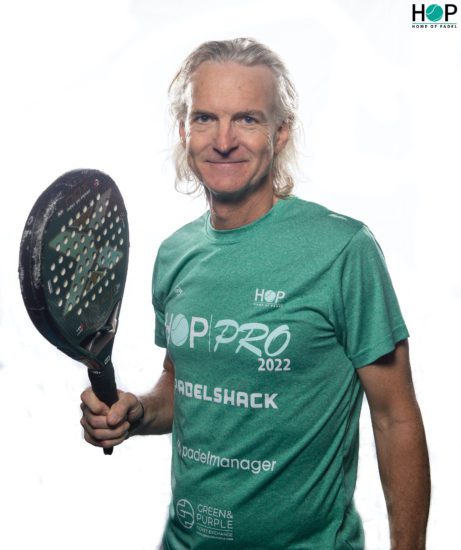
About the host: Minter Dial
Minter Dial is an international professional speaker, author & consultant on Leadership, Branding and Transformation. His involvement in sports has been a lifetime passion. Besides playing 18 years of rugby, captaining athletics teams, coaching tennis and playing squash for his university, he’s been a lifelong player of padel tennis, starting at the age of 10, from the time of its very first public courts at the Marbella Club in 1974.
Then, after a successful international career at L’Oréal, Minter Dial returned to his entrepreneurial roots and has spent the last twelve years helping senior management teams and Boards to adapt to the new exigencies of the digitally enhanced marketplace. He has worked with world-class organisations to help activate their brand strategies, and figure out how best to integrate new technologies, digital tools, devices and platforms. Above all, Minter works to catalyse a change in mindset and dial up transformation. Minter received his BA in Trilingual Literature from Yale University (1987) and gained his MBA at INSEAD, Fontainebleau (1993). He’s author of four award-winning books, including Heartificial Empathy 2nd edition (2023), You Lead (Kogan Page 2021), co-author of Futureproof (Pearson 2017); and author of The Last Ring Home (Myndset Press 2016), a book and documentary film, both of which have won awards and critical acclaim.
It’s easy to inquire about booking Minter Dial here.
Full transcript of interview via CastMagic
This transcription, translated into English, comes courtesy of Castmagic.io an AI service for podcasters, with the translation from Google.
Minter Dial: It’s a pleasure to have you, Carolina Navarro, tell me a few words about my podcast. Who is Carolina Navarro?
Carolina Navarro: I have to tell you.
Minter Dial: Yeah.
Carolina Navarro: Well, Carolina Navarro is a former professional padel player. The truth is, padel is her life, it has been her life, and it continues to be her life. She’s very involved with adapted padel, with young people with special needs.
Minter Dial: Uh-huh.
Carolina Navarro: But above all, you think, I think she’s a person, I don’t know, she’s always been down-to-earth, a great friend to her friends, and that’s what you see.
Minter Dial: In all of that, don’t mention that you’re binational?
Carolina Navarro: Yes, indeed. Yes, indeed. Oh, well, I’m from Malaga, sorry, it’s just that the question is very broad. Bio. I’m from Malaga, with a Spanish father and a Swedish mother. Yes. My mother went to Sweden, to Malaga, my father met her there in Torremolinos and well, they fell in love, and that was more than 50 years ago. And well, the truth is I’m very happy, because I’ve inherited a bit of the Viking spirit. My mother says, the Viking spirit and the Andalusian bull, that’s what I have in the ring.
Minter Dial: Since you know padel so well and are also binational, I always say that padel culture is Spanish . Or rather, it’s Spanish-speaking, given that there’s Argentina. But with your Swedish heritage, how do you see, how would you describe padel culture?
Carolina Navarro: The padel culture. Yes. Well, padel was born in Mexico, actually. Then it came to Spain, which is where it really took off. The first court was built
Minter Dial: And I left in Marbella in ’74, let’s go
Carolina Navarro: I was going to tell you, exactly.
Minter Dial: The first one was a court, then.
Carolina Navarro: The first clue was in Marbella, exactly. What year was that? 70 and?
Minter Dial: 74.
Carolina Navarro: 74. I started playing in ’93, imagine. And well, the truth is that at the beginning it was very elitist, it left people, well, with a lot of money and all that.
Minter Dial: And Marbella, of course, a lot.
Carolina Navarro: Marbella is already very chic and all that. And then it really started to expand. When I started, very few people had played and nobody knew what padel was. Right. And well, what happened is that little by little it became so that anyone could play, any age, any fitness level, any economic status. And it’s become an incredible sport, a very social sport, very easy to learn, very fun, and it has that community component, right? You end up forming a community, well, with your friends, other friends of everyone who plays padel, in the end it’s like a cult, isn’t it? A cult, but a really friendly one, a beautiful ecosystem and community has been created.
Minter Dial: The pleasant side of the party…
Carolina Navarro: Fun. Yeah, well, in Sweden, yes, I mean, they’re different, in a way. For example, in Spain, it’s true that you can go and have a beer; they sell alcohol in clubs, and you can have your beer there. In Sweden, they seem like a real drag. In Sweden, I think the level of not being able to drink alcohol in clubs is higher, and well, they have a different way of thinking, but in the end, they have the same community, they have a great time, they meet up, and well, in fact, at one point it was a boom, and everyone played . What happened was that they went overboard building padel courts and clubs, and in the end, well, it dropped off a bit, and now I think it’s stabilizing.
Minter Dial: I suppose you’ve answered I don’t know how many times, but what was your route to get there to play padel?
Carolina Navarro: Well, look, I used to play tennis, then there came a point where I started playing small-sided games , and then there was a point where I was playing professionally and either quitting my studies or quitting tennis and just studying. So, well, I was talking with my parents, and I really wanted to have, in the future I had to, I wanted to have a career, an education, and not give up everything. So, well, I quit tennis and continued my studies. And then a friend of my brother told me about a new sport, padel, in Marbella, Málaga, and so on. And that’s where I started playing, simply to exercise and compete. I started competing with my sisters, sweating it out and all, because I love it. And I started having a great time, and well, I started climbing, climbing, winning tournaments in Málaga, Andalusia, until María Silvela, who was number 1 in Spain at that time, called me. And she said, “Come to Madrid, do you want to play with me?” And I said, “Of course you want to.” The thing is, it was difficult because I lived in Málaga. So, I had to make the decision to go to Madrid, study there, train there, and, let’s say, leave my comfort zone, far from my family, far from my city, and far from where I was used to being all my life. I became independent, so to speak.
Minter Dial: Yes. To get out of their comfort zone. Comfort. That’s important in life. Yes. Especially when it’s on the court.
Carolina Navarro: In the end, yes. Ultimately, when you want something, I think you have to step outside your comfort zone, and that makes you grow, mature, and improve. So, in my case, I had to leave Malaga and go to Madrid because I wanted to play padel, and the number one player called me, and I loved competing. I said, let’s go there and see what happens. And then, on the court, I also had to evolve in many ways, step outside my comfort zone, and start learning to play in different ways, slower, depending on the situations I was facing. But hey, that makes you grow.
Minter Dial: You’ve always seen players transition from tennis to padel. But what’s the secret to making the switch to padel? Because most people don’t know much about it. How do you do it right? What do you need to do?
Carolina Navarro: Well, to begin with, I think people who play padel and come from a tennis background have many advantages. They volley very well, hit the ball quickly, and smash very well; they have a big advantage. But then they develop some bad habits, like not wanting to use the wall at all. They want to play everything quickly, volley, and avoid hitting the wall. Then they don’t hit the bandeja, which is a very difficult shot for tennis players, something I also struggled with. But I think you have to open your mind, right? You have to think of the wall as your friend, so to speak, and use it to your advantage, get out of your comfort zone.
Minter Dial: comfort.
Carolina Navarro: That! Even if you’re uncomfortable, in the long run it’s good for you. And then, for example, to hit the bandeja, which is a very difficult shot for a tennis player, because I was used to hitting it here. That’s it. Well, learning, and come on, I can’t do it, I keep practicing until, well, the bandeja was really hard for me. Uh-huh. I remember that at the beginning I couldn’t do it, they’d go halfway off the wall, off the glass, off the wall back then. Like that? Yes, yes, yes, halfway off, a disaster, a disaster, halfway off the wall and nothing, and it was a matter of practicing, practicing, and then in practice I started hitting two bandeja shots per practice match, then I started hitting five, then I dared, well, if I was doing well in a match, to hit one now and then, and so on until little by little I learned. It’s a really beautiful path because you have to, like we were saying, get out of your comfort zone and push yourself and learn other things that,
Minter Dial: Well, open
Carolina Navarro: the mind, basically.
Minter Dial: That’s what I’m saying.
Carolina Navarro: “Open your mind.”
Minter Dial: That’s it. I always say that padel helps me on the tennis court, because there are many more volleys to do and there’s all the air that gives you different options in tennis.
Carolina Navarro: Sure. That’s it. So, for example, do you know what shot is really good in padel for tennis? Well, for example, when you’re going for a very long, long forehand, hitting a slice shot.
Minter Dial: Ah, yes.
Carolina Navarro: All those sliced shots, when they’re really forced in tennis, what you do in padel, which is practically all sliced shots. Yes. That helps you later for tennis.
Minter Dial: I think there are many more variations in the shots in padel than there are
Carolina Navarro: Yes, much more, much more, and it also has, the ball comes to you from one side, you bounce off the back, from the front, a slice, a little bit of a flick here, a smash, a lob, hitting it out for 3. There’s better of everything, of everything. That’s it. You can give yourself a whole list of shots.
Minter Dial: And there’s also a very simple one that fails.
Carolina Navarro: Sure, that too.
Minter Dial: That’s it. Speaking of the side
Carolina Navarro: Yeah.
Minter Dial: When, how do you choose your side? When I play, I hit. Yes. But it’s not always the best position; some people play better on the right than on the left. How do you do it?
Carolina Navarro: If you’re left-handed on the right side, that’s clear. Easy. Although it’s true that there are two left-handed people because they don’t go
Minter Dial: Let’s play.
Carolina Navarro: It’s like having two right-handed players. Look, the general idea has always been that the right-handed player is the one who gets the ball in the net more, sets up the point, and the backhand player is the one who covers more of the court, has more physical strength, and hits the ball hard. That’s always been the way it’s been. But of course, then you have a left-handed player who can also do the job of a right-handed player, or even someone who isn’t a backhand player. So, it depends on the player. There are players, for example, who defend very well, and I think it’s better for them to be more on the right side, because they’re the ones who tend to give you the wrong point, because the backhand player has the whole court to be able to finish the point and attack with their forehand. That’s it. So, for me, that’s why it’s also better to have players with power, better physical strength, and hitting power on the backhand side, unless it’s a complete disaster.
Minter Dial: That’s it. And I always say that you have to know both sides of everything.
Carolina Navarro: I totally agree. I’m one-sided, meaning I play on the backhand side. Right. I only played on the right side for my first year, and then I’ve played on the backhand side my whole life, but with a closed grip. But obviously, if you’re able to play on both sides, that’s great in my opinion. It’s really good. First, so you can find partners.
Minter Dial: Uh-huh, yes.
Carolina Navarro: And second, because in the end it’s more complete, allowing you to play on both sides. It seems
Minter Dial: while one point might be that you have to switch sides.
Carolina Navarro: Absolutely. When he switches sides, he throws a balloon, I switch. Yes. And in the end, if I switch, I panicked, sorry, it ended up sounding similar.
Minter Dial: Yes, or we’ll talk about Joma later, but in that position you have to know your partner well.
Carolina Navarro: Exactly.
Minter Dial: How do you ultimately know who the best partner is for you? What’s the best path to finding them?
Carolina Navarro: Well , let me tell you. I’ve played for many years, and the type of partner I’ve wanted has changed over time. For example, at the beginning, I was a player who hit hard, who made a big difference with power, and I needed a player who could hit the ball hard and set up the point for me. And I was the one who decided the point. In fact, I played with Paula Yeragibe, and he initially played with María Silvera, with Alicia El Monte, with this player who ultimately set up the point for me a lot. Right. And I was a bit of an aggressive player, you know? Then I moved on, then I was with Alejandra too, and in the end, we were both aggressive players. Right. Then, as time went on, and I was also with Ceci, who prepared the point very well for me, and I was the aggressive player, then there comes a point where, of course, physically, well, I get so tired, I start to slow down the point, to play a little slower, to set up the point myself, and I started to look for left-handed players who were powerful hitters and who ran.
Minter Dial: And do you know the reverse side well?
Carolina Navarro: Perfect, the right-handed one, right? You need a good right-handed player, yes. And, well, I changed a bit to the type of player I wanted.
Minter Dial: And in terms of my mind?
Carolina Navarro: On a mental level, too. First, that, and then I had to bring in the mental aspect. I like players who are aggressive, who have a winning mentality, who shout, who really want it, you know? To truly be passionate. To devour the opponent in a good way, to play at full throttle and leave everything on the court until the very last ball. I need that kind of player. Even. And well, that’s kind of what I was looking for, and then, besides that, to have good chemistry on the court, because it’s many hours together with a player; in the end, it’s like being with a spouse. And you’re constantly in high-tension, high-pressure situations, and it’s important to have a good feeling and try to communicate everything, to have a connection, let’s say, with the person you’re playing next to. Otherwise, it’s very difficult.
Minter Dial: Juanjo Gutiérrez told me, he said it was for the same reason, which is, it has been a marriage.
Carolina Navarro: Yes, it’s true.
Minter Dial: So, today you’re the coach of the Spanish women’s national team. How do you choose the right team? Because I asked Juan the same thing: is there chemistry?
Carolina Navarro: Yes, chemistry.
Minter Dial: The chemistry between the players, the complementarity, the mentality, the history. And, in addition, there’s history. Yes.
Carolina Navarro: It’s complicated because so many factors come together. Keep in mind that these are eight players who compete against each other all year, and you need them together for a whole week, or ten or ten days, living together and, obviously, trying to fight for the same goal, right? Uh-huh. So, you have to put aside egos and everything, leave it all behind, and become a team, a tight-knit group. So, well, you have to try to focus on the players’ performance, the chemistry between them, which pairings they have and how they can work together, their co-existence, and also try to find ways to create good team dynamics, because in the end, it’s ten days.
Minter Dial: in Doha.
Carolina Navarro: In Doha, in Doha, and it’s complicated, there are so many factors you have to look at and well , then, you have to get the best team so you can do your best, because in the end all the countries are growing a lot, they’re improving a lot, a lot, and well, we’re going to have a nice challenge, really.
Minter Dial: I don’t mean to be sexist, but there are different differences between the women’s team in terms of how to section the men’s team?
Carolina Navarro: I don’t know what criteria Juanjo will have either, no, I mean, we’re talking a lot and we’re in great contact. But well, he thinks the male perspective is completely different from the female one. Uh-huh.
Minter Dial: And the game is different now.
Carolina Navarro: Yes, it’s different, but yes, but then the issue of getting along is also important. Right. Because in the end, I mean, I think women are a little more difficult in that sense, but come on, there won’t be any problem because there never has been a problem with the girls. I mean, I think that in the end, the eight who go will do great. They’ll be super good, because I’ve always been on the national team for many years, and in the end, we form a tight-knit group and we all give it our all representing our country, because in the end, it’s an honor to be able to represent it.
Minter Dial: I think it’s easier to take on a project for the country than a partnership these days. It’s said—I don’t know how you’d describe the state of women’s padel today—because there’s always more money, more participation, more passion. Is there still a possibility of a project for a partnership that’s been going on for years, or is it still more like the men’s game? It seems to me that it’s faster; there’s no patience .
Carolina Navarro: For me, it’s just that, no, everything is too immediate. For me, projects are very difficult, and it’s a shame, because it used to be like that with projects; you trusted your partner, and if things didn’t work out, you tried to stick it out and see it through. But today, I think, with how professionalized it’s become, and the points system, sometimes you play with teammates just to be in the top 8. Right. In the end, I think it’s better if you’re not in the top 8, which isn’t ideal. But if you’re with a teammate you really think you can do well with and you have a good connection , it’ll work out and you’ll make it into the top 8. So, I think sometimes the mistake is made of trying to play with teammates just to be in the top 8 or 16, which is easy to say, but I think in the end you have to be guided a little more by your feelings and by who you think you can get good results with. Not just because of the numbers, which is how it’s being done now.
Minter Dial: You were number 1 in the world, which is more difficult? Becoming the number one or keeping the number one ranking?
Carolina Navarro: I absolutely intend to maintain it. I mean, getting there is very difficult, very difficult, but staying there is even harder. I remember when I was number 1, I think they were all talking amongst themselves to figure out how to outmaneuver Itziar, yes, yes, to beat us. At the time, they beat Cecilia and me, we were together for four years, well, with all the companies I was with. And in the end, the problem is also that, you know, you have the pressure that only winning matters. The press does win, I know, that’s normal, and if you lose in the news. So, that’s tough. Because then they don’t value it, they really don’t value it.
Minter Dial: The victories.
Carolina Navarro: Victories aren’t valued. You realize it later, when it’s already over, you say, wow, I was something else, wasn’t I? Number 1 year, I was incredible. But you’ve been so focused on everything and it wasn’t valued that much. It was like, well, time to win again, well, time to win again. And when I lost it was, yes. It’s harder to stay on top, because everyone wants to beat you and
Minter Dial: and all.
Carolina Navarro: And always, of course, and they always have the pressure of having to win, no matter what, because they’re always the favorite. I remember when I stopped being number 1, I realized, like I said, wow , I’m not the favorite anymore, that’s great. Now the pressure is on the others, I mean, that’s great. No, that’s great, but in the end I think, wow , the pressure is on the others. Me, well, if I lose, it’s no big deal, you know? And before, if I lost it was a huge drama. A drama for the press.
Minter Dial: Yes. And how do you do it? How did you cope with those tough moments? When you lost a game. How do you do it?
Carolina Navarro: Well, in the end, I tried not to make such a big deal out of winning, or losing. Because ultimately, it’s like, you think you’re the best when you win and you think you’re the worst when you lose. And I think that naturalness I brought to victories and defeats—not being so great when I won, not so bad when I lost—and keeping my feet on the ground and not dwelling on it, like, “I lost. Okay, no big deal.” My psychologist would tell me, “Okay, you’ve lost, or you might lose. What happens if you lose?” I’d say, “Nothing.” But tomorrow, I mean, tomorrow you’re going to get up, you’re going to train, and it’s just another day. Right? And so, I tried to take the pressure off, to realize it’s not the end of the world. I mean, if you lose, you lose. What are you going to do? The important thing is to get on the court and give it your all. Right? I always had that mentality of giving it my all until the last minute and then leaving. And I’d say, “Look, I couldn’t have done more, I was better.” That’s it. If they’re better, what am I going to do?
Minter Dial: Two more issues. The first is the “Shovels for Everyone” program.
Carolina Navarro: Yeah.
Minter Dial: Tell us what it is and why it’s so important to you!
Carolina Navarro: I think it’s my best gift, because for me it’s a gift to be able to be with the kids thanks to my sister , Nini, who got her adapted padel instructor certification. We’ve had the school for 13 or 14 years now, in Malaga, with about 80 kids. And every time, for example, when we talk about the losses we discussed earlier, I go and be with them. What do I care about losing?
Minter Dial: A different perspective.
Carolina Navarro: What do I care about losing? I’m with them, I don’t know, I’m playing with them, they hit a volley and they’re the happiest people in the world for hitting a good volley, wow, how happy they are when I arrive, how they hug me,
Minter Dial: naive energy .
Carolina Navarro: Exactly. And they arrive and tell me, I do it, I give them a t-shirt, and they say, “It’s the first time they’ve ever given me a gift.” I don’t know, being able to take them, even if it’s their first time flying, if they’ve never even been on a plane, because I call them to a Premier League event or something, to do an exhibition and see them there in the middle of the stadium, happy. I mean, there are no more wonderful things than being able to do, to make people happy. And they give me more than they could ever give me, I mean, they give me so much more than I could ever give them, and for me, that’s a gift. I don’t know, you have to experience it.
Minter Dial: I understand. And if someone listening wants to help you, participate, or learn more, how?
Carolina Navarro: Well, if you’d like to visit, you can come to Malaga to see the school and be there. If there are any people, anyone who wants to volunteer and help us with the school, or even if there’s a company that wants to contribute financially, we’d appreciate it. Because with our limited funds, we’re fortunate to have Joma help us out by providing clothing for the kids, racquets, and things like that. The real challenge, on a financial level, is getting money from other companies. We use that money to rent clothes for the kids, to cover all their expenses, all their travel, everything for the places we take them, all the events. And we also give talks in schools to raise awareness about the sport and show that any child can play.
Minter Dial: Do you have a link on your site specifically for this purpose?
Carolina Navarro: Yes, it ‘s Palas Para Todos. It’s on my Instagram, it says Palas Para Todos.
Minter Dial: Perfect. And the The last issue is
Carolina Navarro: Nothing, don’t worry.
Minter Dial: And you’re also ambassador for Joma. Yes. Tell us about what it’s like to be the ambassador for this beautiful Spanish brand.
Carolina Navarro: Well, me
Minter Dial: And that one.
Carolina Navarro: Ah, the racquet, it’s in
Minter Dial: my racquet.
Carolina Navarro: For example, Valkyrie. Well, they signed me about three or four years ago to be a sponsored player and a brand ambassador. So, when I was finishing my degree, they offered me a position with the brand, supporting them in the padel side of things. So, I gradually got involved during my final year, and now I’m responsible for international padel, handling everything from player signings and participating in Premier events to the entire racket collection, design, testing, and all that. And then, I’m also a brand ambassador.
Minter Dial: And the sneakers.
Carolina Navarro: And the sneakers. These ones, since we’re the official footwear brand here in London, have turned out really, really beautiful. And well, I’m there helping out as much as I can from the inside to grow the brand internationally, which I think is going really well and they’re all very enthusiastic, and I’m really happy about it too. I have an amazing team behind me and the people who made it so wonderful.
Minter Dial: Last question, any advice for amateur players? What would you like to tell them to help them improve at padel?
Carolina Navarro: First of all, what I always say is to enjoy yourselves. Yeah. Because it sounds silly, but, like, you go to the court to relax, to enjoy yourself. It’s true that you might be competing, but try to enjoy it.
Minter Dial: Not just a sport.
Carolina Navarro: Sure. And you also go there to relax and enjoy the competition, right? The important thing is to give it your all. Right. When you step onto the court, give it your all, everything you have that day. I wish we could always play well and at 100%, and that’s the least of our worries. Most of the time we go, imagine, today I’ll come here, I’ll sit down, okay, today the smash is going to be a disaster, but then I’ll hit a good volley and I’ll do this, well, I have to play knowing that today the smash isn’t going to work. And another day the volley won’t go in, and another day I won’t move well. So, every day I step onto the court, give everything I have with what I have. And then, above all, enjoy it and warm up. Warm up, yes. Please.
Minter Dial: Yes, before.
Carolina Navarro: Before we start. Uh-huh. And if they want to stretch, but they say it doesn’t matter. At least warm up, because people come running in, I don’t know what’s going on, and they don’t feel anything until the first minute. That happens to you too, right?
Minter Dial: Yes, of course. What I like about what you said is that my podcast is called Joy. Of Padel, the enjoyment of Padel, and I have 5 rules. The 1st, enjoy it. And the 2nd, I don’t say get warmed up, but I say don’t get injured.
Carolina Navarro: Of course, that will warm him up.
Minter Dial: The same. The 5e is a great post-match drink.
Carolina Navarro: Yes, that’s the most important thing!
Minter Dial: Take the time to do it. Absolutely. Carolina, thank you so much for everything.
Carolina Navarro: No, thank you so much. It’s been a pleasure. Really, thank you so much. And well, I hope everything goes wonderfully for you. I want to send a greeting to everyone on your podcast, since the video is also available, right?
Minter Dial: Yes, Carolina Navarro dot com.
Carolina Navarro: And that’s it, really, you’re wonderful, thank you so much, and I already feel like it took us ages to do this, but it was worth the wait. That’s it. We’ll do it like this in person. Let’s go. Of course. Thank you. Very good.