
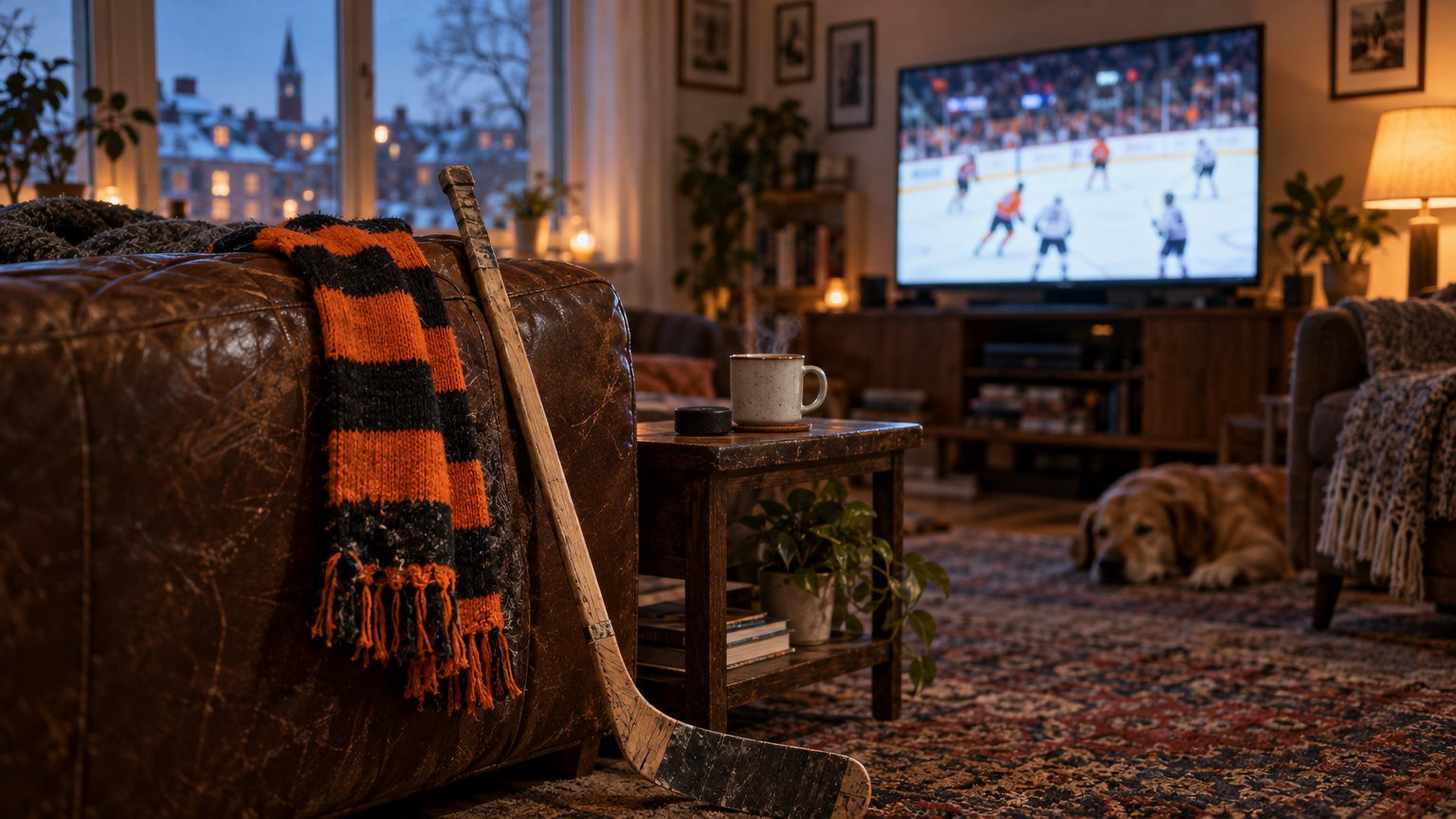
No, I am not a fan of the orange and black of Halloween! However, I have supported the Orange and Black of the Philadelphia Flyers for most of my life, and from a few thousand miles away for most of it. They haven’t lifted the Stanley Cup since 1975 (I discovered ice hockey and the Flyers as a 9-year-old on a trip to visit my grandparents in Philadelphia in 1974!). By any rational measure, I should have moved on decades ago. I haven’t. And that, in a nutshell, is one of the most powerful lessons in branding I know.
A brand lives in the minds of those who follow
A friend and fellow Flyers fan recently asked me what it really means to be a Flyers fan. I’ve been chewing on it ever since. It’s perhaps an odd thing to consider but what is — and how do you craft — the brand of a sports team? My answer: a team’s brand is the lived experience of its fans and stakeholders. For me (and as far as my association with them is concerned), Flyers fans are rugged, demanding and loyal. Ideally, the team’s values ought to resonate not just with the fans, but importantly with the players and staff on the team, too. The values aren’t dictated – or lived – inside the boardroom. The brand exists in our collective heads, coloured by our own contexts and, yes, our baggage. It comes alive when the jersey is donned, by fans and players alike.
That’s true of any brand. A logo is an asset; its value lies in the meaning attached to it, that belongs to the people who carry it around. Sports teams just make this painfully visible, because their “customers” will tell you, loudly and every week, what they think the brand stands for. The armchair coaches come to mind.
Loyalty that survives losing
Here’s where most marketers might get unsettled. Fans don’t stay for the results. If they did, half the stadiums in the world would be empty midway through the season. They stay for identity, for belonging, for the story they share with the person in the next seat, or at the pub pre- and post-match. And that’s good news for the Flyers, who have started off this 2026 season with a 3-8-4 record, good for dead last in the Metropolitan division and Eastern conference and 30th out of 32 in the entire league. Yet, here am I, still yearning for them.
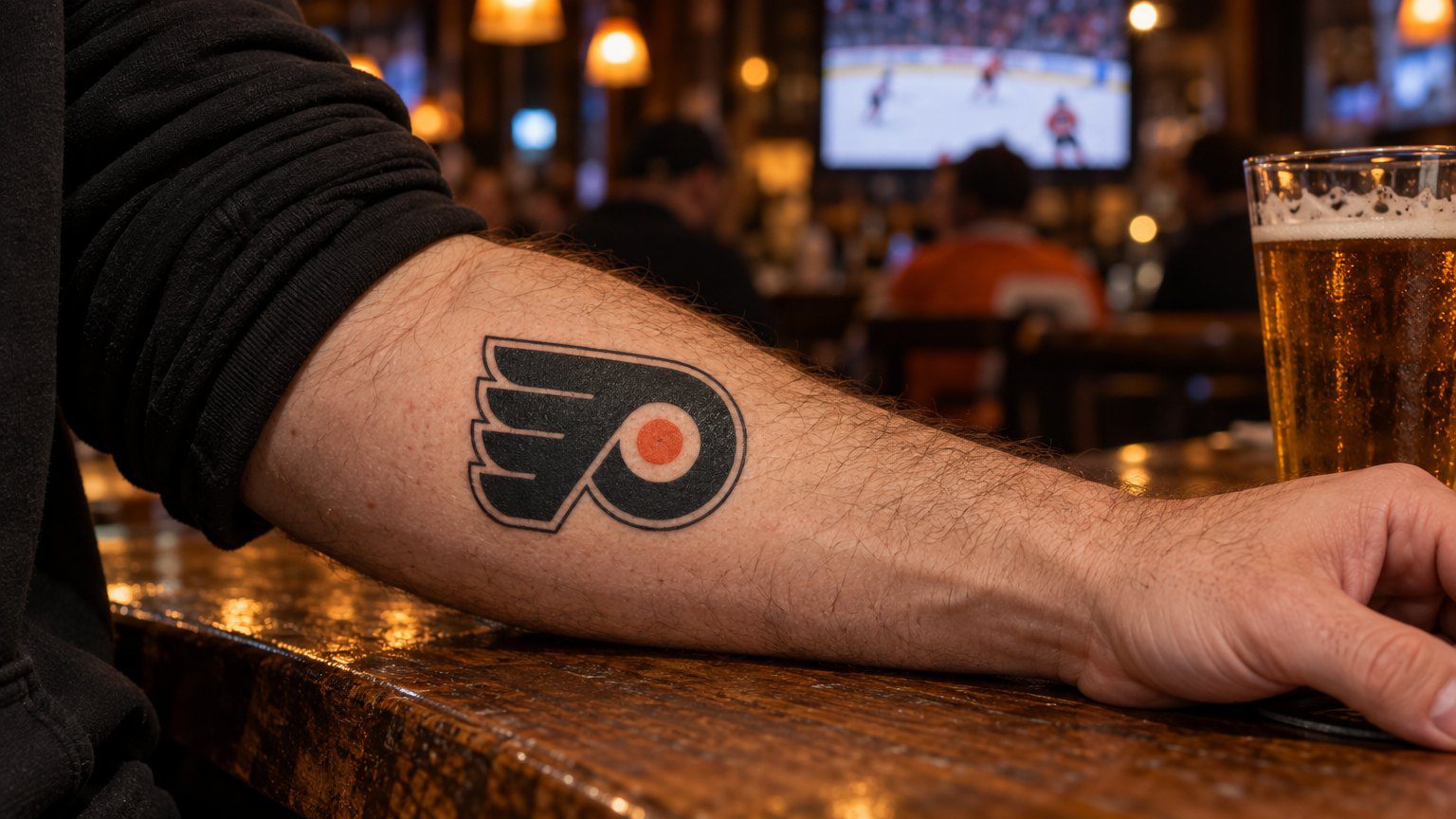
In business, we tend to think loyalty is earned by performance: a better product, a keener price, faster delivery. Performance matters. But emotional equity is what carries you through the bad seasons, and every organisation has bad seasons. The question is whether your customers will still be wearing your colours when you’re losing. That’s why I have long touted the concept of the Brand Tattoo Test. The question is whether people would be prepared to ink their bodies with your logo or some other representation of your team/company. The point is that the fan/employee/customer has the tattoo through good and bad times, during and even after they’ve stopped working at the brand. That’s because your values are sufficiently explicit and infinitely aligned. In this case, the brand passes the test. But the vast majority of brands don’t and won’t.
Sports teams all want to win all the time, but that won’t happen. There is, by its very nature, only one winner at the end of the competition. Thus the need to create a feeling and energy that captivates fans despite a lack of victory.
What matters is the narrative that attracts and attaches. And the attachment (values and meaning) must be different and distinguishable, but not necessarily obvious. They can be earned or experienced over time, much like the Grateful Dead, a blue cheese or a whisky might take time to appreciate. And in those discrete differences, stakeholders and loyal fans must feel a certain congruency. Leaning on and accentuating those differences is absolutely critical to ensure a long-term sense of belonging. That said, you also need to be good, and win—or at least stay profitable. As I like to say, you will serve no purpose if you don’t survive.
A strong brand is not everything to everyone
For me, the Flyers stand for something specific: 60 seasons of history, the Broad Street Bullies, two Cups (1974 and 1975), and legacy players like Rod Brind’Amour, Jeremy Roenick and Rick Tocchet as the prototypes of what a modern Flyer looks like. Hard-working, physical, unapologetic. Not everyone loves that. Good. A strong brand isn’t meant to please everyone.
Every brand needs to answer two questions:
- what is so different about you, and
- why is it relevant?
If you can’t answer both, you don’t yet have a brand. You have a product with a logo.
Rooted in a place
To be coherent, a team’s brand has to connect to its town. Each team has a geographic base. For the Flyers, they are deeply embedded in Philadelphia: a city of cheesesteaks, cream cheese and the Constitution. A major East Coast city of immense historical significance that still feels intimate and lived-in.
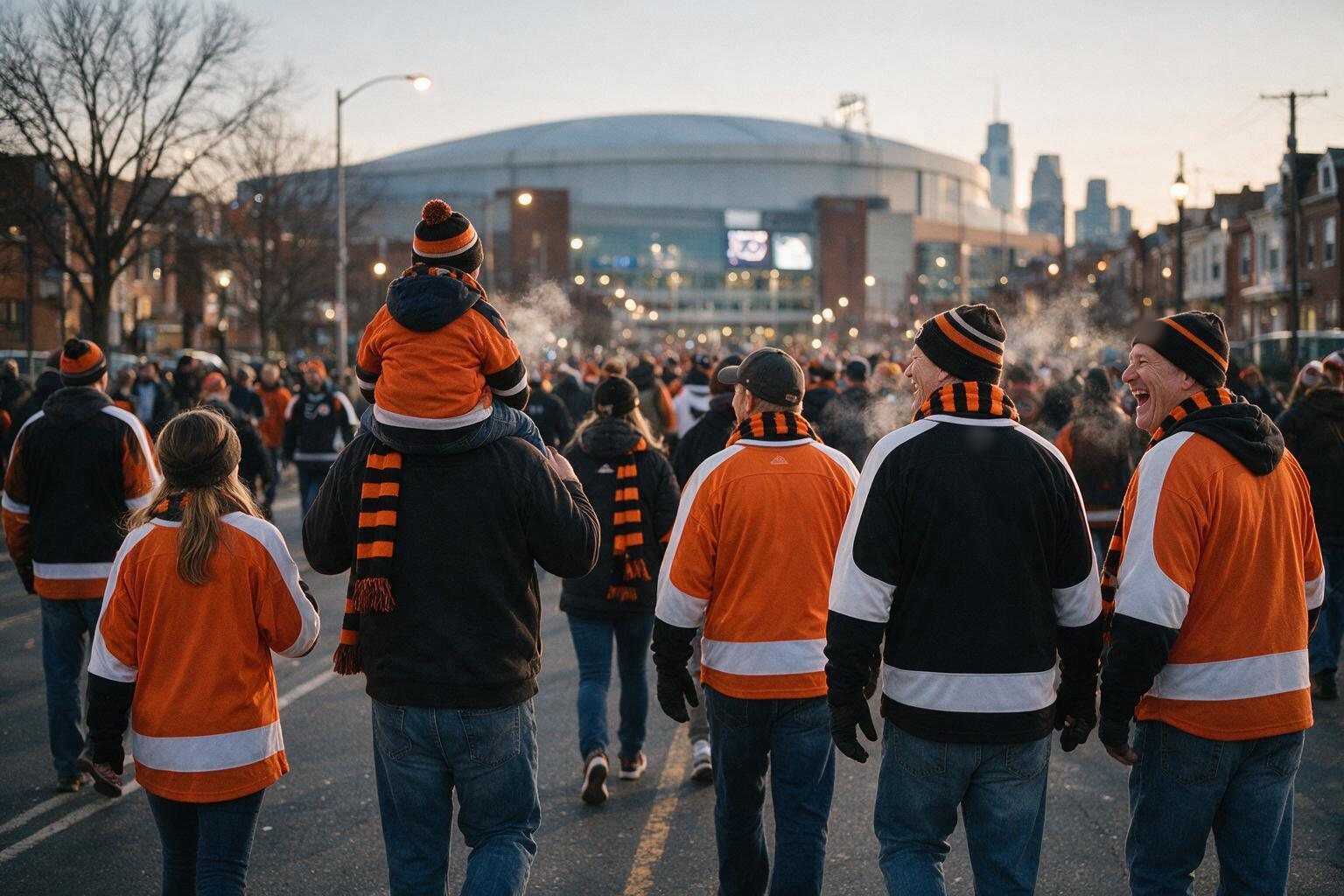
The Philadelphia Flyers don’t just represent Philly—they embody its grit. Built on a reputation for hard work, toughness, and refusing to back down, the Flyers reflect a city that takes pride in earning respect rather than asking for it. Their “Broad Street Bullies” identity tied the team to both a Philadelphia street (Broad Street) and a distinctly Philly attitude: fiercely competitive, unapologetic, and loyal to its own. That connection gives the brand meaning beyond hockey. The Orange and Black stand for showing up, standing together, and leaving everything on the ice—the kind of effort Philadelphia fans expect from anyone wearing their city’s name. In Philly, you don’t have to win every night to belong, but you do have to show you care.
Then there’s Gritty. When the Flyers unveiled their googly-eyed orange mascot in September 2018, he got a mixed first reaction. Philadelphia adopted him anyway, because he looked like the city: a little unhinged, defiantly itself. That’s what happens when a brand expression is true to its roots rather than focus-grouped into blandness.
When a sports team gives its city an identity
There are some teams that are iconic and give their city stock around the world. In my mind, I think of the New York Yankees (Major League Baseball), the Dallas Cowboys (NFL), the Red Sox Nation of Boston (MLB) and Liverpool FC as providing their city with a form of gold dust. However, Forbes publishes a list of the top 50 most valuable sports franchises, and inevitably that’s where the money talks, and brands per se are less valued. The list is dominated by those who make the most money. Seven of the top 10 are from the National Football League (i.e. American football), with Dallas as the perennial #1. There are a total of six non-American teams in the 50. My beloved Liverpool is ranked 48th=, whereas neighbouring Man United sits at 24th=. Below are the top 10 from 2025 (Forbes):
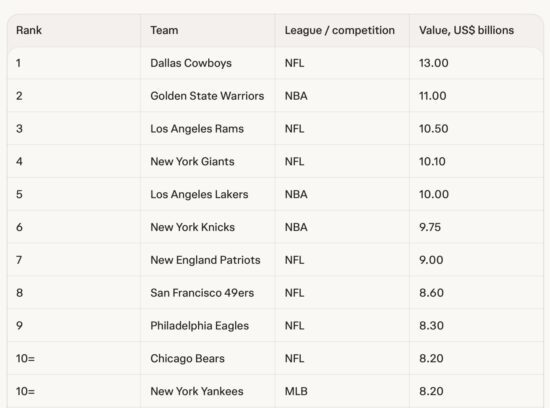
What part of the value is allocated to brand? Well, it turns out that “brand” is reduced largely to its financial payout. A part of the evaluation comes from the financial benefit of a team’s identity and reputation—its name, crest, history and fan loyalty—as distinct from the value of its market, stadium or entire franchise. Yet, in the way most of these valuations work, it’s all about the financial windfall. Specifically, they look at things like the present value of hypothetical licensing royalties, using brand strength, comparable licensing rates and projected revenues. An interesting example of this is how many people buy the team’s merchandise without being from or even living anywhere near the city. But, what has always interested me about brand are the elements that create an outsized emotional attachment. It’s the brand that speaks and acts differently from others (in its values, customs and language) and to which its fans genuinely relate.
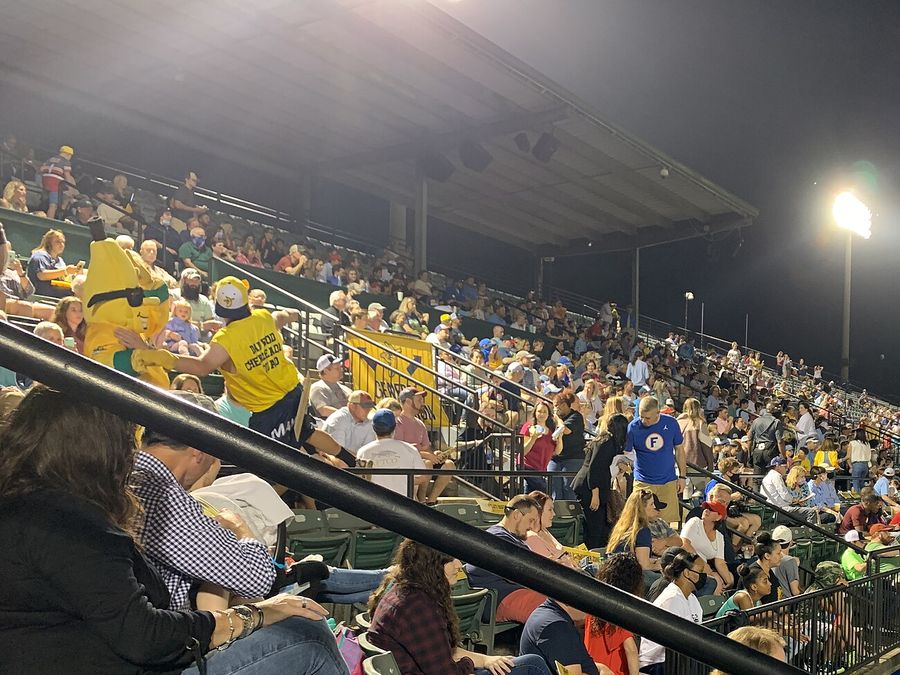
Take a look at the Savannah Bananas, a baseball team that has made the fan experience its entire brand. Their company is literally called Fans First Entertainment, and their Banana Ball format has turned a summer collegiate team into a phenomenon. They didn’t win fans with trophies. They won them with a point of view. When I interviewed their founder, Jesse Cole, on my podcast, the message was clear: fans first, always. As such, he has made his promise a business decision, not a slogan. He speaks about how he is willing to give up short-term revenue to build lasting relationships with fans. Jesse also explained the importance of knowing who you are for—and accepting who you are not for: “You can spend all your time, all your money, all your energy trying to convert people, or you can focus on the people that love what you do and go all in on that.” Importantly, Jesse speaks about how employees need to be the number one fans and that the organisation hires for values and attitude well above skillset.
When the team moves…
When a team is sold or transplanted to a new city (which also happens with businesses), the question is: what remains? The name of the team or company is often unrecognisably changed. How does one build a brand after such history? How does the brand/shape of the team change in its new home? Well, this brings up issues that happen in M&A. Change management and culture adaptation are difficult. It is typically poorly understood, much less well managed.
The key: craft your brand with intention, and with open ears and hearts towards your key stakeholders. Dig in on some values, but hold some ideas lightly before they gel. And remember: don’t try to please everyone.
This happened to my much-coveted brand, Redken, which I was fortunate to run worldwide for a handful of years (1999-2003). The company was purchased by L’Oréal in 1993, but then a year later suffered a massive earthquake that pushed management at the time to transplant it from LA to NYC. It was a huge shift, and an opportunity. We went from Redken “Beauty through Science” to “Redken 5th Ave NYC”, moving away from the granola crunch of California. In the process, we upgraded our look and gradually shifted to be fluidly NYC in look and feel. But it took vision, time and effort, and it was not without heartache and mistakes. Working with my partner in crime, Pat, we intentionally crafted a specific look and feel to Redken. We spelled out the ways to interact, handle disputes, run meetings. We had rituals and language that were unique to us. Pat and I modelled the behaviour we expected others to follow. And, the key point is that we managed to carve out a real identity and culture that was not only different from other brands. It was, importantly, different from any other brand within the L’Oréal portfolio.
The value of an NHL franchise?
My Philadelphia Flyers come in as the 11th most valuable team brand of the 30 teams the NHL had in 2013 (there are 32 today), according to the Brand Finance study of NHL teams by Brand Finance. While there have been a few different renditions and eras for pro hockey, I have focused my analysis starting with the modern era (1967) onward, after the expansion from the “Original Six” (the six teams that made up the league from 1942). I note that the top ten (excluding the Flyers), representing 33% of all the teams, have won 50% of the Stanley Cup championships.
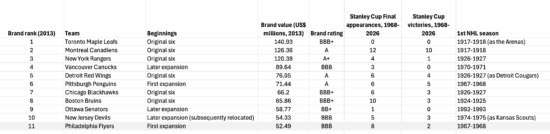
So perhaps success is part of their brand.
What business leaders can take from the rink
It’s been my observation that many businesses – and it’s odd to imagine – don’t strive to establish a genuine point of difference. Even rarer is a brand that is able to cogently answer the question: how would the world be worse off if the brand didn’t exist? Here are some takeaways that business leaders could take from the Philly Flyers and Savannah Bananas:
- Business leaders need to know what makes them different and relevant, and have the courage to leave some people out.
- Root your brand in something real: a place, a history, a community.
- When you move, merge or get bought, rebuild the brand with intention: listen to your stakeholders, hold some ideas lightly and dig in on your values.
- Treat your customers as co-owners of the story. They are anyway.
- Own your hardship. A long drought, handled with honesty, can bind people closer rather than drive them away (see my post on the role of hardship in building a team).
- You can’t always win, so build a narrative and a sense of belonging that outlasts the losing seasons—but stay good enough to survive.
- Invest in emotional equity before you need it, because you will need it.
My Flyers may yet end the drought before I come a cropper. Maybe not. Either way, I’ll be watching and rooting from my proverbial sofa many miles away. That’s what a brand looks like when it works. As for advice for the coach and team: we have to find our identity, and that probably starts with solid defense.
So, what’s your team? What do you stand for… that is different from other teams? To what extent would you wish to singe the logo of the company you work for into your skin? And what are you doing to encourage the same of your teammates and customers?
P.S. I should add that I only ever lived in Philadelphia for short stints. It is the hometown of my mother and, for that reason, it has a special place in my heart, too! Unlike baseball, basketball or American football, my alignment with the Flyers hockey team is also related to my deeper appreciation of (and alignment with) the values of ice hockey as a sport (much like with rugby and lacrosse).




A great piece of brand analysis.
Thanks Schuyler. The other topic I have been ruminating on is the branding of schools and universities… For another time!
What a great take on the elements of successful brand building and a blueprint for creating a true “legacy brand.” Great brands are built on emotional connections, not simply performance or financial success.
The Flyers, in my opinion, owe much of their enduring brand strength to an organizational culture that treated fans and players like an extended family. We can thank the late team founder, Ed Snider, for establishing that foundation. And I believe it has produced three lasting outcomes:
• Generational Tradition: Flyers’ fandom is passed down from parents and grandparents, becoming part of family history and turning support for the team into a shared rite of passage.
• High Standards: Flyers fans are famously demanding and aren’t afraid to express their displeasure when the team falls short, particularly when effort and commitment are lacking. Their passion reflects a genuine sense of ownership in the team’s identity and future.
• Unwavering Loyalty: Through championship droughts, rebuilding years, and disappointing seasons, Flyers fans remain deeply connected to their team, finding unity and camaraderie even in shared adversity.
Every brand will face challenges along the way. Those that endure are the ones that build genuine emotional connections, remain true to their values, and never take their customers’ loyalty for granted.
Ultimately, the lesson for business leaders is that building a brand people genuinely care about may be far more valuable than simply winning their next purchase.
Kudos, Minter, for bringing this to light. By the way -Go Flyers!!!
Love it, Kurt. Great call out about Snyder. He sort of plays the “founder” role?
Something I feel every autumn: “Spring hopes eternally”! 🙂
Great “acid tests” for assessing the power of affiliation that a strong brand can inspire – what would you wear as a tattoo. As you point out – the depth of that affiliation is correlated with brand value to some degree. People who feel that a brand understands and serves “people like them” are likely to pay a premium for products and services – but at some point the statistics would say that there is likely a tradeoff between the depth and breadth of that appeal. The deeper and more fundamental the resonance, likely the narrower the audience. Light, broad affiliation for “whiter whites” probably creates an economically more valuable brand than an all-natural, biodegradable detergent with a minimal carbon footprint that may reflect some peoples most dearly held values. But the more likely Tide tattoo is probably a crimson A!
So I think that is part of the appeal of being a Flyers fan. In the chant of their sibling MLS team the Philadelphia Union – “Nobody likes us, we don’t care”. As you point out, it is things like the willingness to stand up for your colors and your teammates even when it isn’t easy and isn’t entirely socially acceptable that fellow Flyers fans distinguish themselves from the others attracted by the superficial glitz and preening of other teams’ stars and owners. That is a more resilient affiliation than the bandwagon fans that buy all the yankees, cowboys and Man U merch that underpins those brands financial value.
Even better is the deeply connected community that the late Ed Snider built around the Flyers franchise – sponsoring the construction of dozens of rinks while sponsoring coaches, equipment and youth leagues in some of the most impoverished neighborhoods around Philadelphia. Philly fans appreciate the people who find ways to help their community without seeking credit or notoriety.
Deep affiliation without any need for affirmation is a powerful recipe, and yes, I think would makes me more likely to get a Flyers (or Eagles) tattoo than any of the logos in my closet or cupboard.
I love the Tide reference, Brad. Indeed, there has to be a balance between commercial viability (breadth) with integrity (depth).
I didn’t know that chant for the Phila Union. It reminds me of my time supporting the Flyers while living in Montreal. I went to many a PHL-MTL game in Montreal wearing my Flyers colours… proudly.
The note about Snider’s wide investments makes tons of sense. What an amazing legacy he left!
Go Flyers!
“For the Flyers, they are deeply embedded in Philadelphia: a city of cheesesteaks, cream cheese and the Constitution.” Saved the best for last!
Hi Sarah,
We might need an amendment …?
My proposal: The Broad Street Amendment. On the rights of fans, the duties of players, and the limits of patience.
Section 1. The right of the people to a fair fight shall not be infringed. Five minutes each, then we move on.
Section 2. No fan shall be subjected to cruel and unusual rebuilds. Any use of the phrase “trust the process” must be accompanied by an expiry date.
Section 3. The people shall retain the right to boo their own team, without surrendering their claim to love it.
Section 4. No player shall be required to win every contest, but every player shall be required to turn up for it. Grit without skill is insufficient; skill without effort is unconstitutional.
Section 5. A difficult schedule may be entered into evidence. It shall not constitute a defence in perpetuity.
Section 6. Refs should not get in the way of pucks leaving our zone! {ref Wild goal last night}
Finally (and most importantly) Section 7. Hope shall be renewable each season. [Patience shall not be presumed unlimited].
Signed in Paris.
Gritty, witness. Orange ink, naturally.
Maybe more brands should have mascots. I don’t pay much attention to the Flyers, but I do love Gritty and, therefore, the team. The Geico Gecko warms my heart too, and it feels good being their customer (their competitive rates and customer service help too). It’s certainly one way to engender connection to a brand.
I am reading about a mascot (“Judy”) for a British Royal Navy ship in WWII and how every RN ship desired to have a mascot (deemed more important than the supply of beer!)
A great rumination, Minter. I know nothing about branding, but I do remember the Redken years fondly). Nonetheless, given the Flyers subject matter I feel qualified to comment.
As you well know, I am born and raised in Philadelphia — and like you the first professional sport championships I experienced were the Flyers victories in 1974 and 1975. They were a young team at the time, having only come into existence in 1968 with the expansion of the National Hockey League. And they were the first championship for Philadelphia since the Eagles won the NFL championship in 1960. So for a 14 year old boy they were my first sports heroes and that Bob Clarke, Bill Barber, Bernie Parent team helped shape my appreciation of sport in general
And over the past 51 freaking years since they last raised the Cup I have watched the Flyers build into their DNA a calculated brand based on EFFORT (which they now like to define as “grit”). Unlike other Philadelphia sports teams that at times seem uncaring, or blasé, or just there for the money (for those of you still with me, see Ricky Watters, Ben Simmons, the Phillies from 2013 to 2022), the Flyers have carefully curated and advanced their working class hero theme in everything they do — even if outmatched on talent, they promise to always outwork the other team. This has not always been true in reality, but it is what people here expect from the Flyers. They may not be flashy, but they work super hard. Always.
THAT brand, that they never give up, is a large part of what I think has kept people coming to the arena year after terrible year. And what keeps people wearing Flyers orange and black even when the team stinks — they want to be identified with a team that always has a commitment to the work ethic. The Gritty move was a very smart way to capture that mindset — he may not be able to skate (just ask Youtube) but he tries really hard every night.
Anyway, great piece. Thanks as always for your willingness to keep us all thinking.
Hi John, thanks for your thoughtful commentary. I enjoy the way you distinguish between the Flyers’ DNA and the fan expectation versus the reality. Your comment led me to understand that the Flyers are the NHL version of Rocky: blue collar and hard working. Indeed, there were some ‘stars’ that didn’t fit that bill. But, I certainly appreciate the likes of Couturier and Konecny who are tough veterans that give it their all every night. As long as the Flyers continue to show grit and flash the occasional upset, we remain loyal to the hope that one day Lord Stanley will revisit the City of Brotherly Love, brother!
This article really resonated with me, particularly as it relates to building and sustaining a strong brand. Minter, I do wish you had mentioned our beloved Philadelphia Eagles!
First, the notion that “business leaders need to understand what makes their brand different and relevant, and have the courage to leave some people out.” There can be pressure to appeal to everyone, but truly powerful brands are often defined as much by what they choose not to be as by what they are. A clear identity creates stronger connections with the audiences that matter most, even if it means not being the right fit for everyone. That takes conviction and a willingness to stay focused on the brand’s purpose and value proposition.
Second, the idea that “you can’t always win, so it’s essential to build a narrative and sense of belonging that outlasts the losing seasons, while still remaining strong enough to survive.” This struck me as particularly relevant because brands inevitably face challenges, competitive pressures, products that don’t perform as expected and periods where results may not meet expectations. The organizations that endure are often those that create a deeper connection with their customers, employees, and partners. When people feel they belong to something meaningful, loyalty extends beyond short-term successes or setbacks.
Together, these concepts reinforce that great brands are not built solely on products, promotions, or quarterly performance. They’re built on a clear identity, a compelling story, and a community that believes in what the brand stands for. For those of us who are part of building and representing a brand every day, it’s a valuable reminder that differentiation and belonging are not opposing forces. In fact, they often strengthen each other.
I found this perspective both challenging and inspiring because it encourages leaders to think beyond immediate results and focus on creating a brand that remains relevant, resilient, and meaningful over the long term.