
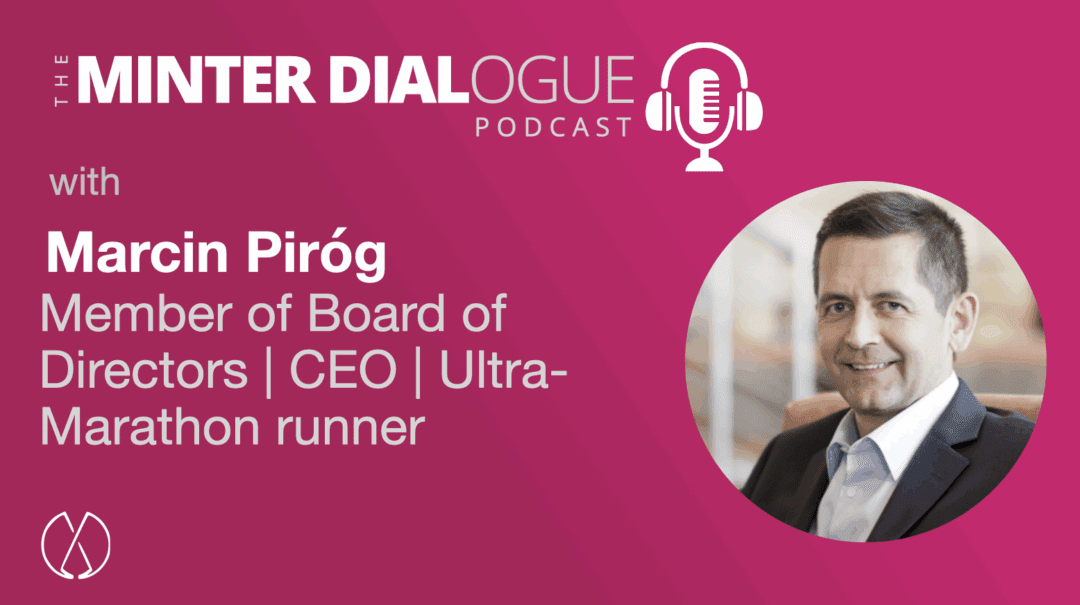
Minter Dialogue with Marcin Piróg
I had the pleasure of speaking with my long-time friend, Marcin Piróg, a seasoned executive and adventurer. We delved into his experiences at INSEAD, his transformative leadership at Carlsberg Poland, and his challenging tenure as CEO of LOT Airlines. Marcin shared valuable insights on successful business transformations, emphasising the importance of clear communication, decisive action, and team building. He highlighted the unique challenges of managing state-owned companies and the complexities of the airline industry. We also explored his passion for ultra-marathons, discussing how these extreme challenges contribute to self-discovery and personal growth. Marcin’s advice for aspiring leaders centred on the critical importance of building a strong team and having the courage to make decisions quickly. Throughout our conversation, Marcin’s values of freedom, love, and continuous self-discovery shone through, offering listeners a glimpse into the mindset of a truly dynamic leader and adventurer.
To connect with Marcin Piróg:
- Find/follow Marcin Piróg on LinkedIn
Further resources for the Minter Dialogue podcast:

Meanwhile, you can find my other interviews on the Minter Dialogue Show in this podcast tab, on my Youtube Channel, on Megaphone or via Apple Podcasts. If you like the show, please go over to rate this podcast via RateThisPodcast! And for the francophones reading this, if you want to get more podcasts, you can also find my radio show en français over at: MinterDial.fr, on MegaphoneFR or in iTunes. And if you’ve ever come across padel, please check out my Joy of Padel podcast, too!
Music credit: The jingle at the beginning of the show is courtesy of my friend, Pierre Journel, author of the Guitar Channel. And, the new sign-off music is “A Convinced Man,” a song I co-wrote and recorded with Stephanie Singer back in the late 1980s (please excuse the quality of the sound!).
Full transcript via Flowsend.ai
Transcription courtesy of Flowsend.ai, an AI full-service for podcasters
Minter Dial: Martin Pirog, it’s lovely to have you on the show. You and I have known each other for many a year. Both went to INSEAD together. And then I had the pleasure of having a wonderful dinner at your home in Warsaw recently. So, but let’s start with, you know, for those you don’t know you, Martin, who are you?
Marcin Piróg: I’m the min today I’m an investor and entrepreneur, a father of four wonderful children and a runner. Value wise, I’m a bit of a nomad in life, in work and in spirit. Driven by love and freedom. My most precious virus that pushes me to, to explore, to take risk, to keep discovering and to move forward. I’ve led teams, I build companies, I cross deserts and freeze all. I’ve learned that what really matters is staying true to who I am.
Minter Dial: Why does it matter to you, Martin?
Marcin Piróg: You know, I, when I was a child and teenager, I lived in Poland. At that time it was a. Under communism. And I really appreciate freedom and that’s something that, you know, I believe, you know, have driven the whole my life, professional family life and the values that I describe. And this nomad nature, it’s related not only to my genes or ancestors, but to, to the situation that I lived when I was young and when we, when we started, you know, to learn life and we had, you know, our, our dreams, you know, we still have dreams but. And that structured me that, that and, and also, you know, the second what I mentioned, the most precious value is, is love. I had a lot, a lot of love when I was kid in my family. And that’s something that, you know, that gives you something unique in life. You know, when you go through storms, troubles, problems, you know, that that’s a unique thing that, you know, helps you to, to be and, and to, to still, you know, be there, enjoy life. Yeah.
Minter Dial: So the support of the people who, around you, the love that they shared with you was something that helped form you and, and guide you.
Marcin Piróg: Yeah, I, I love being with people and I enjoy, you know, and, and we have fun. But on the other hand I also, you know, I’m, I enjoy being just with me and, and to have a time for reflection, to, to think, to dream, to think about the past, about the future and, and that’s why also, you know, one of the reasons that, that drove me to the desert will discuss maybe later about it, but the support from people who are close to you and for the closest ones, that’s something that, you know, is, is unique and, and, and we should all care about it.
Minter Dial: So a topic I quite frequently address on the pod, this notion of knowledge of self. It’s long been said, e.g. Socrates, know thyself. And the idea of being with yourself. To what extent has that been important in understanding yourself? Because if I look around and most studies research show that most people actually don’t have a good understanding of themselves. It is the key to getting to understand yourself, being happy with yourself.
Marcin Piróg: Yeah, you know, I, some 20 years ago I had a, I had a coach who helped me a lot in my life. It was at the time that, you know, I, I had some big, you know, family challenges and, and was a little bit in a depression or not being able to take decision. And, and we discussed a lot and, and one of the, one of the questions, you know, the most difficult question I think I got in my life is the one that you, you asked me at the beginning, but it was 20 years ago and he said, you know, who are you? Tell me, who are you? And, and I was just not able to answer. And it gave me. Now it is, it was a great lesson because then I started to really think. So, you know, beyond, you know, this artificial things that you use in leadership in, in life that, you know, there is something deep in, within you, in yourself. And, and it’s, it’s really difficult to know to, to dig and to, to discover, you know, what is really important to you, what drives you, who are you? And I think that, you know, that was. It. It was hard, hard lesson. But slowly, you know, he helped me and you know, it, he changed my life. You know, I, right now, you know, being with my, with my partner, with my, with my kids and, and, and to some extent, to the vast extent, it’s, it was thanks to, to this guy who, who asked me, you know, tough questions and that’s, I think it’s, it’s, it’s a lot about it. It’s to be ready to answer hard questions, questions that, you know, you. It’s, it’s, it’s quite uncommon to, to hear.
Minter Dial: I love it. Marcin, let’s talk about your running because I tend to feel that the time you get to know yourself best is when you’re challenged to the core, when you have difficulty and do you have the stamina, do you have the resilience? What is the backstory that’s helping you to power through. So, just talk us through because you now you did this Desert Ultra Marathon. Talk us through your decision making to do it and what did it teach you in the Process.
Marcin Piróg: Yeah, I was, I mean I, I love sports, you know, and I played football for almost 50 years until my, and my hips, you know, collapsed and I couldn’t, couldn’t play anymore. But I, I was also, you know, running, you know, the whole life. And, and two years ago my friend told me about this Gobi challenge, You know, ultra marathon, 240km through the desert, through four different deserts within Gobi. And, and by the way, you have.
Minter Dial: To run with all your kit, right? Tell us the process that goes into, yeah, your food and you, you are.
Marcin Piróg: Given the water and the tent and all other stuff you have to carry with you. And it’s a six days run, run, walk let’s say, because you can run, you can walk, you, you do both basically, and you carry your, your foot for the, for the whole six days journey. So, it’s at the beginning your, your backpack is, it’s quite heavy. Yeah, it’s including water, it’s about 12 kgs. So, that’s, that’s a real challenge. And the, the freezer dried food is the one that, you know, that was the most difficult to me because I was not used to that.
Minter Dial: It’s like what astronauts take, right?
Marcin Piróg: Yeah, exactly. And so, it’s because of the, of the weight, you know, you cannot carry, you know, things for, you know, six weeks for six days, but something that is light and especially at the beginning, you know, when your backpack weighs, you know, 12 kgs and, and you run work for eight, nine hours a day, you know, you, you start, you know, to have some challenges and, and, and one of the, of the biggest challenge was that, you know, the shoulders straps.
Minter Dial: You know, I was just imagining your.
Marcin Piróg: Skin and, and, and then, you know, after two or three days, you know, you really, you know, it’s really painful. But coming to, coming to your, to your questions, you know, out there in the deserts, really nothing distracts you. It’s just silence, you know, vast, honest, endless. And in that silence you, I feel my freedom, you know, and.
Minter Dial: As I.
Marcin Piróg: Said, you know, I always felt good in my own company and that it’s a good time to reflect, to think about the past, about choices, about people. And when you walk through the desert, I can find myself anywhere in the, in any moment of my life. But it’s also, you know, good, good time to, to reflect about, you know, okay, so what’s, what’s in front of you? What you, what do you want to achieve? And, and, and this, you know, discovery that, and the things that, you know, pushes me to take risk to keep discovering and to move forward. It’s. It’s also you know, a challenge because you are still like, you know, always, always searching, always reaching for something just off out of your sight and you are never completely at peace. But you know, it’s wonderful experience because you know, nature wise you are in. In. It’s like you know, coming back to your roots and you see all this, you know, animals living in the wild, horses, camels, sheep, goats, cows, isolated yachts scattered across the land, you know, and home to nomadic families. You can see kids on the road that, you know, wave you and greet you and just this nature and space. It’s so great that say, you know, I really feel like, you know, it would never feel like that in a, in a. In a place you live in where you know, even at home, you know, and at work, you know, it’s something unique and something that is. That attracts you and obviously stuff, you know, in terms of, you know, physical condition. But you know, you, once you finish and accomplish then you think about okay, I would love to do something like that in again.
Minter Dial: It gets addictive. Yeah. One of the, one of the things I like to quote one of my guests was called Michele Nevarez and she said to your point, it, it’s a, it’s a never-ending journey to get to know yourself and in fact it takes more than a lifetime get to know who you are. I want to. I had a conversation recently about courage in society and the welcoming of pain or the embracing of risk. And you’ve mentioned the word risk. You mentioned the word challenge. And he was referring to Magellan and Christopher Columbus, how they went off without real insurance. Certainly not with much assurance as to the safety of their journey and what was going to be the end of it. He. The argument we had was, well, today’s world we don’t have the courage that we had back then. Do you, do you think that, that. To what extent do you think that’s true and to what extent do you think we need more of it in today’s world?
Marcin Piróg: I believe it’s personal. It’s depends on. On the person. And since, you know, I have this love for discovery and, and also the, the courage to move when others stay. It’s like, you know, the Snowmad spirit that I mentioned is to not to be afraid to leave what’s comfortable. And we, we. We completed the NBA course and I remember when I first heard about INSEAD MBA at that time I was, I had a nice job, you know, director at Total in France and I decided to go for it. You know, I said, you know, I can live my company, my salary, I take a year off, I will invest in my future. And that was to, you know, at that time also, you know, my first kid was just born. He was one year old when I started Tinfoil. And that was this, you know, living what was comfortable and many people didn’t understand, you know, how come, you know, you have nice house, you know, it just started to have a, you know, nice family, you know, you have one year old kid and nice salary and you, you just crazy. Yeah, but at the end, you know, it’s like, you know, it paid off. It paid off.
Minter Dial: What, what was it about the year off that you thought paid off? What was the benefit of going.
Marcin Piróg: Was this, you know, related to my, to my nature, to this, you know, drive for doing something different to discover. My idea was that was at the time I, I was already 12 years in France and my idea was to move to the US as a next step, as the next step in my professional career. At that time it was my dream, you know, I would, I will push my career in, in, in the US and it almost, almost happened. Yeah, because you know, I was, I had an interview with, with an American company, but they said, you know, okay, but you will start in Poland because we, we just made an acquisition in Poland and after two years, you know, you will go to the U. To the US as a, you are in the pool of, of our young talents. And, and so, so we moved to Poland. I moved, you know, back to Poland after 12 years and it was like, you know, that was 1993, it was two years and it was like 32 years ago and I’m still in Poland.
Minter Dial: There’s so many stories that start like that. You know, I went to do a year abroad and I’m still here 30 years later. Or you know, it was just supposed to be a six-month trip, but here I am. Do you concretely think that things that we learned together at INSEAD had any bearing on your career? Your leadership style, business principles that frameworks that you thought were actually implementable? Is there anything that stands out for you about our year in INSEAD?
Marcin Piróg: There, there are two sides. One is the, you know, the pure learning. And I, when I started, you know, I was a young engineer, you know, production manager with, with experience in, in manufacturing, but no knowledge about, you know, economics, accountancy, all these things that, and, and on, on that side I, I learned a lot and my, my learning curve was very, very steep. And that Also that obviously you know, helps in, in your professional life, but the biggest value was on the, on the human side and this variety of people. I remember, you know, I was happy to, you know, to have you in my, in my group, you know, because there were seven people. The groups of seven people, very different horizons, different countries, different industries. And that’s something that you know, to me at that, at that time was. It was a discovery, it was a journey because you know, as I said, you know, I spent seven years with total in manufacturing, two different companies, but still, I mean still within the same group and the same spirit, you know, French people working in production. And then suddenly I found myself with consultants, with bankers, with you people from family businesses, you know, very different variety.
Minter Dial: Tennis umpire.
Marcin Piróg: And, and also a revelation revelation to me because and, and quite big opening. So, it’s also you know, people sometimes they, they, they think about you know, MBA like you know, is the good investment. And I said, you know, financial wise. To me it was like you know, six months payback. But this is not important comparing to what you really, you know, what, what you really discover, what you learn, what the, you know, the people you, you meet. It’s amazing and it’s, and that’s the biggest value I believe it’s to you know, the way they, you know, they, they were teaching us also you know, we spent most of our times, it’s not with the books in at home but you know, with among us, you know, all this homeworks that we’re supposed to deliver while working together. That’s a, that’s a great value and that, that’s something that completely changed my also my professional life. You know, I was after, right after finishing a MBA, so I became a board member of, of a big American company. So, which is quite, you know the important mission impossible in many ways. You know, it’s, and you know to, to sum up, you know the biggest. And I think that the great value of, of insight is just you know, to, to be with people like you like you know, you know, all these people that he, you know, we’re still in touch with that you know, because you know, it’s hard to believe but you know, how many years, 30. No 20, 32 years after we have a WhatsApp group when I believe there are more than two. Two thirds of our promotion promotion, it’s still active on, on WhatsApp.
Minter Dial: Pretty impressive. Yeah. I mean I obviously spent some time thinking about it as well and, and at some level, let’s say your kids come to You Martin and say, listen, Papa, I want to go to, I want to go to business whole school. I want to have an MBA like you. To what extent then does the choice of the school become important? And how do you navigate that choice? Because there are lots of different MBAs out there.
Marcin Piróg: Yeah, I have, you know, my, my two sons from my have my first marriage. They are, they, they are, they work, you know, they have, they profit, they, they develop their professional careers. They don’t have MBA. I believe that they know they were well educated. And one of the, one of the things that, you know, I, I told them when they were well before, you know, starting to study that, you know, when you finish your high school, you go abroad, you know, you go out of home and wherever you study, you know, I, I will, I will finance your studies until you, you finish and then you are on your, on your own. And the reason when I told them that is that, you know, I have a brother and a sister and we, we all, you know, Finnish no universities, but my brother and myself, we went out of my, of our hometown and my sister stayed and lived with, with my parents. And I must say that, you know, the life, in life, you know, we, it was much easier to me and to my brother because we, you know, at a young age, you know, we started to, to be independent. You know, obviously knowing what my, our parents, you know, gave us some money, but you know, we started to, you know, to, to deal with that, to budget, to, you know, to, to understand how to, how to do that. And it was not the case of my sister. And, and also this huge impact on then on, on. On your life. And, and that’s why, you know, I, I’m, I’m very happy that, you know, Michelle, which is my oldest son who’s right now in, in Sydney, he makes his professional career and, and the other one, Daniel, who is in, in Abu Dhabi, they, they are very independent and they are, they’re all on their own and they, they push a very successful professional career. And, and I believe that, you know, that that’s something that I would like also, you know, to my, my younger children, but right now in high school and in, in the, in the primary school, that also I’d love them. Even though it’s a, it’s a different world today, different generation, different generation, different expectations and very independent, I must say, very, very independent. Very different from, you know, our generation and my, you know, older children’s generation. But you know, I think that’s independence and the, the cutoff from the from the family at certain age, it’s important. It’s hard on both sides, you know, for children, for, for parents. But it’s something that, you know, pays off in, in the future life.
Minter Dial: It’s the first, the inevitable moment where a bird has to, the mother bird throws its little chick out of the nest and it has to learn to fly.
Marcin Piróg: Yeah.
Minter Dial: So let’s talk about your business experiences because you’ve had many interesting top executive positions, whether it was at Carlsberg running that in Poland or biomed Lublin. And one of the topics that I really like to dig in on is transformation, because you’ve done quite a, quite a lot of transformation if, if turnarounds could be considered a transformation. And obviously all the different eras and changes that have been coming into the workplace through the changes in tech, maybe, maybe through the prism of one of those transformational experiences. What actually makes transformation work? How do you, how does one take a bull by the horns and make it happen? Because it seems to me, let’s put this in another context, that the numbers show that maybe three quarters of all transformation efforts fail. Much like M & A fail or a lot of entrepreneurs fail. So, failure is sort of out there a lot. So, what avoids the failure and what achieves the success?
Marcin Piróg: Yeah, I, it’s maybe not three quarters. I, as much. I learned that it was more than 80%, so. But you are close. No one, one experience. I think that, that maybe the most rewardable experience I had is, was when, when I was running Carlsberg in Poland. And we are quite small comparing to our big two competitors. We, we acquired three regional brewers. So, it was like at the same time, you know, two from, from one German brewer and one from Polish entrepreneur. And so, it was like, you know, merging four companies post regional companies. And it was like, you know, I took, I took one external company to make an assessment center. We, we selected, you know, top 100 people from 100 managers from four companies. And we are very clear about what we want to do. So, I think one of the things is that you should really be clear and very open from the beginning, because otherwise the risk is that you lose people. Not the worst, but the best. Because for them it’s easy enough to find a new job and when they feel uncertain, they just quit. So, from the very beginning we prepared the communication and we said, okay, the first month we’ll run this assessment centers and we gave a very precise date, the idea, we will announce the new structure and the names in this new structure. And even though it was tough because you know, you know, you think when you, when you are in this top, top hundred, you know, okay, so I’m, I’m one of them. But you know there are, there are four people for the, for, for a given job.
Minter Dial: Yeah.
Marcin Piróg: So, but it was very, I mean we, if I remember we, we didn’t lose any of the, of these managers during the process and at the end so we announced the new structure. It was painful for some because they had to leave, but the organization was set up and we started very quickly this integration process and it was quite, I mean quite smooth. Now we were supported by, by Carlsberg headquarters by, at that time, you know, we had BCG working with us and, and after, I must say though it took about three maybe six months we had you know, new organization that you know, started you know, to, to deliver over deliver. And that was my longest experience by the way. You know with Carlsberg I spent almost 10 years and that was year-end of year one when he made this acquisition and from the company, you know, that was, you know, which was losing money. We became one of the stars within Carlsberg families. And when I still you know, meet people, my managers from, from that period, so they said, you know, that was the, the best adventure of my life. And, and many of them, you know, they made, they went out of Carlsberg and made careers, very successful careers. But you know, so coming back to your question, openness, you know, to be clear and take that tough decisions and that’s something that you know must say. I must say from my, my professional experience that you know, it sounds easy but it’s very uncommon. The courage and this decision taking process that, that’s something that you know, not many, many managers, top managers have A.
Minter Dial: Few of the things that I heard you say Marcin, as to why it was successful. You dropped in a consultancy so bcg and to what extent was that a critical element of success?
Marcin Piróg: No, they, the consulting companies, they are strong in designing processes and I must say personally I’m, I’m more accurate with that because I’m more spontaneous and I don’t like, you know, spend time on, you know, prepare, I mean scheduling things. But you know, it’s, it’s more like, you know, I, I feel this is the way to go and then let’s go. Obviously, you know, it’s, you know, I thought I talked to the managers and, and we share our views on that. But once, you know, we, we feel something is good so we go for that BCG or McKinsey because I worked a lot with Both companies, they, they give you this, you know, framework and they, they said, you know, okay, so this is the process. So, 1, 2, 3, 4, 5. And they, they put it in a, in a time frame. So, that, that’s helpful because you know, designing, coming back to, you know, to this assessment center, designing a process where you select, you know, let’s say 30 managers are out of 100. And the process leading to these decisions, I mean it’s you, you can imagine but you know, it’s, it’s important to, to also you know, to, to put it in, in a, in a written form and to communicate. So, that, that was very helpful. On the other hand, you know, just you know, being more general about you know, the consultancy companies, I believe that you know, with some experience and seniority, you don’t really need them. And, and at certain, you know, stage of my career, I mean I stopped you know, working with consultants because you know, I, at, at one, one day I had a reflection, we had a, a workshop with them with, with my top, top team and I said, you know, I, I just wonder who for this, for this learning experience.
Minter Dial: Yeah, I’m sure lots of consultants learn in the process of consulting. Second thing I heard you say with this, this group of 100 directors is this notion of co creation or participating in the decision making with your transparency, the, the clarity of, or at least the openness, maybe I use the word transparency, but the openness and the clarity to what extent was the ability to co create, to actively participate in it with some kind of honesty in that participation was that important in the success. And a second part of that is to what extent did they actually self-select or did you for the most part have to push out people because they, they just, we couldn’t, you couldn’t have them fit in because they were the bad eggs, if you will.
Marcin Piróg: There’s no self-selection. I believe that, you know, you sometimes it was like, you know, so these two or three guys for the same position, it’s that they are all good And so, it’s not like you know, black and white. So, you sometimes, you know, some, sometimes I, I saw the potential. I said okay, so we’ll find another job for this, for this guy because there are many positions, you know, you know when you, when you have 1500 people in a, in a company. So, you obviously, you know the number of senior positions. So, it’s also quite substantial. So, we could offer for let’s say financial controller, we could offer him and propose another job in, in finance or outside or Outside finance. And, and that’s also about being, being open. So, it was like, you know, okay, so look, you know, for this position, you know, we selected another person. But you know, if you are interested, I can offer you another job and if you are interested, we can, we, we can continue discussions. So, and many, and many people I, I could retain because you know, they were brilliant people. And I said, you know, okay, I cannot cut off, you know, 75 of my, of my top managers since, you know, I would like to keep 75% and, and not 25. So, it was like a compromise. But you know, the support from, from headhunters who run this recruitment, this assessment and also from guys from the consultancy company that also, you know, they supported this, you know, having hundreds interviews or even 200 because each of them was. Had two interviews with, with the company and with the consultancy on the head counter. So, that’s time consuming. And then you know, you have then when you inter. Interview different people for the same position, so you have to have this, you know, the interviewers meetings that you discuss and, and you take decisions. So, but you know, the, that was good to that, that we had this time frame thing that, okay, so when you recruit people you can, you can do that forever because you know, you have always questions. But you know, it’s also important to take, you know, decisions at certain time because as I said at the beginning, you know, otherwise, you know, the, the best people would, would leave you. So, I remember that, you know, when we announced the merger of the companies, it was like middle August. By the end of September we could announce, you know, the whole organizational structures, including names.
Minter Dial: That must been quite the shakeup. The last piece I want to talk before we get into your experience running LOT Airlines was this notion of culture. You acquire all these new brands that all come with different cultures. You have your reigning Carlsberg culture from head office. Presumably some elements of that. To what extent was the amalgamation really all about setting the culture and how do you actually make culture shift?
Marcin Piróg: Yeah, very, very good one. You know, the people from running regional brewers, they’re very, very proud of, you know, their brands, local brands, because they were leaders in the local regions and, and did it forever and was like, you know, how to combine especially, you know, with, with the departments like, you know, sales department. They were supposed to sell, you know, all the brands how to, how to cope with them. And hopefully, you know, Carlsberg brand came as a sort of common denominator, denominator, denominator. And it was not. Nobody was jealous about it. Because it, it was a different band, you know, they were running regional brands and it was an international brand. So, the, the thing is that, you know, that, that drove many decisions like you know, changing the name of the company into Carlsberg Poland. And because you know, they were four different names and nobody had a problem with Carlsberg Poland because you know, it’s a common denominator, right? It was also, you know, moving the, the headquarters to Warsaw because you know, they were in four different parts of Poland and we had four offices, you know, in, and then we created one, a new one from, from scratch in, in Poland, in, in Warsaw. And it was also, you know, the way that, you know, the launch or relaunch of Carlsberg brand, that was a big event because you know, we took, you know, we, at, at that time I had a 500 salesman and we took all of them by ferry boats to Bornholm, you know, the Danish island on the Baltic Sea. And we had a big, you know, big event and it was all around Carlsberg brand and they, they went back, you know, home with, with nice jerseys of, you know, Liverpool. Because at that time Liverpool was sponsored by Carlsberg. So, it was like. And, and they were, I mean it was, you know, fully integrated company at that time and it was this event, you know, they gave and also, you know, I brought, you know, marketing director from Carlsberg who was also, you know, a fan of Liverpool and, and we had, you know, a really, really nice event. And it started to fly after this Bornholm meeting.
Minter Dial: Sometimes what I feel is I get stuck in it’s very complex culture, it’s complicated to put in place. But also if you just take it with a little bit of lightness, as we say in French, then maybe that can also be a way through chat about LOT Airlines for the last few minutes we have together Marcin. So, you take over LOT. It’s in a pretty dull or dim position at taking over as I understand it, close to bankruptcy or maybe even in bankruptcy protection. It’s the national airline and I can only imagine that that must have been a pressure hot position, probably even political. How did you take on board? Why did you take it on board? And, and how did it go?
Marcin Piróg: Yeah, that was, I must say that maybe my toughest professional experience. And it’s because of the ownership. And I must tell that must say that, you know, over time, you know, I, I realized that, you know, the, the government is the worst owner of the company you can imagine. You know, public, private, whatever is, is great. And. But the government, state owned Company is completely different. And after, you know, spending at that time it was like, you know, 25 years of experience with different multinational companies and then you, you jump into a company which is, you know, there’s more values or whatever you think about is completely different. You know, unions that are empowered because they feel that, you know, that they are strong because they, because of the ownership structure. And I must say that, you know, business wise it was exciting, fantastic adventure. You know, it’s really, you know, the, the drivers of the business. So, many in the, in the aviation industry that you know, you don’t find in FMCG on energy sectors. It’s really fantastic. But you know, your, your employees, your management sometimes you know, they are so tough with you that you know, you, you just wonder whether you’re playing there in, in the same team. So, to, to give you an example, you know, it’s like general pattern said, you know, there are three kinds of decisions. Yeah, yes, no, I don’t know. But you know, in, in the corporate life, you know, there was decision is no decision. And in the governed state on own companies the best decision is no decision anyway. And when you have to take a decision, then you produce papers, you know, to, to fill, you know, the, the cupboards of, you know, different ministers because you know, they, they have to be covered. And that’s, that’s, it’s a pity because you know, when I was, you know, I was told that, you know, my objective is not only to, not to, to save from the bankruptcy but to, to privatize the company. And, and I believed that, you know what I was told that you know, it’s true, but after that I realized that you know, they will do anything not to privatize. And, and this is sort of, it was sort of mission impossible. So, business wise again it was like, no, we were the first company in, in Europe to take, to have Dreamliners. And that was the end of my mission. You know, managed to bring you know, first Dreamliners to Poland. And also, you know, there were a lot of huge improvements. But it’s like, you know, looking right now the current state of the company, it’s like you know, all this coma state monopolies like you know, British France, Lufthansa, LOT, that the similar, you know, challenges is that, you know, sometimes you know, you want to do things that, that you, you feel logical and then you, you have a, you know, internal resistance which is huge. And, and when you look on the, you know, this say low, low cost companies, they have completely different business Models, but also in terms of, you know, personnel, they don’t have this legacy of former monopolies and, and even though, you know, the, the companies I mentioned, most of them, I, I private. But still the heritage, the legacy, you know, the values or the culture remains the same.
Minter Dial: For someone. We just talked about that. Wearing a Liverpool shirt with Carlsberg emblazoned on it, that’s a lot of fun. Recently I was lucky enough to represent Britain in a padel tournament against America. And that provides not just the fun but also a little bit of weight on the shoulders because you are now I’m playing padel to represent my country wearing the CEO hat of your Polish Airlines. I, I have to imagine there was a little bit of pride involved as well. I mean, it seems like the equivalent of playing for your country to actually run the national Polish Airlines.
Marcin Piróg: Yeah, that, that was unique. You are completely right. You know, there is a, I mean, despite this internal challenges and, and stress, huge stress that you have internally, but externally you have, I mean, this red carpet because, you know, LOT is part of Star Alliance, part of IATA, part of European association industry. And when, wherever, you know, I went and there were, I mean I spent, once I calculated, I, I spent 160 days a year in a plane going around the world, including most of my weekends. And, and I mean, I mean there are places like, you know, China, U S Japan that, you know, you have a red carpet when you go out of the, of the plane and, and that’s something that, you know, they take your passport in the, in, in the, in the plane. I said, you know, you will give it, will give it back, you know, once you are in a hotel. And so, there is this prestige of representing the nation and obviously, you know, you’re, you are proud to represent your airline and your country and this outside world is, it’s much, much different, you know, from what you live internally.
Minter Dial: I can just imagine. I mean, you’re just talking about the best decision is no decision from their perspective. You’re trying to actually make happen and you’re probably getting backlogged a lot yet. So, going outside you would have to negotiate as you must have done for the Dreamliners with Boeing and, or Airbus. You don’t presumably get the same kind of red carpet if you are, let’s say, I don’t know exactly the ones that are the biggest. But you’re not the biggest airlines. You might have been the fastest growing once you got out of bankruptcy. But how do you, how do you approach a negotiation with such a titan because that’s almost, it’s a, basically a duopoly, right, between Boeing and Airbus. How do you get accepted there and what makes for a successful negotiation at that type of level?
Marcin Piróg: Margin. Yeah, that was, you know, bank was late with all Dreamliners deliveries, so we were supposed to get them, you know, before my, my arrival and, you know, I spent two years with Lott. It was just at the end that we finally got them. And there were different, you know, challenges like engines, which are not of part, not, not part of Bain delivery, by the way. You know, it’s interesting what, what I learned in the, in this industry is that, you know, when you, when you buy a car, you buy a car. When you buy a plane, you don’t buy a plane. You buy, you know, the, the, the frame and then you buy motors from another company and you buy seats from another company, and then you combine them and they deliver you. But, you know, you negotiate, you, you have many negotiations with, you know, engine delivery producers, with Bain, with seeds producers. So, and the internal design is so different that, you know, sometimes you spend more time to, with, you know, negotiating terms with not Bain, but, you know, other suppliers than with Bain. But coming back to.
Minter Dial: I just want to interrupt because that, that’s something that I’ve noticed so often as I like you, I’ve traveled an enormous amount and I always, I mystified and this is you, you seem to have answered the question. I mystified as to how poorly designed these internal planes are. Either poorly designed for the flight attendant, they have to lean over and it’s awkward this and that, or the, the button that you need to maybe recharge your phone is some sort of ridiculous backpedaling and you’re sort of breaking your back to get to it. It’s hard, I’m sure, doing design when you have so many people to cater to, but it seems like that would explain why so many airplanes, even in higher classes, are poorly designed. Is that, is that something you would reflect?
Marcin Piróg: Yeah, exactly. And it depends very much on who is taking decision because in terms of seats, you either give it to marketing people or to finance people. So, and depending on who decides, you know, the outcome is completely different.
Minter Dial: It seemed like every conversation I’ve had with flight attendants is that they are never included in the conversation. And yet their experience, if you make, you know, everything a pain in the ass, the, there’s no space for people to get through when they go to the loo, it inevitably will irritate them. And, and they are the ones that are delivering the service and the humanity of your airline in on board. And, and if that’s not happening and they’re not, you know, overly joyful, well, you’re going to get those pouty faced, unhappy flight attendants.
Marcin Piróg: Exactly. And you know, one of the toughest decisions is that, you know, when you have a big plane flying on long haul, so you have a few classes, you know, first business economy, economy, you know, you can imagine. And then you know, bank asks you so how many seats in the first class? How many seats in the business class? What is the size of the seat? And then you, you know, is that okay? I, I thought, you know, I, I was buying a plane. But no, I, I have to decide basically about everything. And, and it’s tough because if you make a mistake, you know, then you know, your, your comm, economies are, finances are completely different and, and obviously, you know, it also changes, you know, over time. You know, the business, the number of seats in the business class, first class. But you buy an, exploit the plane for at least 10 years, if not 15 or 20. So, then you know, obviously you can, you, you can change, but you know, it, it’s, it’s, it’s costly and time consuming. So, at the beginning, you know, you, you really, you bet a lot on. And you have different assumptions and, and I’m, I just mentioned seeds, but it’s about just everything you know about, you know, how you, you mentioned flight attendants, you know, where, where they sleep, you know, how much space versus, you know, what you give to the, to your staff versus to your customer. Because it’s the same space, you know, so it’s one, one is bigger or smaller, but you know, the, there’s an impact on the other.
Minter Dial: Then you got the unions to deal with. All right, well, march in. It’s been great. I overrun my welcome. I’ve, I’ve really enjoyed our chat. Maybe we could close with a word of wisdom. Watching. For all your experience, whether it was at Carlsberg, Polska, BioMed, Lublin, LOT, airlines, total even, what kind of advice would you have for someone who’s listening, who has ambitions to be a top leader, top manager, who knows, even CEO. But what do you think is, is the most important advice for that type of individual?
Marcin Piróg: The most important is your team. And in order to have a good team, you have to be very open, transparent, courageous. And, and it’s not only about people. You know, I remember, you know, once I had a chance, you know, to, to meet Jack Welch and, and I asked him the question what makes that, you know, you CEO is successful. And he said, you know, basically, you know, the, the underlying assumption is that, you know, if you are at the top, you, you are intelligent enough, so that’s given. But there are two things, you know, your team and the luck. And that’s something based on my experience. You also need, you know, I. And with the, with a similar approach with strong teams, sometimes you are successful, sometimes you are not. But with your people, you have to be very, very open, courageous, you know, and, and coming back, you know, to the, to the, to the decisions, you know, you take decisions, you know, it’s not like, you know, you don’t at any time, you won’t have all elements to take decision, but it’s like, you know, a striker, you know, when you get a ball and you have, you know, less than one second to take a decision, if you start to think about, you know, left, right, shoot, you know, whatever, then you, I mean, your time is over. So, it’s like, you know, being. Be courageous in taking decisions and, and really take people and people who are, who are better than you.
Minter Dial: And we’re going to finish then. Martin, on a statement, I often say, but I think you might even disagree with it, but I usually say, and in every language that I speak, it’s true that luck comes before work. Only in the dictionary. I don’t know if that’s true in Polish.
Marcin Piróg: That’s a nice thing. Yeah.
Minter Dial: Anyway, I don’t know the words, but Fortune, B, Baro, La fortuna and some. Anyway, Martin, djiecuya, thank you so much for having spending the time with us to talk about your experience. What’s your. Where’s your next ultra marathon?
Marcin Piróg: What’s.
Minter Dial: What’s where? What are you preparing for?
Marcin Piróg: Yeah, it’s great. Silk run. It’s 300 km through Tajikistan from Afghanistan to China. It’s like, you know, always challenge yourself an adventure with basically it’s no competition, winners or losers, but it’s another nomadic migration for people who, who love adventure.
Minter Dial: Love it.
Marcin Piróg: Thank you. Thank you so much. Thank you. Bye.

Minter Dial
It’s easy to inquire about booking Minter Dial here.